Travel guide
Carry-On Only to Jamaica: How to Make It Work
This guide may contain affiliate links. If you buy or book through one, we may earn a commission at no extra cost to you. Read our affiliate disclosure.
Flying carry on only to Jamaica can work for many trips, and the question is usually whether it will work for yours. You are probably looking at a week away, a warm-weather wardrobe, a bag that has to fit the cabin, and a nagging worry that you will be stuck at security with a bottle too big or a pair of shoes too many. It helps to treat this as four separate questions: what your airline allows, what your departure airport allows in liquids, what Jamaica allows in, and how you and a small bag will get from the airport to where you are staying. The airline that flew you is the controlling source for bag size, and its baggage calculator beats any table, including the one below. Once those four are settled, packing lighter stops feeling like a gamble.
Why Carry-On Only Works for a Jamaica Week
Jamaica is warm, so the clothes you need are light and take little room. Carry-on only usually suits solo travellers and couples, trips of about a week, warm-weather holidays, people willing to wash a few items, and anyone staying in one place or moving with little equipment. It also lets you skip waiting at the carousel and removes the chance of a checked bag arriving late.
It suits some trips less well. Families carrying baby supplies or bulky child equipment, weddings and formal events that need several outfits, long stays without laundry, trips with sports gear or musical instruments, and travellers carrying medical equipment all tend to need more space. If that sounds like your trip, our guide to choosing luggage sizes that fit a transfer vehicle covers checked bags too.
Travellers on community forums often say the same thing about what they would change: they brought too many formal outfits, duplicate shoes, full-size toiletries, heavy denim or bulky towels. These are individual experiences, not measured findings, but they point the same way as the airline limits.
Set Your Airline Limits Before You Pack
Cabin allowances differ by carrier, so look at the baggage page for the airline on your ticket before you pick a bag. These published examples show the range:
These come from Delta, JetBlue, Air Canada, Virgin Atlantic and British Airways, and rules can change by fare, aircraft and operating carrier. If you connect through another country, check each airline separately. A bag that passes on the first leg may not pass on the second.
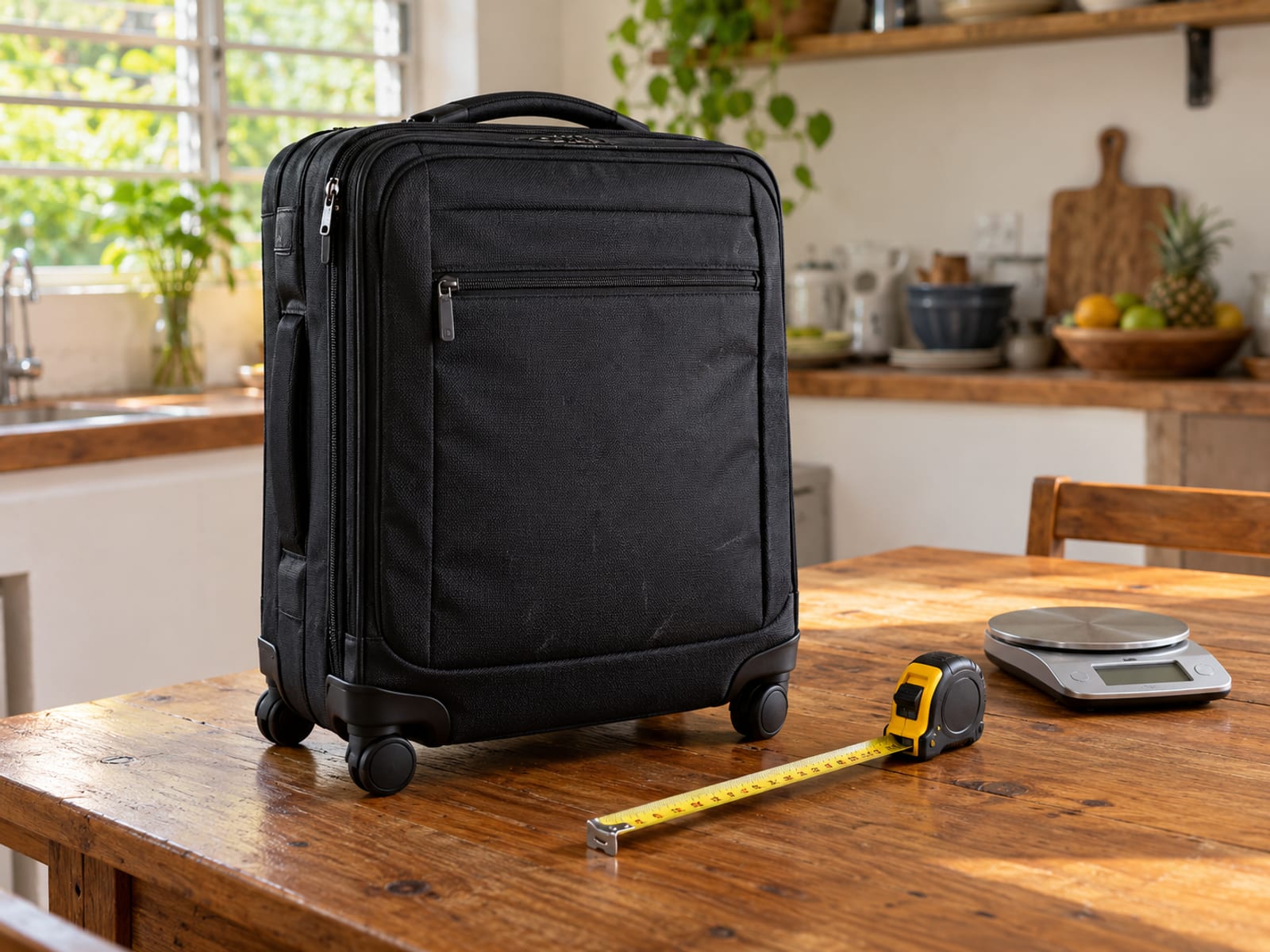
Measure your bag the way the airline does, with wheels and handles included. A carry-on suitcase sized to the 22 x 14 x 9 inch standard is a common choice, but go by your own airline's number, not the most common one.
Build a Seven-Day Warm-Weather Capsule
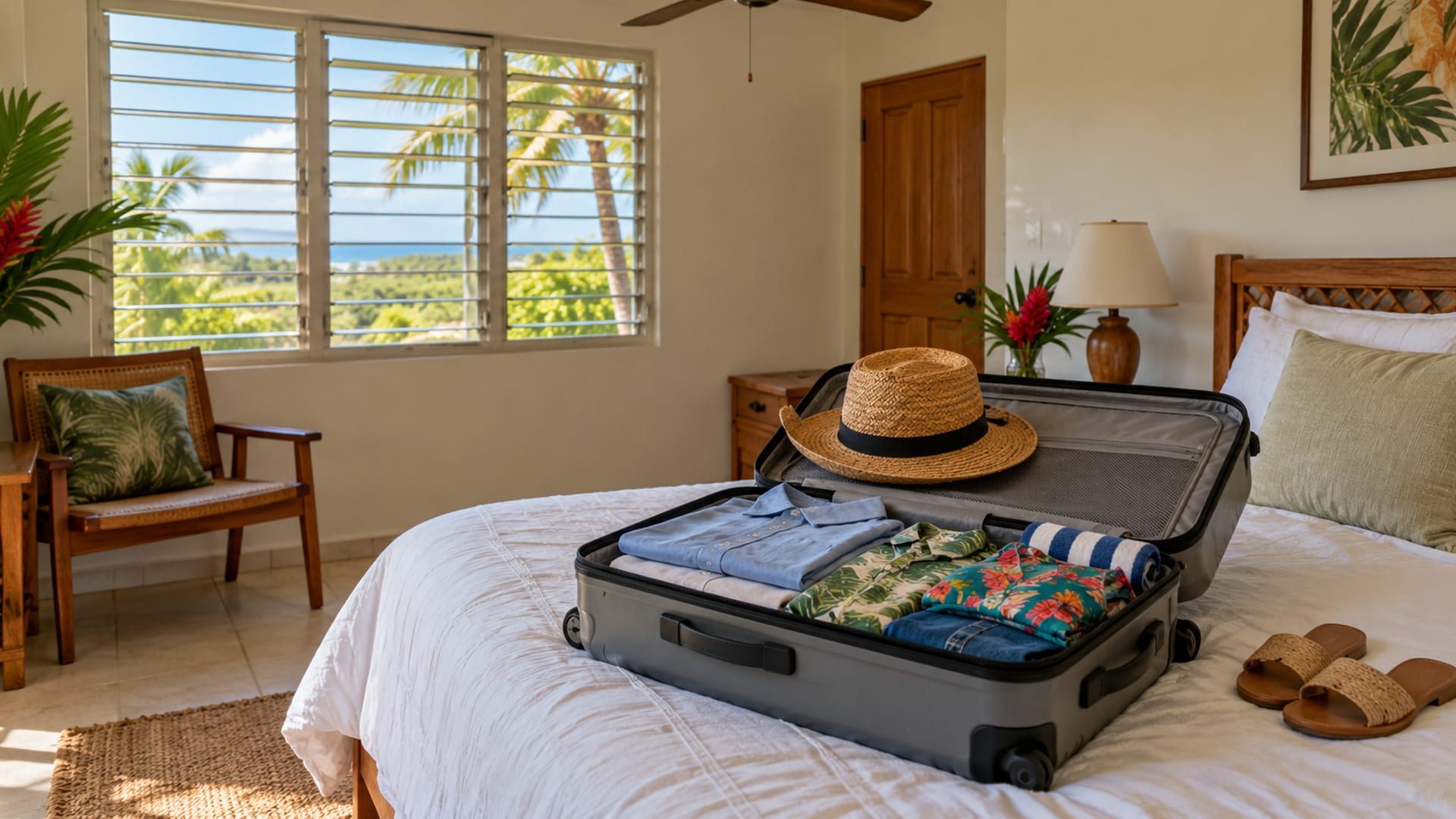
A capsule is a small set of clothes that all mix with each other. For about a week in Jamaica, a practical list looks like this: five or six lightweight tops, three or four pairs of shorts, trousers or skirts, seven sets of underwear, two or three pairs of socks, two swimsuits, one lightweight long-sleeved shirt, one thin sweater or light jacket, one simple evening outfit, a pair of walking shoes and a pair of sandals.
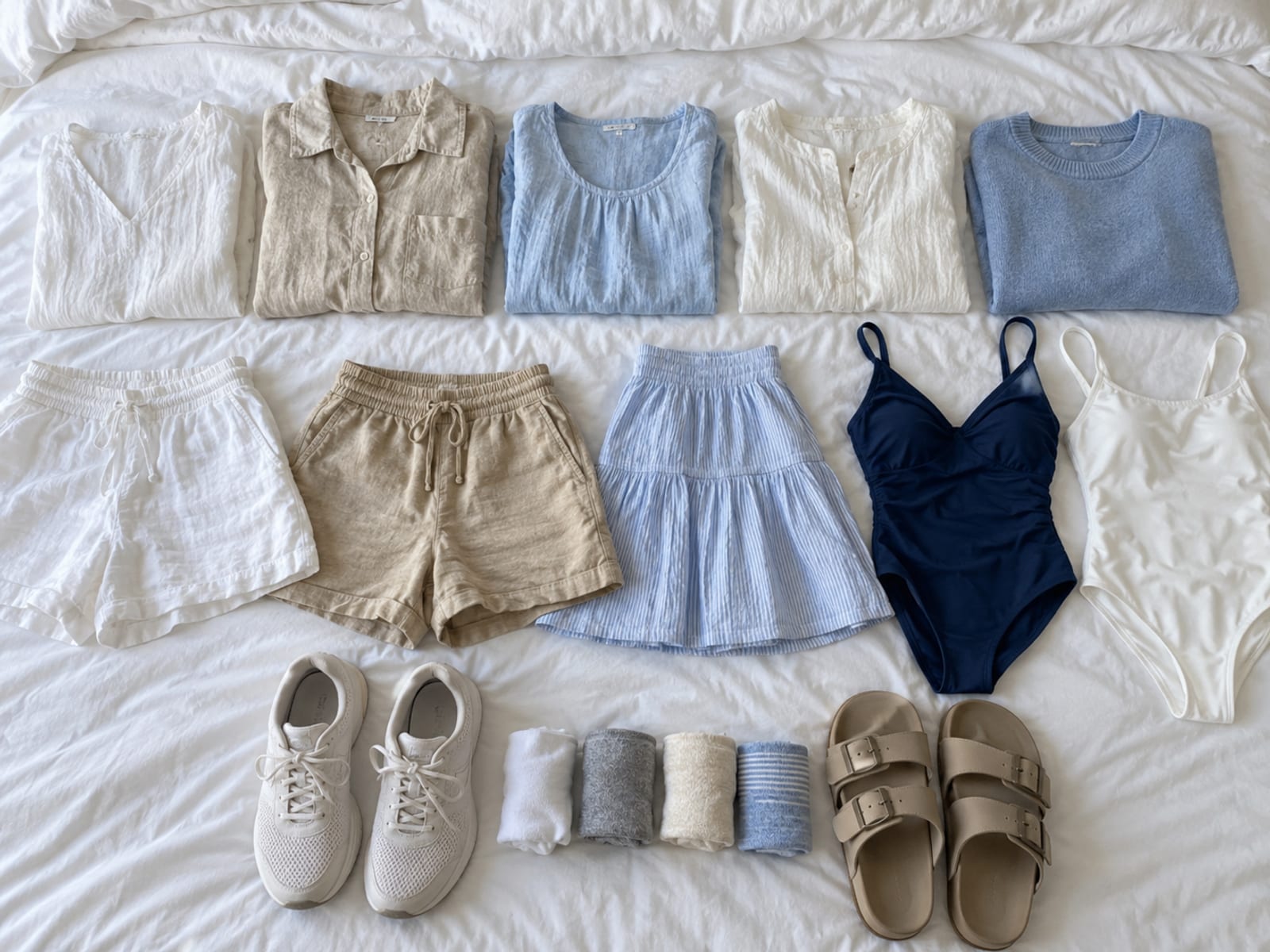
Wear the heaviest shoes, the long trousers and the outer layer on the plane. That keeps the bulkiest items out of the bag and costs nothing. Keep medication, documents, valuables, electronics and one change of clothes in your personal item, so that if you must gate-check the main bag, the important things stay with you.
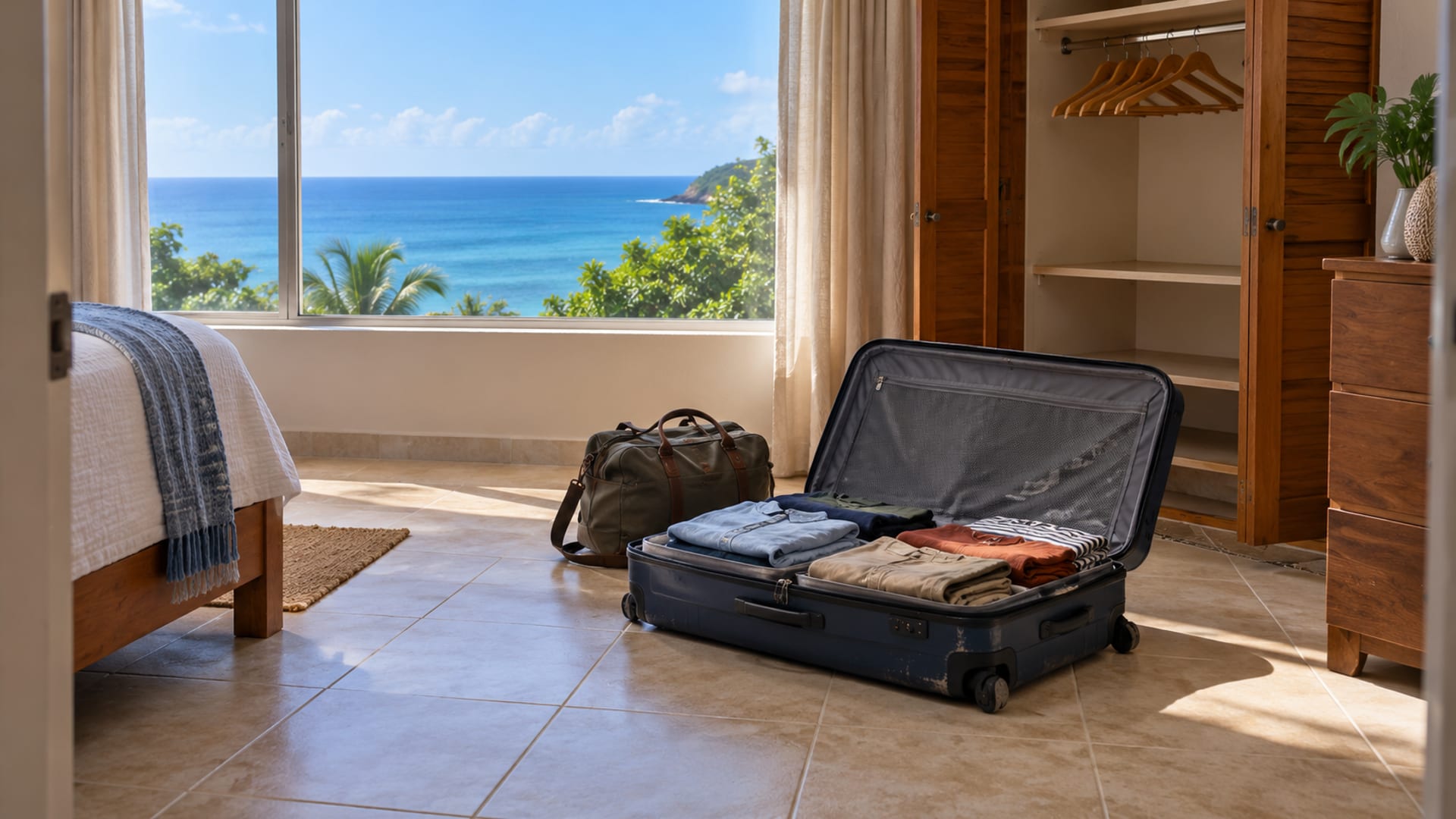
On rolling versus folding, a hybrid works best. Roll soft, casual clothing such as T-shirts, underwear and gym clothes, and fold structured or wrinkle-prone pieces like dress shirts, dress trousers and jackets. Tom's Guide describes the same split. The best method depends on the garment and the shape of the bag, and a set of packing cubes keeps both styles tidy in a small case.
You may also have seen the 5-4-3-2-1 rule. It is usually read as five tops, four bottoms, three pairs of shoes, two layering pieces and one special-purpose item or accessory, though versions differ. Treat it as a starting formula, not a rule from any airline or customs office. For a longer list for a full week with a checked bag, see what to pack for a week in Jamaica.
Pack Toiletries, Sunscreen and Medicines Without Losing Security Space
Liquid toiletries are an airport security problem, not a Jamaica Customs allowance. Shampoo, conditioner, body wash, lotion, toothpaste, liquid foundation, mascara, shaving gel, contact-lens solution, sunscreen and insect repellent can all fall under the rules for liquids, gels, aerosols, creams and pastes.
The rules depend on where you fly from:
- United States: TSA says liquids, aerosols, gels, creams and pastes must generally be in containers of 3.4 ounces or 100 ml or less, in one quart-size clear bag. Medically necessary liquids can exceed that after screening.
- United Kingdom: GOV.UK says containers must be no larger than 100 ml at most airports, and some airports ask for one transparent resealable bag of about one litre. Some airports have different current equipment rules.
- Canada: CATSA commonly applies 100 ml containers in one clear one-litre bag, with exceptions for medication, baby food and special dietary needs.
Check your departure airport before flying. Solid soap, solid shampoo, powder cosmetics and a deodorant stick generally save liquid-bag space, though the airport security authority makes the final call.
Keep prescription and essential medicines in the carry-on, with the medication list and generic drug names. The CDC advises travellers to bring the medicines they need, plus extra for delays, because names, ingredients and formulations can differ abroad. Add a small first-aid kit that fits the clear bag, and choose a sunscreen and repellent in cabin sizes, such as a mineral sunscreen and an insect repellent with an active ingredient the CDC lists (DEET, picaridin, oil of lemon eucalyptus or PMD, IR3535 or 2-undecanone). The CDC lists sunscreen with SPF 30 or greater in its travel health kit guidance.
Decide What To Wear, What To Leave Out and What To Buy There
Carry-on packing is easier when you remember that Jamaica sells a lot. Bottled water and drinks, basic snacks, ordinary toiletries, some sunscreen and insect repellent, simple beachwear and lightweight clothing are all easier to buy after you arrive. Jamaican coffee, tea, sauces and packaged snacks make good souvenirs, though the Jamaica Tourist Board's guidance for going home is worth reading for what you can carry back, since destination-country customs rules apply.
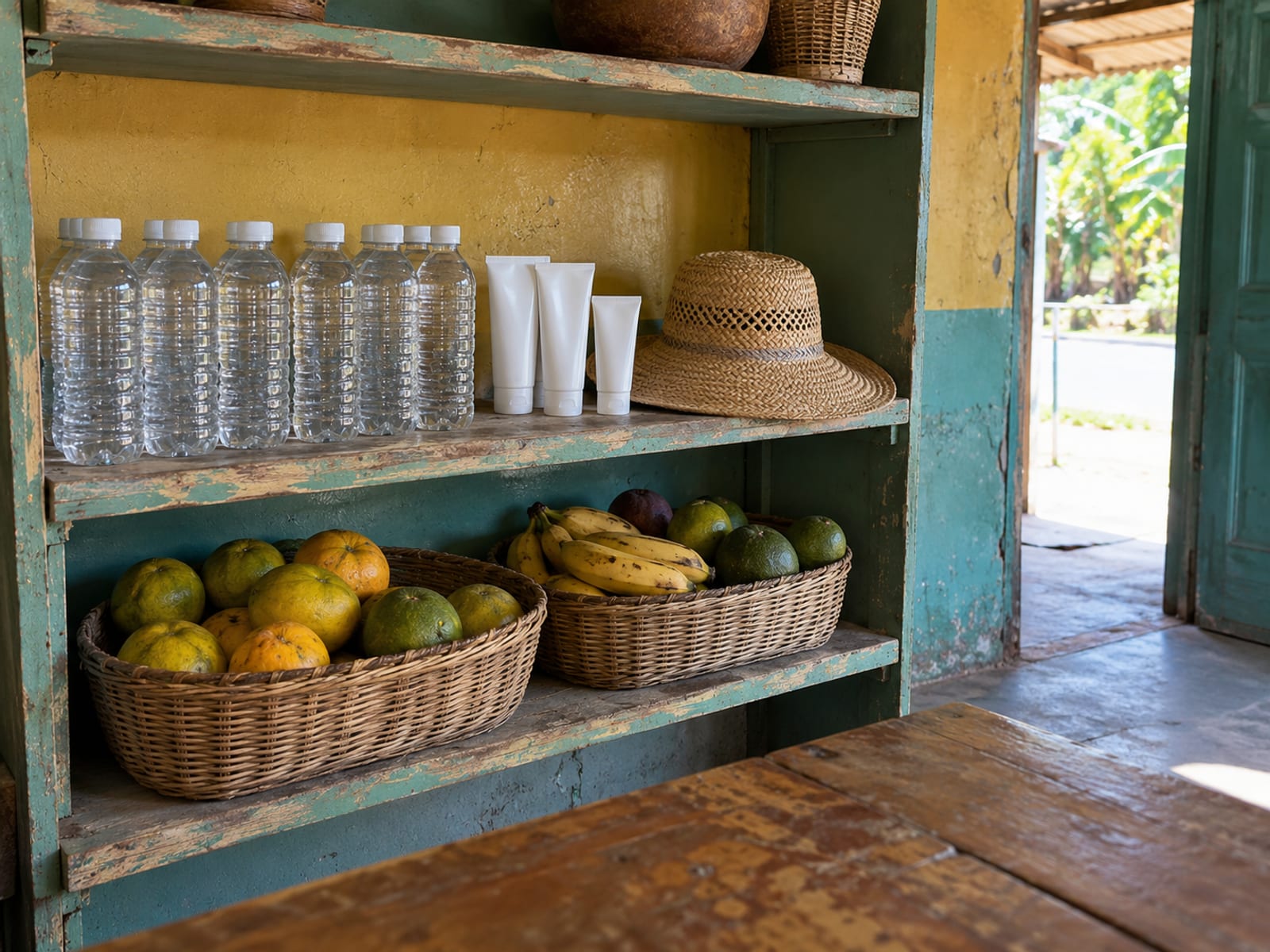
Some things are harder to replace. Prescription medicines, special medical supplies, specific brands or formulations, specialist skincare, contact-lens products, familiar infant foods and specialist clothing or electronics are best brought with you. The Jamaica Tourist Board states that adapters and converters are available but may not be easy to find, and that many hotels provide basic appliances such as hair dryers and irons, so you may be able to leave yours at home.
A few extras travellers often wish they had: sunscreen, insect repellent, a light rain layer, a thin evening layer for air-conditioning, a small day bag and an extra swimsuit. A packable daypack folds flat in the bag and doubles as the beach tote on arrival, if your airline counts it within the personal-item allowance. Forum posts are experience, not authority for baggage or customs rules, so use them for ideas and the official sources for limits.
Match Your Bags to Your Airport Transfer
Even a carry-on-only trip has one practical gap left: the ride from the airport. A small bag takes little room, but the vehicle still has to match the number of people and bags in your group. Operators publish their own examples, and they differ. Holiday Services lists a car for three passengers with two suitcases and two roller bags, and a full-size minivan for up to nine passengers with one suitcase and one roller bag each. JUTA Tours says a four-seater has space for four bags or small suitcases. Aurum Transfers lists a wagon for up to three standard bags, an SUV or van for four bags and a shuttle for ten. These are each operator's published figures and not standards for every vehicle.
For a group with a carry-on each, there is usually room, but a full van can still run short once bags pile up. Give the operator the number of passengers, carry-on bags, personal items and anything oversized. D-JARPS Transport Solutions runs its own vehicles, and for an airport shuttle we ask for those numbers so we can choose a vehicle that suits the group. If you also want a sense of how bags and seats trade off, see how much luggage fits in an airport shuttle.
Jamaica Customs, Weather and Electrical Details That Change the List
Jamaica Customs is a different question from airport security, and it has its own limits. The Customs Agency states that passengers aged 18 and over may receive duty-free allowances if goods are properly declared: 170 ml of perfume, 340 ml of eau de toilette, 2 litres of alcoholic beverages, tobacco limits of 200 cigarettes, 50 cigars or 230 grams of processed tobacco, and personal and household effects, including gifts, up to US$1,000 in total value. The allowance does not cover goods imported for sale.
Restricted items include fresh fruits and vegetables, plants, meat, live animals, milk products, honey and other agricultural goods, which may need permits. The restricted-items list also includes camouflage clothing and materials, firearms, ammunition, pepper spray, tasers, toy guns, bows and arrows, swords, handcuffs, tactical flashlights and night-vision goggles. The electronic C5 declaration asks about pharmaceuticals, chemicals, narcotics, food, plants, animal products, arms and other controlled goods. Declare when in doubt. Prescription medicines are not automatically exempt, and the CDC advises checking with Jamaica's embassy that your prescription drugs are legal to bring.
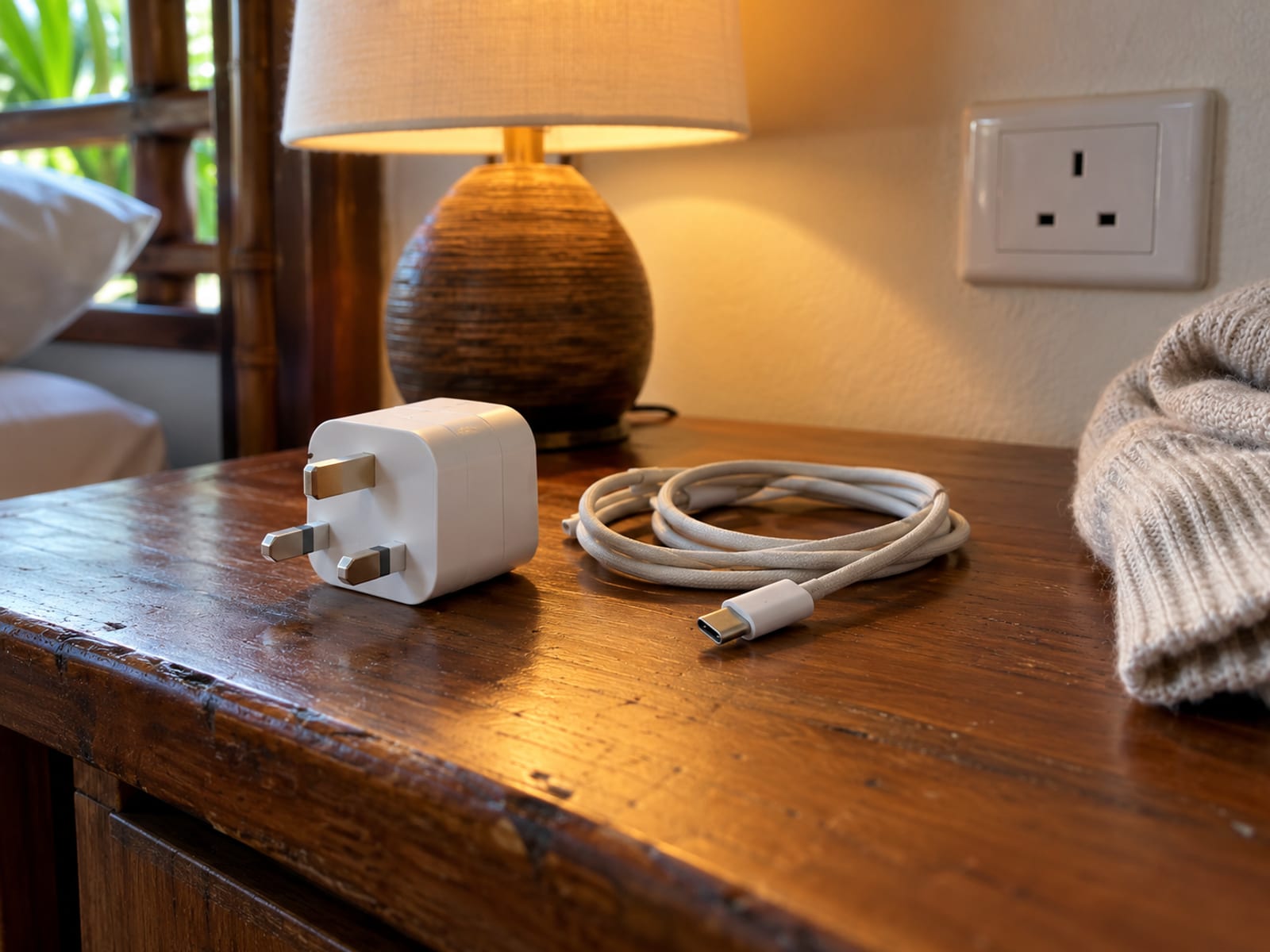
On weather, the Jamaica Tourist Board gives a practical visitor range of about 19 to 32 degrees Celsius and lists rainy periods from May to June and September to November. Hurricanes may pass over the island from June to November. A thin layer helps on cooler nights, in air-conditioning and at higher elevations, and a compact travel umbrella takes little room. Jamaica uses 110 volts and 50 cycles with flat two-pronged plugs like those in the United States and Canada, so travellers from other systems may need a plug adapter and possibly a voltage converter. Our post on plugs and voltage in Jamaica goes through it.
The Arrival-Day Checklist for a Lighter Trip
On the day you fly, a short list keeps things moving. Use it as the final check for a bag that has to fit the cabin and Jamaica's entry rules.
Before you leave for the airport, check the airline calculator once more, confirm your liquids fit the clear bag, and decide what to declare on the C5 form. When you land, you will want to walk out knowing who is meeting you and where.
Frequently Asked Questions
Is it better to roll or fold clothes in a suitcase?
A hybrid works well. Roll soft items such as T-shirts, underwear and gym clothes, and fold structured or wrinkle-prone pieces such as dress shirts, dress trousers and jackets.
What is the 5-4-3-2-1 rule for packing?
It is a minimalist formula usually read as five tops, four bottoms, three pairs of shoes, two layering pieces and one special-purpose item or accessory. Versions differ, and it is not an airline or customs rule.
What can you not bring into Jamaica?
Illicit drugs, counterfeit currency, prohibited weapons, ammunition, firearms without the required permits, camouflage clothing or materials, and fresh produce, meat, plants and honey without authorisation are not allowed. Declare pharmaceuticals and other goods when required, and check the Jamaica Customs Agency lists before you travel.
Can I take sunscreen and insect repellent in a carry-on?
Yes, if each container fits your departure airport's liquids rule, which is commonly 100 ml or less in one clear bag. Larger bottles are easy to buy after you arrive.
How many bags should I tell my airport transfer operator about?
Give the passenger count, the carry-on bags, the personal items and anything oversized before the vehicle is assigned.
Wrapping Up
Carry-on only works for many Jamaica weeks if you check each airline on your ticket, plan liquids around your departure airport, keep Jamaica's entry rules in mind, and pack a small set of clothes that all go together. Keep medicines, documents and valuables in the personal item, and wear the bulkiest pieces on the plane.
A lighter bag means shorter waits and fewer things to lose, and it leaves room for anything you pick up during the trip.
At D-JARPS Transport Solutions, we run our own vehicles and arrange transport anywhere in Jamaica as each trip needs it. Trips are arranged by phone between 6 AM and 10 PM every day, or through the trip request form on our contact page. Tell us how many people are travelling and how many bags you have, and we will go over the details, give you the price and confirm the trip before the day.