Travel guide
Rainy Season Packing for Jamaica
This guide may contain affiliate links. If you buy or book through one, we may earn a commission at no extra cost to you. Read our affiliate disclosure.
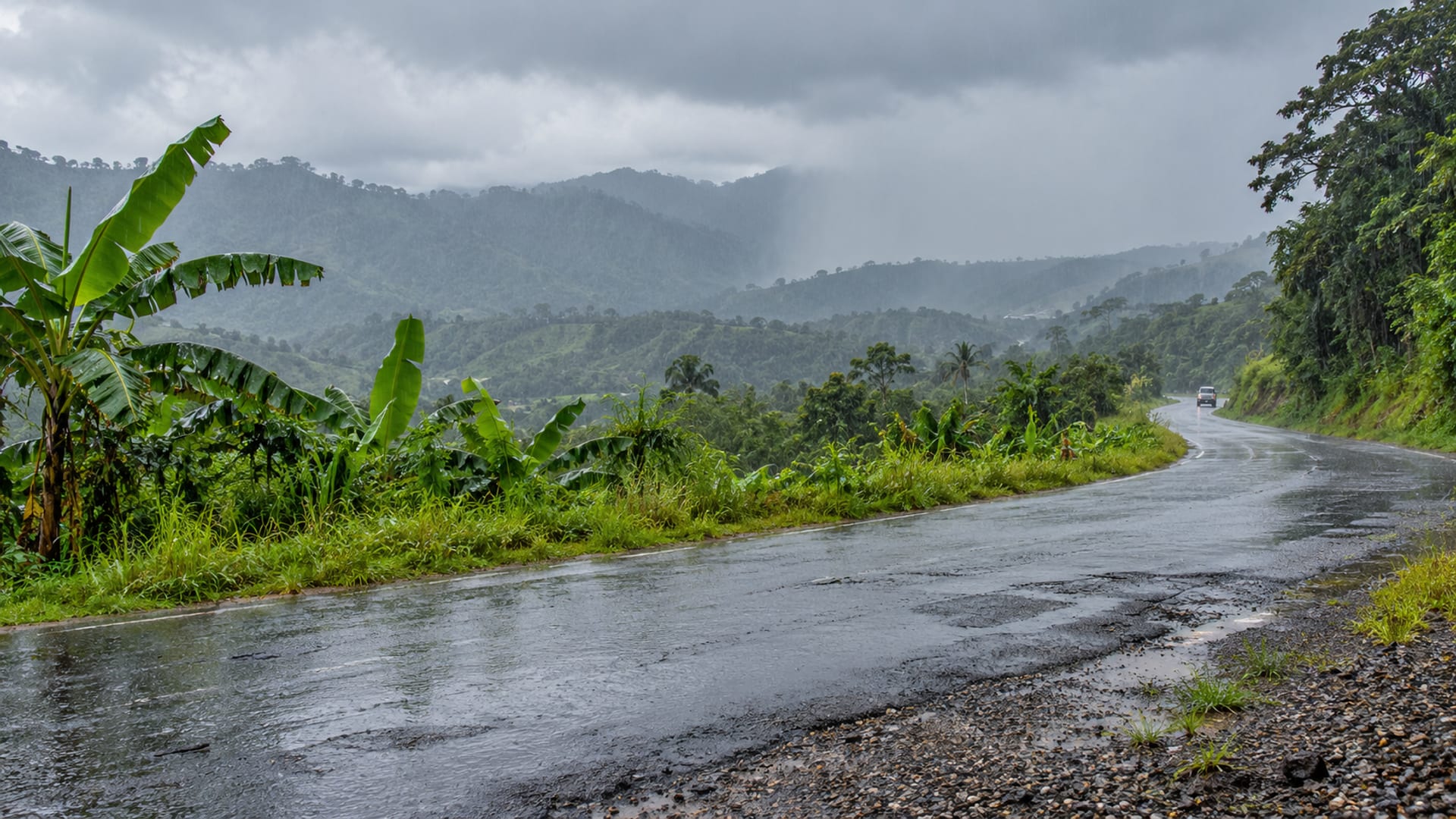
If you are working out what to pack for Jamaica in October, you are really packing for two kinds of weather at once. The mornings can be hot, bright and humid, and an hour later a heavy shower can empty the road and soak anything in your hands. You probably already know the island's official hurricane season runs from 1 June to 30 November, and you want a practical list, not a weather lecture. Clothes that dry slowly, a phone that stops working and a passport that goes damp are the problems worth planning around. A few well-chosen items can handle all of that and still leave your bag light. The sections below build the list around what rain and humidity actually do to a trip, so you can pack once and relax.
Why Does October Packing Need Sun, Rain and Flexibility?
Jamaica has two commonly described rainy periods. The Jamaica Tourist Board identifies May to June and September to November, and the Meteorological Service of Jamaica describes a rainfall pattern with a primary peak usually in October and a secondary peak usually in May. According to the Met Service's severe weather summary, December to March and July are the lower-rainfall periods. October therefore sits at the heaviest point of the rainfall pattern and in the later part of hurricane season.
That does not mean it rains all day. Tropical showers often pass quickly, but they can be heavy enough to affect roads, outdoor activities and low-lying areas. The practical approach is to pack for both and plan your outdoor days with some give. Put the beach, river or waterfall day where you can move it by a day, and keep one indoor option in your back pocket.
If you are asking when the worst time to go is, there is no month that is worst for everyone. Travellers who want the lowest chance of showers and disruption generally avoid the wettest period. Travellers who choose October or September accept more rain risk in return for warm days that are often usable, and they pack and plan to match.
What Should You Wear for Heat, Humidity and Sudden Showers?
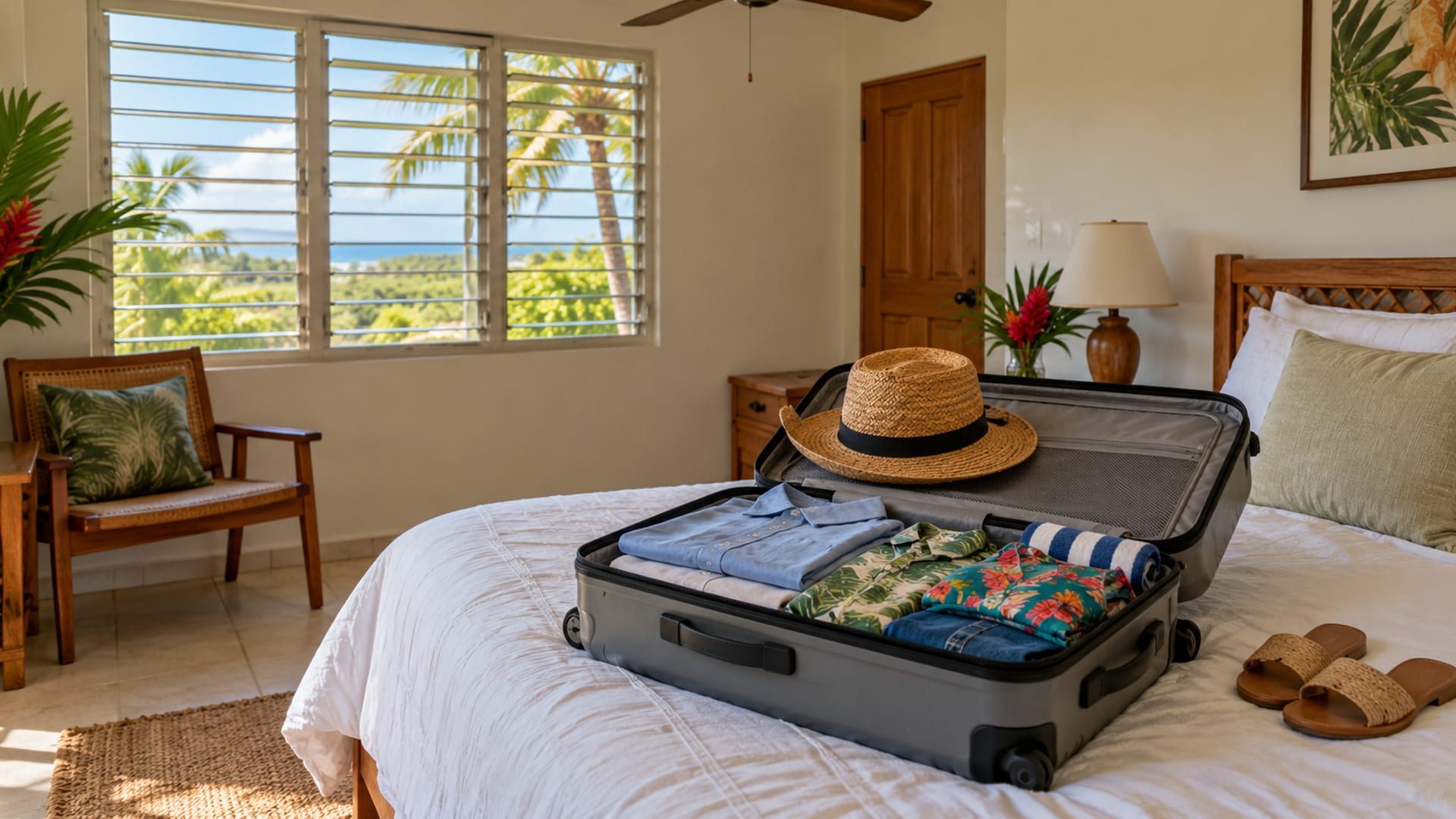
Humidity slows drying, so the best clothes for October are light, breathable and quick to dry. Lightweight shirts, shorts, swimwear and thin underlayers are easier to rotate than heavy cotton. The CDC recommends loose, lightweight clothing in the heat, which also suits a day that goes from sunshine to rain and back.
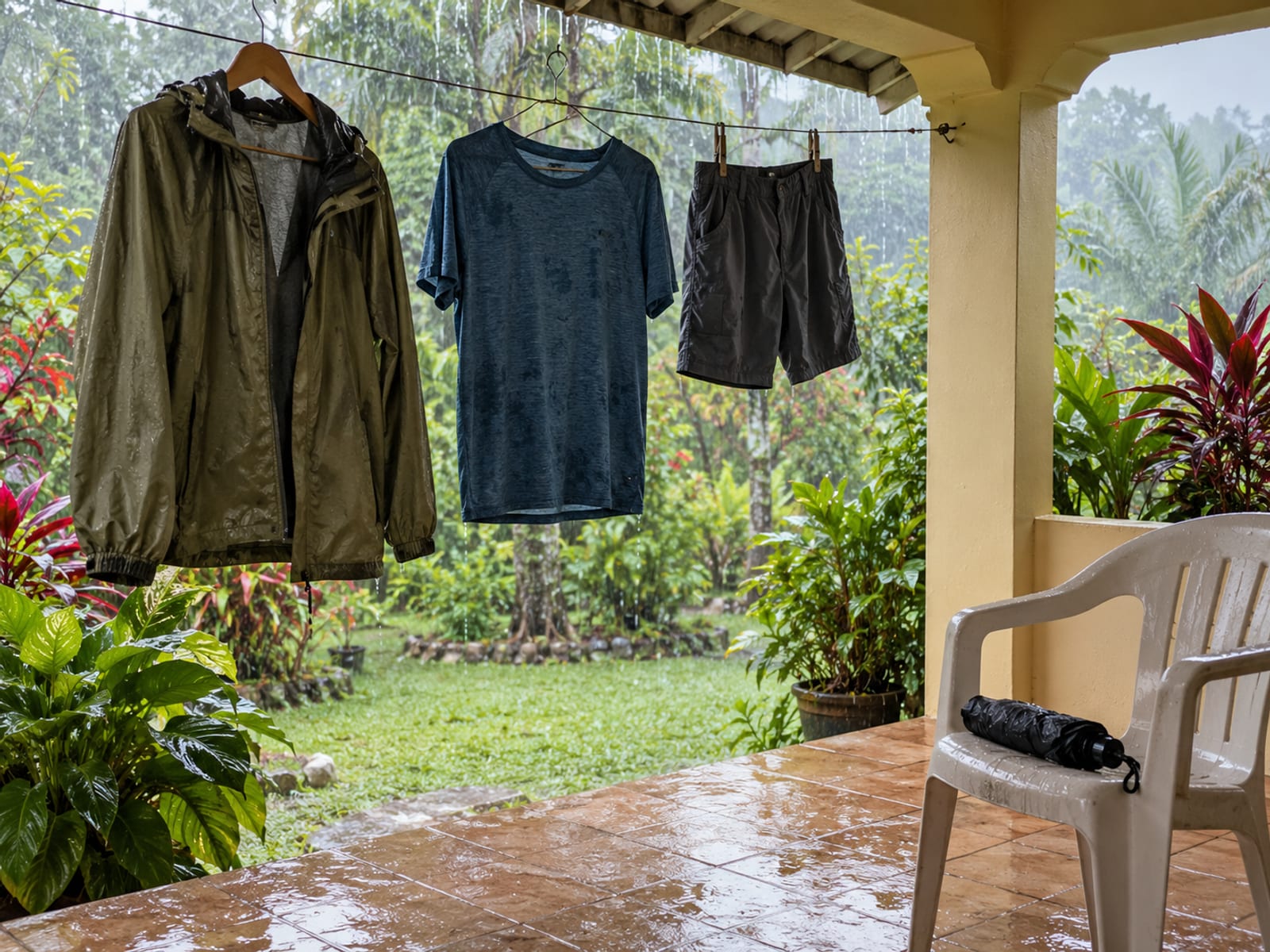
For rain itself, bring one of these, or both:
- A compact umbrella: It fits a day bag and works well for short walks between a vehicle, your accommodation and shops. A compact travel umbrella is easy to carry, though strong wind and heavy rain can make an umbrella awkward.
- A light rain jacket or poncho: It covers your upper body and leaves both hands free. Choose a breathable, packable layer rather than a heavy cold-weather coat.
Add a thin extra layer for air-conditioned vehicles, restaurants and higher ground. Travellers who have been before often say they packed more clothes than they wore, so choose fewer pieces that mix and match. If you are packing for September instead, the list is the same: lightweight breathable clothing, swimwear, sun protection, repellent, comfortable walking shoes, a rain layer and a waterproof pouch for electronics.
How Do You Build a Rain-Ready Day Bag for Phones, Documents and Medication?
A day bag that survives a downpour is the single most useful thing on this list. Inside it, keep passports, cash, medication, phones, cameras, chargers and travel documents in a resealable waterproof pouch or dry bag. The Office of Disaster Preparedness and Emergency Management (ODPEM) advises keeping phones and other devices dry in plastic or zip-lock bags, in its general safety tips, and a waterproof phone pouch does that job when you are near a boat, beach, river or waterfall.
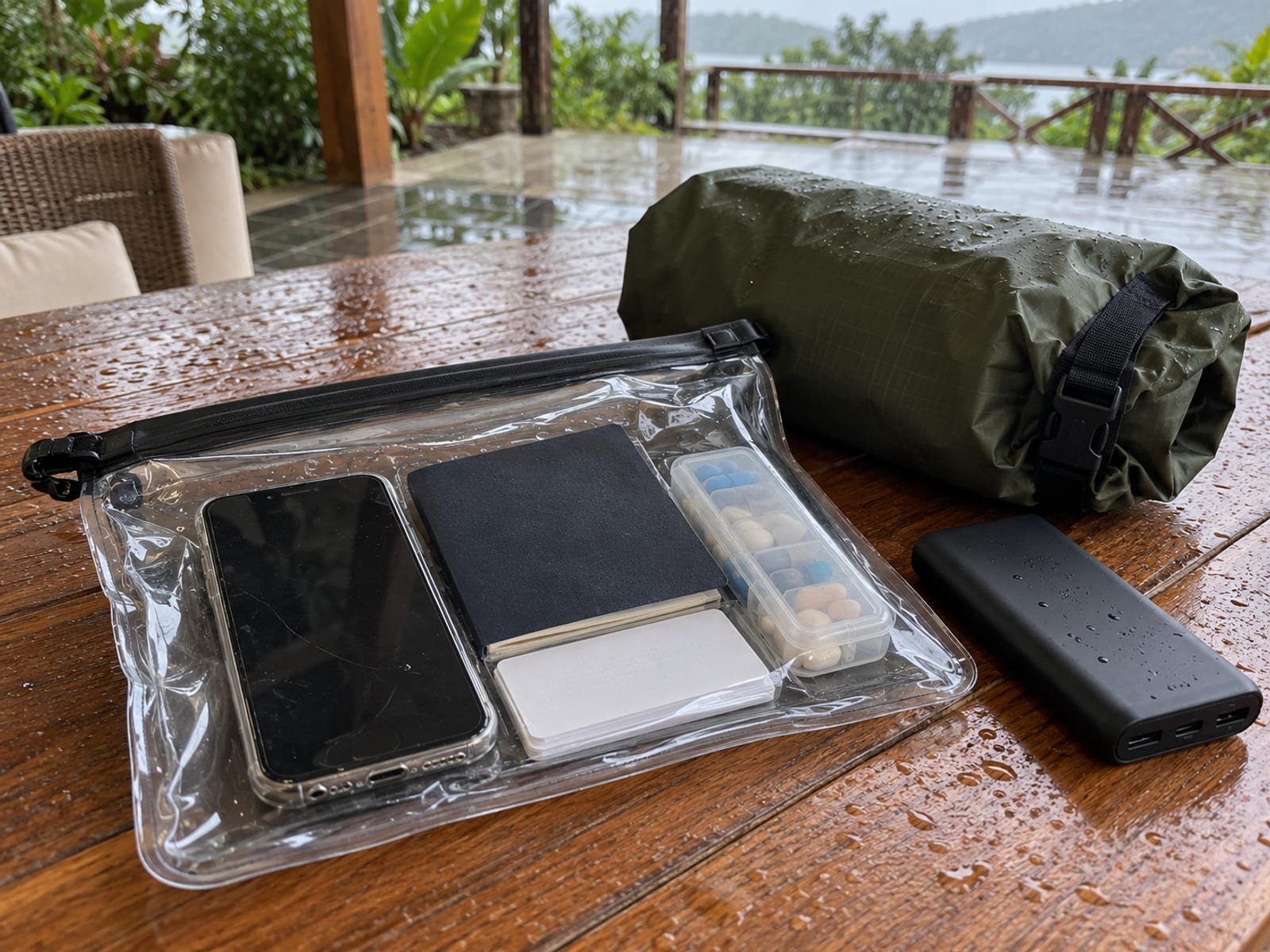
A few habits help in humid weather:
- Seal electronics in a bag when you move from air-conditioning to hot, damp air outside.
- Let a wet device dry before you charge it.
- Use a waterproof sleeve for your passport and paper documents.
- Carry medication in original labelled containers, in the day bag or carry-on.
- Keep a digital copy of important documents, and keep the originals too.
- Pack a spare charger source. Wet-weather delays and power interruptions can make charging harder, so a power bank keeps your phone alive. Airlines require spare lithium batteries and power banks in the cabin, not in checked luggage.
A packable daypack folds flat in the suitcase and gives you a bag for the day, and a second plastic or waterproof bag keeps wet swimwear apart from dry clothes.
Which Footwear and Clothing Work for Beaches, Roads, Rivers and Mountains?
Wet ground changes what shoes you need. The CDC advises protective footwear for beaches and outdoor activities, and a sensible mix covers most plans:
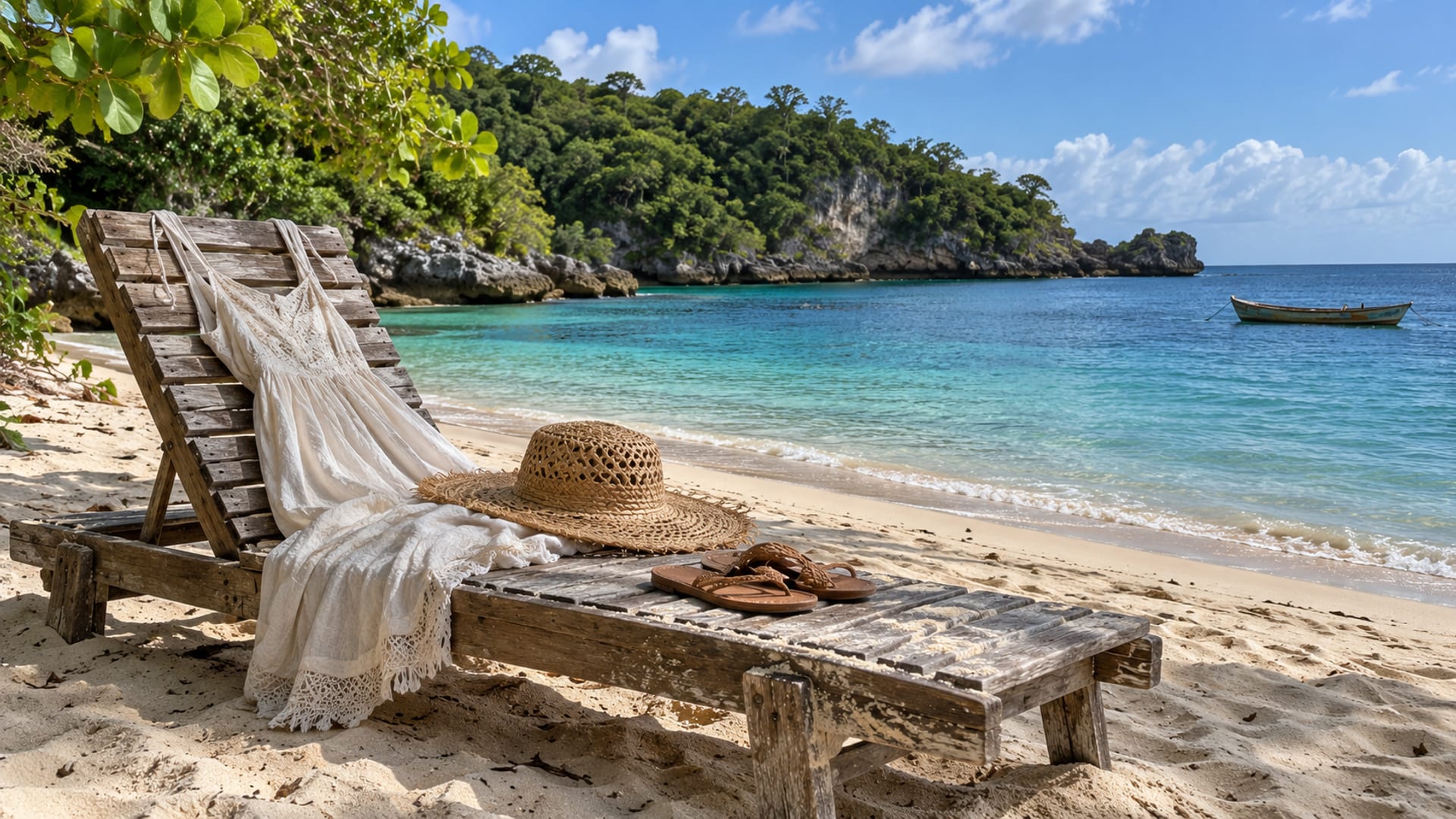
- Breathable sandals for ordinary hot-weather use.
- Closed walking shoes with good traction for wet roads, trails and excursions.
- Water shoes for rocky beaches, rivers and waterfalls. Water shoes are sold in shops and craft markets, but a pair in your size is easier to bring from home.
- A spare pair, so one can dry while the other is worn.
Smooth-soled flip-flops are fine by the pool, but they are a poor choice for wet walking. Mountain and high-elevation areas feel cooler than the coast, especially after rain or at night. Blue Mountain Peak reaches 2,256 metres, according to the CDC Yellow Book, so a light warm layer is useful if you plan a mountain day. Our packing guide for a Blue Mountains day trip covers that outing in more detail.
Sun protection still matters on cloudy days. Cloud does not stop ultraviolet exposure, and water and sand add to it. The CDC recommends sunscreen, protective clothing, hats and shade during the strongest midday hours, and says to apply sunscreen before insect repellent when you use both. A mineral sunscreen is one option, and an insect repellent used as directed helps against mosquitoes, which the CDC lists as a risk in Jamaica.
What Should Visitors Do About Hurricane Season?
ODPEM states that Jamaica's official hurricane season runs from 1 June to 30 November, and the ODPEM hurricane page is the place for official updates. The Met Service notes that cold fronts are commonly evident from mid-October to mid-April and that tropical weather systems can occur from April through December. Most days in the season are ordinary holiday days, but visitors should know where to get official information and what to do if conditions change.
If a storm threatens, a short routine keeps you ready:
ODPEM's household guidance refers to one gallon of water per person per day and a seven-day supply, but a visitor should follow the accommodation's current instructions and not try to build a household-scale supply. If flights are delayed, our post on what happens to your Jamaica airport transfer when a flight is delayed covers what to tell your provider.
How Do Airline Bags, Transfer Vehicles and Luggage Fit Together?
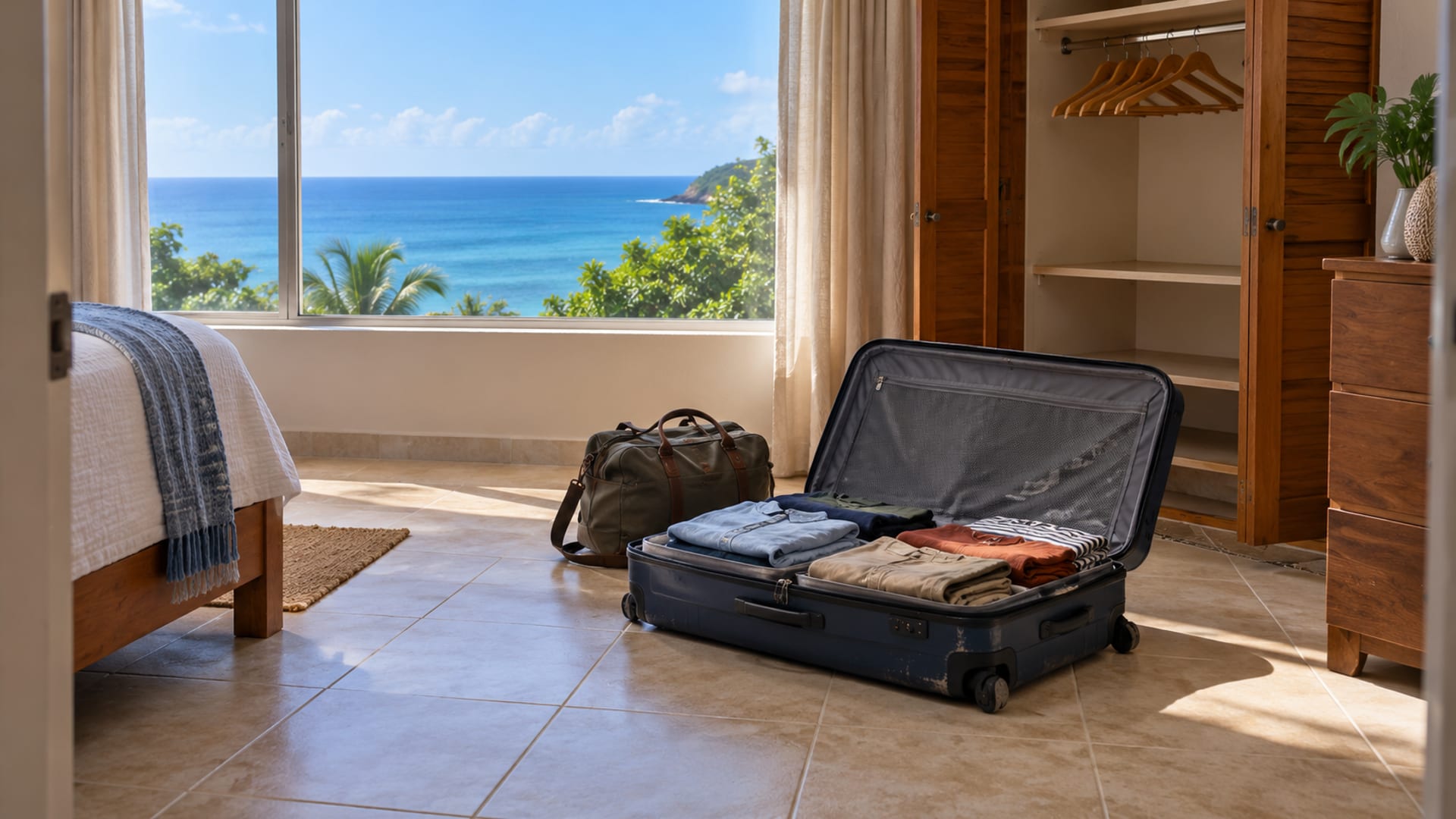
Airline allowances change by airline, route, fare and date, so read the allowance on your own booking. For one example, JetBlue's bag page lists a personal item up to 17 by 13 by 8 inches, a carry-on up to 22 by 14 by 9 inches, and a checked bag up to 62 linear inches and 50 pounds. Fees depend on fare, route and booking details.
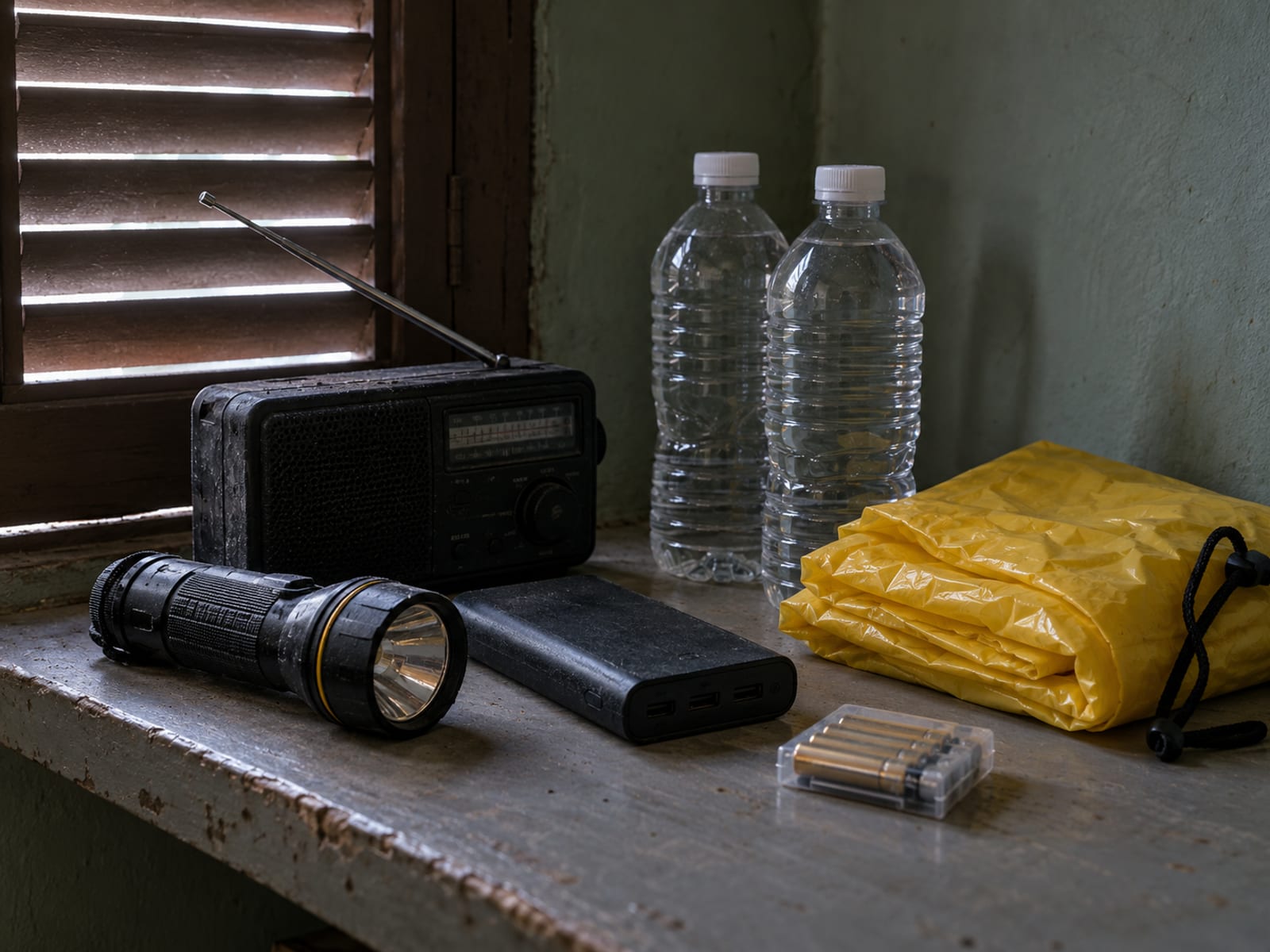
Luggage also has to fit the ride. Operators publish their own figures for how many people and bags each vehicle takes, and those figures differ, so there is no universal Jamaican standard. Hard-shell cases, strollers and golf bags take extra room, and a wet-weather trip tends to add an umbrella, rain gear and a damp-clothes bag. When you arrange an airport transfer, give the passenger count, the number of bags, their types and any bulky items. Our guide on how much luggage fits in an airport shuttle shows what to tell your provider, and our airport shuttle service is arranged around those details.
What Should You Pack Before Leaving Home, and What Can You Buy in Jamaica?
Many ordinary items are easy to buy after you land. Visit Jamaica says bottled Jamaican spring water is widely available in shops and restaurants, and basic toiletries, snacks, simple beach clothing and basic sandals are generally available too. Prices and stock vary by location, so do not rely on a resort shop for something you need on the first night.
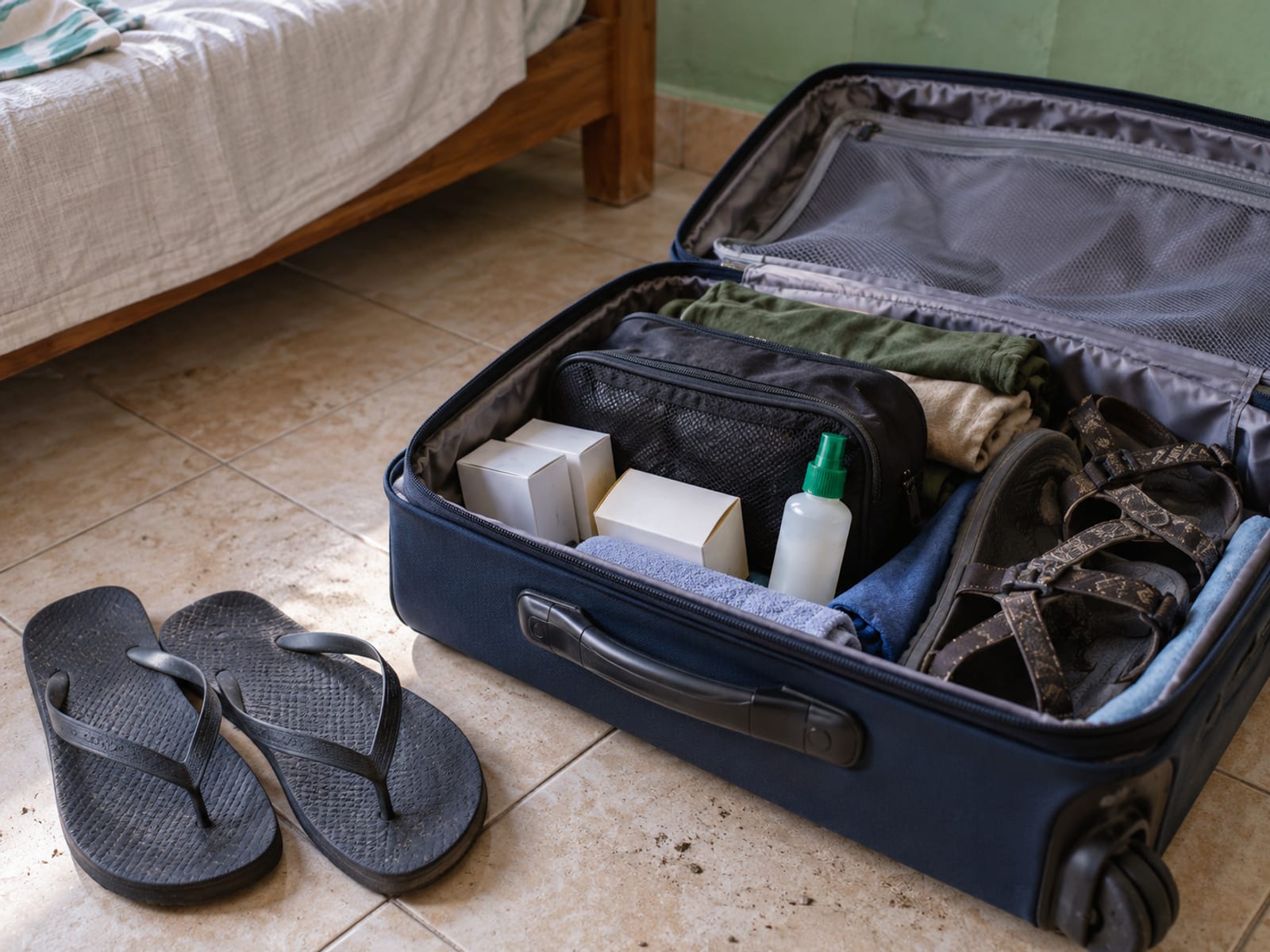
Pack these from home:
- Prescription medicines and specific medical supplies
- Items in your size or formulation: Footwear, clothing, sunscreen and repellent you prefer
- Phone, camera and laptop accessories
- A dry bag or waterproof pouch in the size you want
- Documents, visas and identity papers
- A small first-aid kit. A travel first-aid kit keeps plasters, antiseptic and basic remedies in one place.
- Anything you need straight after landing or during a delayed transfer
If you cannot be sure a product is available near your accommodation, ask the accommodation or a nearby shop before relying on it.
What Do You Need to Know About Customs, Health and Power?
Jamaica Customs Agency guidance says passengers aged 18 and older may receive duty concessions on personal and household effects, including gifts, up to US$1,000 in total, when the items are not for sale. Its duty FAQ lists 170 millilitres of perfume, 340 millilitres of eau de toilette, 2 litres of alcoholic beverages and a set tobacco allowance. Camouflage clothing and materials are restricted, so leave them at home. Pharmaceuticals may need Ministry of Health approval or an import permit, so keep prescription medicine in original packaging with documents and confirm unusual or controlled medicine before travel. The Jamaica Customs passenger allowance page lists the details, and the Jamaica Civil Aviation Authority travel information says to carry money, medicines and identity papers in cabin baggage. Check drone rules with the Jamaica Civil Aviation Authority and Jamaica Customs before you pack one.
For health, the CDC advises sunscreen, insect repellent, a basic first-aid kit, regular water and avoiding floodwater and contaminated water. Prescription medicine stays in your carry-on.
Jamaica's supply is 110 volts at 50 hertz, with Type A and Type B sockets. Visit Jamaica describes flat two-pronged plugs like those used in the United States and Canada. Visitors from countries with other plugs should pack an adapter and check whether their devices support 110 volts. Our post on plugs and voltage in Jamaica shows how to read a charger label.
Some of the terms on this page are worth defining before you pack.
Frequently Asked Questions
What should I pack for Jamaica in October?
Lightweight, quick-dry clothes, swimwear, a compact umbrella or light rain jacket, supportive closed shoes plus sandals or water shoes, sunscreen, insect repellent, a waterproof pouch for phones and documents, and your medication in your carry-on.
When is the worst time to go to Jamaica?
No month is worst for everyone. October is the month most linked with the main rainfall peak, and it sits inside the official hurricane season, so it carries a higher chance of showers and disruption. Travellers who want the lowest weather risk usually avoid the wettest months.
Is it worth going to Jamaica in hurricane season?
It can be, if you accept some weather risk and prepare for it. Follow the Met Service and ODPEM, protect your documents and electronics, keep outdoor plans flexible, and confirm your accommodation and transport if a storm threatens.
What to pack for Jamaica in September?
The same core list as October: breathable clothing, swimwear, sun protection, repellent, walking shoes, a rain layer and a waterproof pouch. September falls in the wet and hurricane seasons, so a rain-ready day bag is useful.
Do I still need sunscreen on a rainy day?
Yes. Cloud cover does not remove ultraviolet exposure, and water and sand add to it.
Which items should go in my carry-on?
Prescription medicine in original containers, passports and travel documents, your phone, a power bank and any item you cannot replace easily.
The Bottom Line
Pack light, quick-dry clothes, a compact umbrella or rain jacket, shoes that grip, and a waterproof pouch for the things that cannot get wet. Keep medication and documents in your carry-on, keep sunscreen and repellent handy even on grey days, and follow the Jamaica Met Service and ODPEM if the forecast turns.
A bag packed this way lets you say yes to a river, a market or a beach whenever the sky clears, without worrying about a soaked phone. Flexible plans and a dry day bag matter more than extra outfits.
At D-JARPS Transport Solutions in Jamaica, we run our own vehicles and arrange transport anywhere in the island as each trip needs. Tell us your passenger count, your bags and your pick-up time, and we will go over the details, give you the price and confirm the trip before the day. Trips are arranged by phone from 6 AM to 10 PM every day, or through the trip request form on our contact page.