Travel guide
What to Ask Before You Hire a School Transport Service in Jamaica
This guide may contain affiliate links. If you buy or book through one, we may earn a commission at no extra cost to you. Read our affiliate disclosure.
You have tried the informal options. A cousin who could drive until her shift changed, a taxi that was different every week, a neighbour who helped until his own plans moved. Now the school term is close, and you want one dependable arrangement for your child. The right questions to ask a school transport service in Jamaica are the ones that get a specific answer you can check, instead of a general promise that the service is "safe" or "reliable." A provider who runs a proper service will usually be glad to answer them, and the answers tell you more than any advertisement. The list below is built so you can read it out on a phone call or paste it into a message. It covers the documents to ask for, the route and handover, the price, and the days that break the normal pattern, with what a good answer sounds like next to a vague one.
What Should You Ask About Licensing And Insurance First?
Start with the paperwork, before you talk about price. The Transport Authority says that people who transport students to and from school under a contract, including contractual transport providers, should hold a Contract Carriage licence. That gives you a clear first question: what type of licence covers this service, and can I see it?
A good answer names the legal operator, the vehicle and the licence status, and the provider is willing to show the documents. A vague answer sounds like "everything is in order" or "the vehicle is insured," with no policy or licence named. Compare the vehicle on the paper with the vehicle that will arrive.
Each of these has a reason behind it. The Transport Authority states that a receipt is not a road licence, so a receipt for an application should not be treated as the licence itself. The same source says a PPV driver's badge is normally valid for two years, and a temporary badge of up to six months may be issued first. The Road Traffic Act 2018 requires insurance in line with the Motor Vehicles Insurance (Third-Party Risks) Act, and the evidence has to be produced for inspection on demand. You are not being difficult by asking. You are asking for the same things the law expects the operator to hold, and you can read the Road Traffic Act 2018 for yourself.
What Does A Good Answer Sound Like From The Driver And The Vehicle?
Once the licence and insurance are clear, move to the person and the vehicle. Ask who the regular driver is, whether a replacement driver exists and who that would be. Ask whether there is an attendant or a second adult, who takes attendance when children board, and how a parent reports unsafe driving or bad behaviour.

On the vehicle, ask what vehicle will carry your child, how many passenger seats it has, and whether every seat has a working seat belt. The Road Traffic Act 2018 requires a driver to make sure passengers wear seat belts, and a driver carrying a child must make sure the child wears or travels in the prescribed child restraint system. So, the useful question is not "is it safe?" but "how do the seat belt and child restraint rules apply to this vehicle and to my child's age and size?" A line such as "the children know to sit down" is not a substitute for a clear seat belt or restraint arrangement.
Also ask about upkeep. How often is the vehicle inspected and maintained, what happens after a breakdown, and does it carry a first-aid kit, emergency equipment and a working way to communicate? Ask whether the vehicle is used for other work before or after the school run. For more on what to look for, safety checks parents can make before choosing school transport covers it in order.
How Do You Agree The Route, The Handover And The School-Day Exceptions?
A route is a set of agreements, and each should exist in writing. Ask whether pickup is door to door or at a meeting point, what the pickup window is and what the expected drop-off window is. Ask how many students ride, which other stops are on the route, and what happens when traffic, weather, flooding, road works or a breakdown causes a delay. Ask whether the vehicle waits if your child is not at the pickup point, and for how long.
The handover matters just as much. Settle who may receive your child, what happens if no authorised adult is present, and whether your child may be released to an older sibling or a named caregiver. The Ministry of Education's school safety guidance says schools should control entry and exit points and set drop-off and dismissal procedures, so ask where the vehicle loads and unloads and what the school's own dismissal procedure requires. A provider's responsibility does not end at the school gate.
Then cover the days that break the pattern: half days, early dismissal, examination days, sports days, clubs and school events. Ask whether the route or the pickup point can change during the term, and how much notice you will get if it does. A local school transport registration form, the Hybrine Transport form published through Jamaica College, is a useful example of what to record. It asks for morning pickup, afternoon drop-off or both, pickup and drop-off addresses, preferred time windows, authorised pickup persons, emergency contacts and medical-emergency consent.
What Changes The Cost Of School Transport In Jamaica?
There is no single price for school transport, and a quote only helps if you know what sits inside it. The things that tend to change the price are the route length, the school location, whether the service is one way or return, whether pickup is door to door or at a meeting point, the number of rides and the level of service. A private operator may also charge a registration fee, a deposit or a late fee, so ask about each one.
We do not give a price here, because the price depends on your child's route and school. When you ask for a quote, ask whether it covers one way or both, whether early-dismissal days and exam days are included, whether missed days are refundable, when the provider can change the price and what notice is needed to suspend or cancel. Ask too whether you will receive a receipt or written payment record.
A few cost questions come up often, so short answers follow. Is the school bus free in Jamaica? Not generally. The government rural school bus service is subsidised. The Ministry's 2025 sectoral report gave subsidised rural student fares of about $30 to $50 per trip, and by January 2026 the Jamaica Information Service reported a subsidised fare of $50 per trip with a cashless student card.
Do you have to pay for your kids to go to school in Jamaica? School attendance and transport are separate questions. Families may have costs for transportation, meals, uniforms, books and activities even where education is publicly provided, and a private school may charge tuition. Confirm the transport price with the school or the operator, as the Ministry of Education FAQ is the place for school-level questions.
How much will bus fares increase in Jamaica in 2026? The Transport Authority approved a 16 percent adjustment for public passenger vehicles in two phases, 8 percent from June 2, 2026 and a further 8 percent from July 1, 2026, as set out in its fare increase notice. JIS gave the example of a route taxi fare between St. Ann's Bay and Ocho Rios moving from $200 to $220 in June and then $240 in July. Private school transport prices do not automatically follow this public adjustment, so ask whether your quote is fixed and what could change it.
How Long Are School Hours, And What Does That Mean For The Route?
There is no single daily timetable for every Jamaican school. Hours vary by school, grade, shift arrangement and the day, and examinations and activities change them again. JIS has described an extended-day model running from 8:00 a.m. to 2:30 p.m. and schools leaving the shift system as running from about 7:30 a.m. to 2:30 p.m., and those are examples, not a rule for your child's school. The details of a particular school come from that school's calendar and timetable.
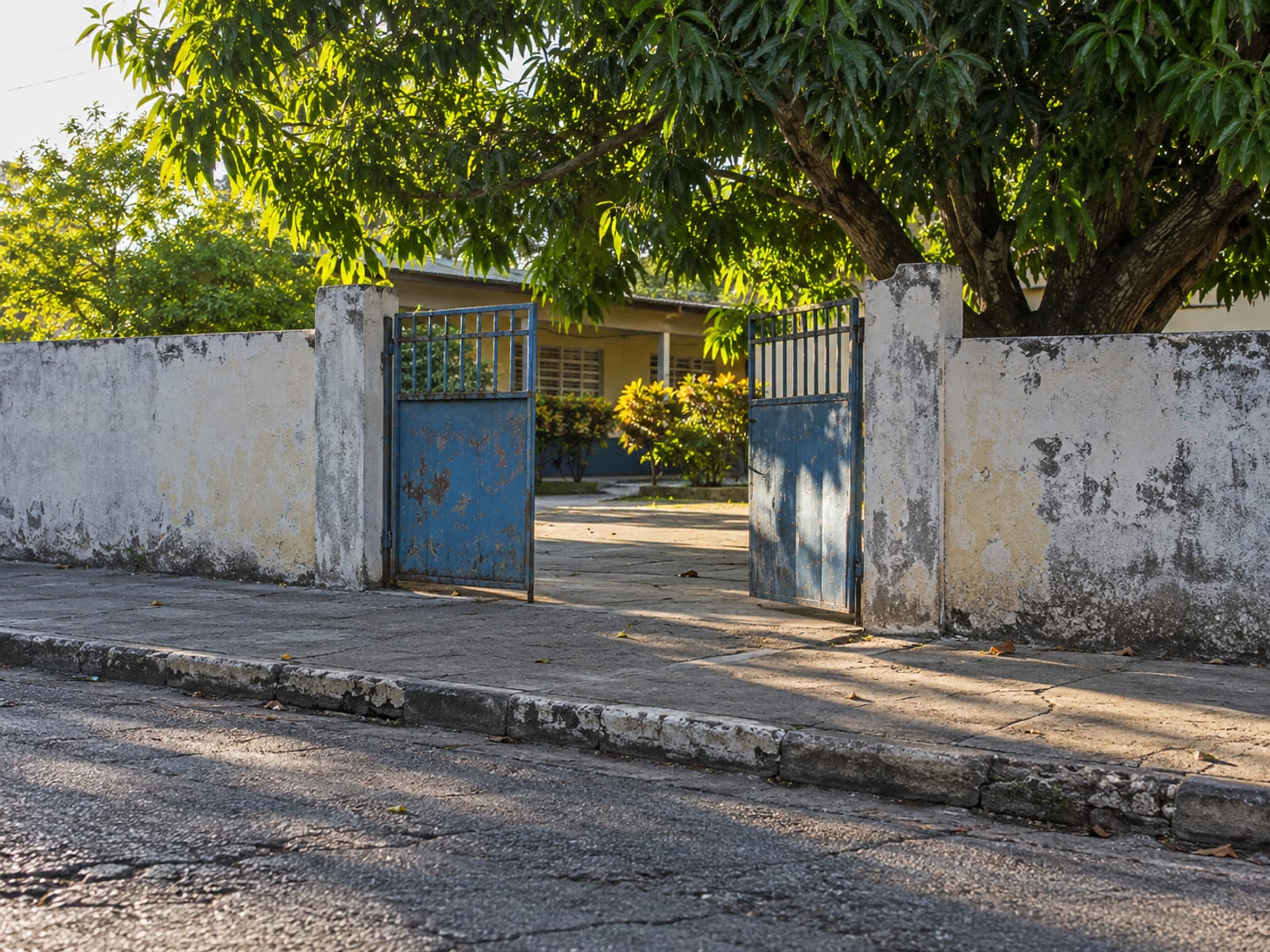
For the provider, that means two practical steps for you. Give them the school's actual calendar, with early-dismissal and examination dates, and ask in return whether the afternoon run follows the ordinary dismissal time, whether there is a second run for early dismissal and whether candidates are collected when an exam ends. If a school changes its hours mid-term, ask how the pickup windows adjust and how much notice you will receive. How private school transportation works in Kingston walks through a normal school day for a child on a shared route.
Where Do Rural Buses, JUTC, Route Taxis And Private Transport Differ?
You may be comparing a private arrangement with a public option, so it helps to see what each one is built to do. Each has a real place. They are different services, and the fare for one does not set the price of another.
A route taxi, as the Transport Authority defines it, is a public passenger vehicle seating no more than ten passengers and operating on a specific route. It is not a private school service, which is why an agreed handover is not part of the ride. For a closer comparison of the government service and a private one, see government school bus or private school transport.
Which Red Flags Should You Not Explain Away?
Some answers are worth stopping on. Parents and commenters describe concerns about overcrowding, long waits after school, unclear routes and uncertainty about whether a service will actually reach the advertised area. Those are individual experiences and not proof about any one provider, but they show where problems tend to start.
Treat these as reasons to pause before you commit:
- Unnamed operator: The provider will not say who the legal operator is.
- No documents: The provider refuses to show licensing or insurance papers, or treats a licence application receipt as the licence.
- Changing drivers: The driver you were shown is not the driver who arrives, or the vehicle or driver changes without telling you.
- Too many children: The vehicle carries more children than its available seats, or children stand or travel without the required restraint arrangement.
- No plan for problems: There is no clear process for absences, delays, emergencies or a missed handover.
- Loose timing: Pickup and drop-off are described only as "in the morning" or "after school."
- Moving terms: Payment terms are verbal, unclear, or change after service begins.
- Discouraging questions: The operator discourages you from checking the vehicle or asking about safety.
What Jamaica-Specific Checks Come Before You Commit?
A few checks apply because of how the rules work here. First, confirm the licence type with the Transport Authority's published requirements if you have any doubt, and note that a green commercial carrier plate for goods does not answer the student passenger question. Second, ask how the provider applies the Road Traffic Act 2018 and the Road Traffic Regulations 2022, which came into effect on February 1, 2023, to the vehicle being used, as the Ministry of Transport lists on its forms page.
Third, ask whether you can see the vehicle before agreeing, and whether the school can confirm the approved loading and dismissal point. Fourth, if a government or JUTC service is available, ask where it stops in relation to your child's home and school, and who looks after the child between the stop and the gate. Finally, ask how a complaint or a safety incident is recorded, and whether there is a written incident-reporting process.
Frequently Asked Questions
What are the most important questions to ask a school transport service in Jamaica?
Ask which licence covers the service, whether you can see the road licence, the driver's PPV badge and the insurance papers, how pickup and handover work, and what the price covers. Then ask how absences, early dismissal and exam days are handled.
Is the school bus free in Jamaica?
Not generally. The government rural school bus service is subsidised, and JIS reported a $50 per trip student fare with a cashless card by January 2026. Private operators set their own charges.
Do you have to pay for your kids to go to school in Jamaica?
Education is publicly provided, but families may still pay for transportation, meals, uniforms, books and activities, and private schools may charge tuition. Transport is a separate service, so confirm its price with the school or operator.
How long are school hours in Jamaica?
They differ by school. JIS has described 8:00 a.m. to 2:30 p.m. for an extended-day model and about 7:30 a.m. to 2:30 p.m. for schools leaving the shift system. Use your child's school timetable.
How much will bus fares increase in Jamaica in 2026?
Public passenger vehicle fares rose 8 percent from June 2, 2026 and a further 8 percent from July 1, 2026, a 16 percent total. Private school transport is priced separately by the operator.
What should be in a written school transport agreement?
The child's details, pickup and drop-off points and windows, who may receive the child, absence and late-pickup rules, early-dismissal and exam-day arrangements, emergency contacts, the price and the notice needed to change or cancel.
What This Means for You
You do not need to be an expert to choose a school transport service. You need a short list of questions, a habit of asking for documents and a written agreement before the first trip. Specific answers that come with papers you can read are the ones to rely on, and general reassurance is a reason to ask again.
With those answers in hand, the school term becomes simpler to plan. You know who is driving, where your child is collected and handed over, what happens on the days that break the pattern and what you will pay. That clarity is what makes a school run dependable week after week.
D-JARPS Transport Solutions has been open since 2024, runs its own vehicles and arranges transport anywhere in Jamaica as each trip needs it, including school transportation. Trips are arranged by phone between 6 AM and 10 PM every day, or through the trip request form on our contact page. Send us your child's school and route, and we will go over the details with you, give the price and confirm the trip before the day.