Travel guide
After-School and Extra-Lessons Pickups in Kingston: Setting Up a Schedule
This guide may contain affiliate links. If you buy or book through one, we may earn a commission at no extra cost to you. Read our affiliate disclosure.
Your child's lessons, practice or club now run past the normal school bell, and you cannot be at the gate at the end. That leaves a gap in the afternoon, and in Kingston traffic it is a gap you want filled by a plan, not by a phone call from the school office at 6 PM. An after school pickup service in Kingston works best when everyone involved, the school, the activity leader, the driver and you, is working from the same page. That page lists the days, the exact finish time and place, who may collect your child and what happens when something changes. This guide walks through building it, step by step, so you finish with one sheet you can send to all three.
What Do You Need to Settle Before You Ask for a Driver?
Start with the child's real week, not the ideal one. Government-supported extra lessons have run on weekdays from 5:30 p.m. to 7:45 p.m., and the 2022 Ministry programme covered Mathematics, Language Arts, Integrated Studies, Science, Social Studies, English and examination subjects. Other lessons are arranged by a school, a private tutor, a learning centre or a community group, and they may be held at the child's school, another venue, a tutor's premises or online. Sports and clubs can finish at different times from lessons. A 2026 JPS programme, for example, ran Saturday sessions in St Elizabeth and three-hour weekday sessions in Westmoreland, which shows how much schedules vary by programme.
Ask the activity leader for the weekly timetable, the location, the attendance procedure and the collection deadline. Do not assume the activity ends when the school day normally does. Then settle these points:
- Days: Which days the activity runs, and whether the pattern changes during exam preparation.
- Finish time and place: The exact release time, not the advertised start time, and whether the child stays on school grounds or moves elsewhere.
- Latest safe collection time: How long the child may wait if the driver is late.
- Next stop: Home, another caregiver, or a second activity.
How Long Are School Hours in Jamaica, and Why Does It Matter for Pickup?
The question comes up because the answer decides when the driver should arrive. Jamaica's Education Regulations, 1980 set minimum instructional time rather than one start and finish time. Primary, all-age and secondary schools generally must provide at least five teaching hours a day, or at least four and a half hours where a shift system operates, and every school day includes a break of at least 30 minutes. Each school sets its own timetable, so the dismissal time you need comes from the school, not from a national rule.
The school year also matters. The Ministry's published 2023/24 calendar describes a September 1 to August 31 year in three terms with a minimum of 190 contact days, and it notes that individual schools may communicate extra arrangements. Ask the school for the current year's term dates, half days and examination days, since a pickup plan built for a regular Tuesday can fall apart on an early-release Friday.
A related question parents ask is whether school is free. Public education is provided through the government school system, but parents may still pay for uniforms, books, meals, activities, examinations, transport and extra lessons, and private schools charge school fees. Transport and after-school activities are separate arrangements unless the school or programme includes them, so budget for them on their own.
How Do You Build the Weekly Pickup Plan?
Parents describe after-school transport as a weekly pattern rather than one daily pickup. Common arrangements include fixed pickup days for lessons or sports, a different destination on activity days, a second pickup after the activity ends, one child collected from one school while a sibling is collected elsewhere, and a driver waiting while the child finishes. These are parents' accounts, not a national standard, but they show what to ask a provider: can you manage several schools, staggered release times, changing destinations and siblings' schedules?
A single vehicle can sometimes serve siblings at different schools, but whether it can depends on the provider, the route and the release times. Ask directly instead of assuming.
What Should the Pickup, Handover and Change Rules Say?
Put the rules in writing before the first ride. A written agreement should name the child, school and class, the regular pickup days, the pickup point and expected collection window, and the home drop-off point. It should list the adults authorised to receive the child, with names and numbers, and say whether the child may be released to a named relative, caregiver or school staff member. Jamaica College's safety newsletter, as one example, asks for authorised emergency contacts and controlled collection procedures, and a Jamaican school-bus registration form records addresses, time windows, emergency contacts and authorised pickup persons.
The change rules matter as much as the schedule. Agree who the parent contacts, the latest time for same-day changes, how cancellations are confirmed, whether an unused scheduled ride is charged, where the child waits if the vehicle cannot arrive, who is called if you cannot be reached and whether the driver may take the child to an alternative destination. Many parents add a simple rule that the driver never changes the destination without the parent's authorisation, except in an emergency.
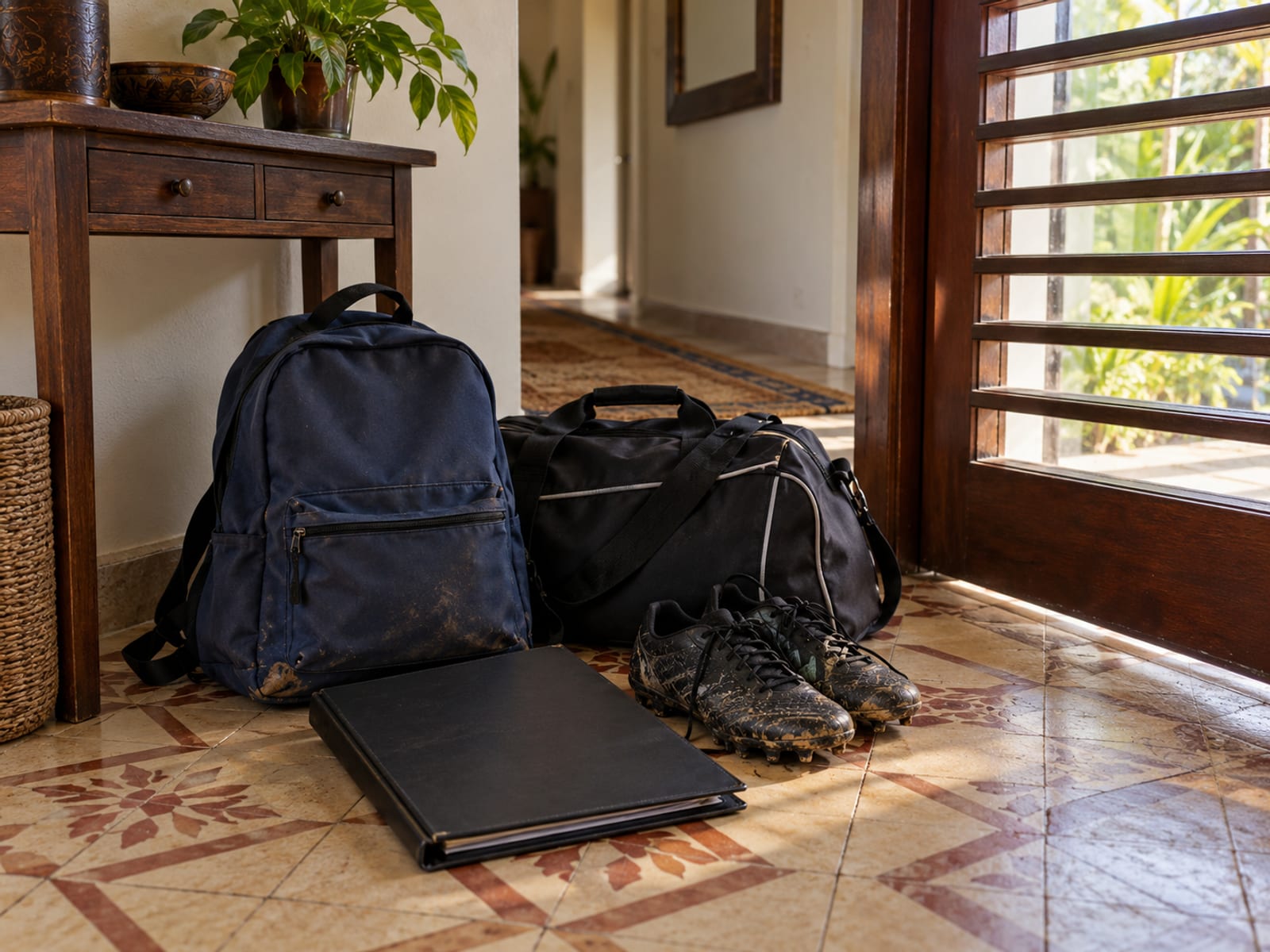
No national standard sets a cancellation deadline for private after-school pickups. Agree the provider's cancellation, absence, delay and alternative-care procedure in writing before the first ride.
What Happens When Kingston Traffic Delays the Pickup?
Kingston's late afternoon overlaps with school dismissal and the work commute. Recent reporting describes chronic congestion on Kingston corridors, and a reported Spanish Town Road disruption turned a usual half-hour trip into one of more than three hours. A scheduled pickup time is therefore not the same as a promise of when your child arrives home.

Practical steps follow from that. Give the provider the activity's release time and not only the school's regular dismissal time. Ask for a pickup window rather than one exact minute. Agree how the driver will tell you about a delay. Make sure the child stays with the school, the activity supervisor or an authorised adult until the driver arrives, and agree a backup contact and a late-pickup procedure before service starts.
Which Is Better: Public Routes, School Buses, Route Taxis or Private Transport?
Each option suits a different child and a different afternoon.
The Ministry of Education and Youth advises parents to show children acceptable routes and bus routes, visit the bus stop with them, make sure they know which bus to take, discourage loitering after school and make sure contracted drivers are trustworthy. A private arrangement lets you build around the activity, which is why many working parents choose it. Our school transportation service is one place to start, and how private school transportation works in Kingston goes deeper on the parent's side.
How Can You Check That a Provider Is Legally Authorised?
You have a right to ask, and a good provider expects the questions. The Transport Authority states that a road licence is required to operate a public passenger vehicle, and that a receipt for an application is not a road licence. It also says PPV drivers must obtain and wear the required driver badge. The Transport Authority distinguishes route taxis, which carry separate-fare passengers, from other licence categories, so ask what category the vehicle falls under.
On seatbelts, the Road Traffic Act 2018 requires seatbelts on applicable vehicles and puts the duty on the driver to cause passengers to wear them. Section 73 requires the driver of a vehicle carrying a child to cause the child to be conveyed in the prescribed child restraint system. The government has described different treatment for licensed public passenger cars and buses, so confirm the current requirement for the vehicle and the child involved, and ask what restraints are in the actual vehicle and how your child will be seated.
What Will It Cost, and What About Half Days and Holidays?
Cost depends on a few things you can control: the number of days per week, the distances involved, the number of stops, and waiting time at the lesson. A driver who waits for a lesson to finish uses more time than one who drops and leaves. Ask for a written price that shows what it covers. One Portmore operator's published listing, for instance, offered weekly and monthly packages and one-way or two-way travel, which shows how arrangements are commonly structured; the figures belong to that operator and should be treated as historical unless reconfirmed.

Published terms differ on half days, examination days, teacher-training days, holidays and school closures, so ask the provider to state each one in the agreement. Ask also about absence notices, make-up rides, whether a seat is reserved or the ride is on demand, and whether an unused ride is still payable.
Frequently Asked Questions
How long are school hours in Jamaica?
Jamaica's Education Regulations, 1980 set minimum instructional time, not one start and finish time. Primary, all-age and secondary schools generally provide at least five teaching hours a day, or four and a half where a shift system operates, with a break of at least 30 minutes. Confirm your child's dismissal time with the school.
Do you have to pay for your kids to go to school in Jamaica?
Public education is provided through the government school system, but parents may still pay for uniforms, books, meals, activities, examinations, transport and extra lessons. Private schools charge fees. Transport and after-school activities are separate unless the school or programme includes them.
Can one driver collect children from different schools?
It may be possible, depending on the provider, the route and the release times. Ask the provider directly whether it can manage multiple schools and staggered release times.
What if the lesson is cancelled after my child has left school?
Agree this in advance. Decide where the child waits, who is called and whether the driver may take the child to an alternative destination.
When do government extra lessons run?
The government programme has run Monday to Friday from 5:30 p.m. to 7:45 p.m. Other programmes run on Saturdays or during school breaks, so always check the specific timetable.
Moving Forward
With the days, finish times, handover rules and change plan on one page, an after-school pickup stops being a daily scramble. The page also gives your child's school and activity leader what they need to release your child to the right person at the right time.
Once the first week runs smoothly, you can adjust. Add a rule for exam weeks, update the sheet when the term changes and review the plan with the provider each term. Keeping the same details in everyone's hands is what keeps the arrangement steady. If your child also needs a ride at the start of term, when to book back-to-school transport covers timing.
If your child needs a regular pickup in Kingston, D-JARPS Transport Solutions can go over your schedule with you, give you the price and confirm the arrangement before the first day. We run our own vehicles in Jamaica, and trips are arranged by phone from 6 AM to 10 PM every day or through the trip request form. Send us your days, finish times and pickup points through our contact page.