Travel guide
Exam Season Transport: Getting Students to CSEC and CAPE on Time
This guide may contain affiliate links. If you buy or book through one, we may earn a commission at no extra cost to you. Read our affiliate disclosure.
A CSEC or CAPE paper does not wait for a late bus. If your child, or a group of students you are responsible for, has a timetable in hand and the usual school run feels too risky for an exam morning, you are right to plan this one separately. CSEC exam day transport comes down to a handful of answers you can settle days ahead: where the paper is sat, which session it falls in, when the centre expects candidates, and what happens if the first plan fails. Once those answers are written down, the trip itself is simple. The sections below take you through each decision in the order you will meet it, so you finish with a one-page plan you can hand to a driver.
Confirm the Paper, Session, and Examination Centre
Everything else depends on three facts: the paper, the session and the centre. For school-based candidates, CXC's Handbook for Principals says individual timetables show candidate numbers, dates and times, and they are normally issued about a month before the examinations. The published CSEC timetables identify each paper as a morning or afternoon session. They do not give one start time for every subject, so the candidate's own timetable and the centre's instructions control your plan.
For the 2026 May to June sitting, the CSEC written papers ran from May 4 through June 9, and the CAPE timetable showed oral examinations beginning on April 13 with written papers in May and June. Paper lengths range from about one hour to three hours, and some papers are for private candidates only. Where the timetable requires it, a 15-minute break is allowed between papers.
The centre is the detail families most often assume. It may be the student's own school, but it may not be. Confirm the address, the entrance candidates should use and the arrival time the centre expects. If a student has two papers in one day, ask whether they stay at the centre between sessions and how food and supervision are handled, because that decides whether you need one trip or two.
Why Ordinary School Transport May Not Be Enough on Exam Day
A regular school route is built around a regular school day. Exam days break that pattern in several ways, and a route that works every Tuesday can quietly fail on the morning of a paper.
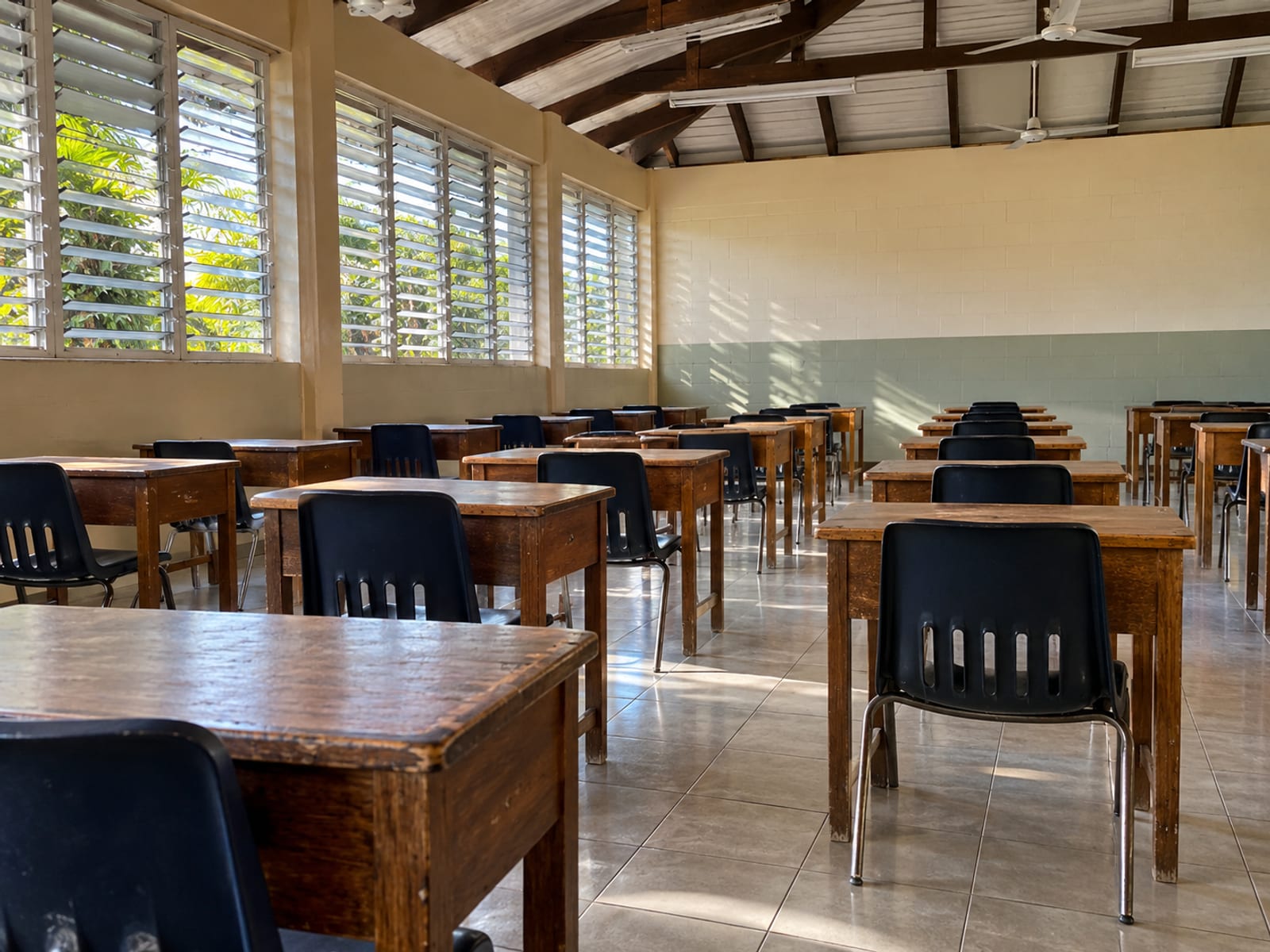
The first problem is timing. CXC's guidelines to candidates state that a candidate who arrives after the examination has started does not get extra time to make up what was lost, and the paper must end at the prescribed time. A bus that is ten minutes behind on an ordinary morning is an inconvenience. On an exam morning it can cost marks.
The second problem is scope. Private school transport arrangements vary by operator. Some cover morning pickup only, some afternoon drop-off only, and some cover both, usually at agreed stops rather than from every door. A regular school-day arrangement may not automatically cover a different examination centre, a later or earlier start, an afternoon paper, early dismissal, a student staying at the centre between papers, or a special pickup after the exam. It may also not run on study days or days when the school offers no ordinary transport.
The central point is simple: an everyday school transport arrangement and an exam-day arrangement may not be the same service. Ask for the exam-day trip by name, and if you are still comparing options, government school buses and private school transport are weighed against each other in a separate guide.
Build an Exam Morning Transport Plan With a Backup
Work backward from the time the centre expects candidates. That arrival time, not the usual school bell, is the anchor for the whole morning.

Allow for pickup, boarding, traffic, parking, the walk from the vehicle and finding the right room. Choose an earlier departure than the normal school trip, and try the route on a weekday morning at a similar hour before the first paper so the timing is based on what you saw rather than what you hope. Agree a fixed pickup point that is visible and easy to reach, and decide how the driver will tell you if the vehicle is delayed.
For afternoon papers, check whether morning school transport returns in time or whether a separate trip is needed. Do not rely on an unconfirmed switch between buses or taxis when the candidate has a fixed start. Every change of vehicle is one more place where the plan can slip.
Rain, Flooding, Traffic, and Route Disruption in May and June
May and June fall in a part of the year when rain can disrupt Jamaican roads. ODPEM notes that heavy rainfall can cause flooding and that low-lying coastal areas, river flood plains, areas near gullies and landslide-prone areas are the most exposed. Ordinary school and work peaks add to the pressure, and JUTC's route guide describes weekday peak operations and says route data is indicative and should be checked for current times.
The practical steps are small but they matter:
- The evening before: Check weather and road advisories, and again early on the morning of the paper.
- Route choice: Avoid roads with known flooding or landslide exposure when a safer route exists.
- Leave early when rain is forecast: Extra minutes cost little; a missed start costs a great deal.
- Never cross floodwater: ODPEM warns drivers not to drive through water covering a road, because the road may have been washed away or rising water may move the vehicle. Students should not wade through it either.
- Backup route and contact: Keep a second way to the centre and a second person to call.
Ask any provider how the route would change if a road became unsafe, and whether they will tell you or the school if the vehicle cannot complete the trip.
Compare Public Routes, Rural School Buses, Route Taxis, and Private Transport
Families usually weigh four options, and each fits a different situation. The table sets out what each offers and what to check before relying on it for a paper.
On the school bus question, the answer is not a simple yes. JIS reported free rides for students on JUTC buses and National Rural School Bus Programme units from September through October 2025, with the rural school bus fare expected to be J$50 per trip per day afterwards. The Office of the Prime Minister reported in January 2026 that the introductory free service was ending and that student transportation cards would become mandatory from February 1, 2026. Confirm the current fare, card requirement, route and operating days before you depend on a scheduled service for an exam. Parents also describe long waits at stops and uncertainty about whether new routes reach their community; these are individual accounts rather than a measure of how the service performs, but they are good reasons to keep a backup.
What to Put in Writing Before the First Trip
If you hire a private operator, a short written agreement protects the exam day. Operator terms differ, so treat each operator's terms as that operator's own rule rather than a national standard. One Jamaican school bus registration form, for example, asks parents to choose morning pickup only, afternoon drop-off only or both, to give addresses and preferred pickup windows, and to name the people allowed to receive the student.
For an exam trip, ask the provider to confirm in writing:
- The student and contacts: Full name, emergency contacts and who may collect the student after the paper.
- Pickup and drop-off: The exact points and an acceptable time window for each, and whether the service is door to door or stop based.
- Which days: Whether exam days, practical examinations and study days are covered, and whether exam-day transport is included or arranged separately.
- Late and missed pickups: What happens if the student is not at the stop, and what happens if the adult is late afterwards.
- Changes: How a change of timetable or centre will be passed on.
- Breakdown and weather: What the provider does if the vehicle fails, a road floods or the driver is ill.
- The driver: Name and a contact method.
- Money: Whether missed trips are charged, plus the cancellation and refund terms.
Ask for the pickup times to be written down as well. A message that states the pickup time and the centre address is far more useful on the day than a spoken promise.
Jamaican Licensing, Child Restraints, and Passenger Safety
A paying passenger vehicle in Jamaica falls under the Transport Authority, which states that a public passenger vehicle needs the appropriate road licence. Route taxis, for instance, must carry red PPV plates, route markings, an Authority identification card and a driver badge, and the driver must hold a PPV driver's licence. The Authority's FAQ adds that a receipt for a licence application is not a road licence, and that a PPV driver badge is valid for two years.

So, when you speak to a private operator, ask which licence covers the vehicle and whether the driver wears the Authority's badge. The question is fair, and a provider that takes the exam seriously will answer it plainly.
On restraints, the Road Traffic Act 2018 requires the driver to cause passengers to wear seatbelts where applicable, and requires the driver of a vehicle carrying a child to cause the child to wear or be conveyed in the prescribed child restraint system. The Road Traffic Regulations 2022 cover belt anchorages, child restraint systems, booster cushions and booster seats, and JIS has reported that the rules for licensed public passenger cars and buses differ by age and vehicle type. For a younger sibling riding along, ask which restraint suits the child's age and size, and do not assume any vehicle carries one.
Costs, Extra Trips, and Questions to Ask Before Booking
There is no single price for an exam-day trip. The cost depends on the vehicle, the distance, the time of day, the number of passengers, any waiting, and any extra trips. Waiting matters most when a student sits two papers in one day or when you want the vehicle ready for the pickup afterwards.
Before you agree to anything, ask the provider these questions:
- Is the centre the student's usual school, and does the quote reflect the actual address?
- Does the price include waiting, a return trip, a second paper, parking, tolls or a change of centre?
- Who is the backup if the vehicle or driver is not available?
- Are holidays, half days, exam days and absences covered in a monthly or term arrangement?
- What happens if the student is late to the pickup, or the adult is late afterwards?
If you are still choosing between providers, questions to ask before hiring school transport covers the wider checklist.
Prepare the Student and Prevent the Next Transport Problem
A good plan works best when the student knows it too. Walk through the morning together the evening before: the pickup time, the driver's name, the centre entrance and who will be waiting afterwards. Pack the timetable, ID, required stationery, water and emergency contact details in advance so the morning is not spent hunting for them.
After the first paper, review what happened. Did the pickup time give enough room? Did the driver communicate? Was the meeting place clear? Adjust before the next paper, and share any change with everyone involved. Schools can help by sending the list of students, centres and sessions to a transport provider early, and a calm, well-briefed student arrives ready to write rather than ready to worry.
Remember that the school year also shapes planning. The Ministry's published calendar describes a September 1 to August 31 year, and Education Regulations set minimum teaching hours of at least five hours on an ordinary school day, or four and a half in a shift school, with a break of at least 30 minutes. That is a minimum for teaching, not a national start and finish time, so exam arrival and release times always need confirming with the school or centre.
Frequently Asked Questions
Is the school bus free in Jamaica?
Not generally. Student rides on JUTC buses and National Rural School Bus Programme units were free from September through October 2025 as an introductory provision. In January 2026 the Office of the Prime Minister reported that the free service was ending and that student transportation cards would be mandatory from February 1, 2026. Confirm the current fare, card, route and operating days before relying on a scheduled service for an exam.
How long are school hours in Jamaica?
The Education Regulations require at least five hours of teaching on a normal primary, all-age or secondary school day, or at least four and a half hours in a shift school, plus a break of at least 30 minutes. These are minimums, not a universal start and finish time, and exam centres may use different times from ordinary days.
What time should we leave for a CSEC paper?
Work backward from the arrival time the centre gave the candidate, then add time for pickup, traffic, parking and the walk to the room. Test the route on a weekday morning at a similar hour, and leave earlier when rain is forecast.
What if the student's exam centre is not their school?
Plan the trip to the centre's address, not the school gate, and confirm the entrance and arrival time with the centre. Tell your transport provider the exact address in writing.
Who should collect a student after the paper?
Name the person in advance, and if you use a provider, give the driver that name and agree what happens if no authorised adult is there.
What should I send a transport provider to get a written quote?
Send the student's name, the centre address, the paper dates and sessions, the pickup point and time window, the pickup after the paper, and any second paper on the same day.
What This Means for You
With the centre, session, pickup time, backup, contact person and after-paper pickup on one page, an exam morning stops being a gamble. You are no longer hoping a regular route will do the job; you are working from the candidate's timetable and a written arrangement.
The same page makes next term easier. Update it when the timetable changes, and the next paper starts from a plan that already works.
If you would like a driver for the exam days, D-JARPS Transport Solutions runs its own vehicles in Jamaica and arranges transport anywhere on the island as each trip needs it. We go over the details with you, give the price and confirm the trip before the day. Trips are arranged by phone from 6 AM to 10 PM every day or through the trip request form, so send us the centre address, the dates and sessions and your pickup points through our contact page. For regular term-time pickups, our school transportation service is described in full.