

Travel guide
Wheelchair-Accessible Transport in Jamaica: What to Ask First
This guide may contain affiliate links. If you buy or book through one, we may earn a commission at no extra cost to you. Read our affiliate disclosure.
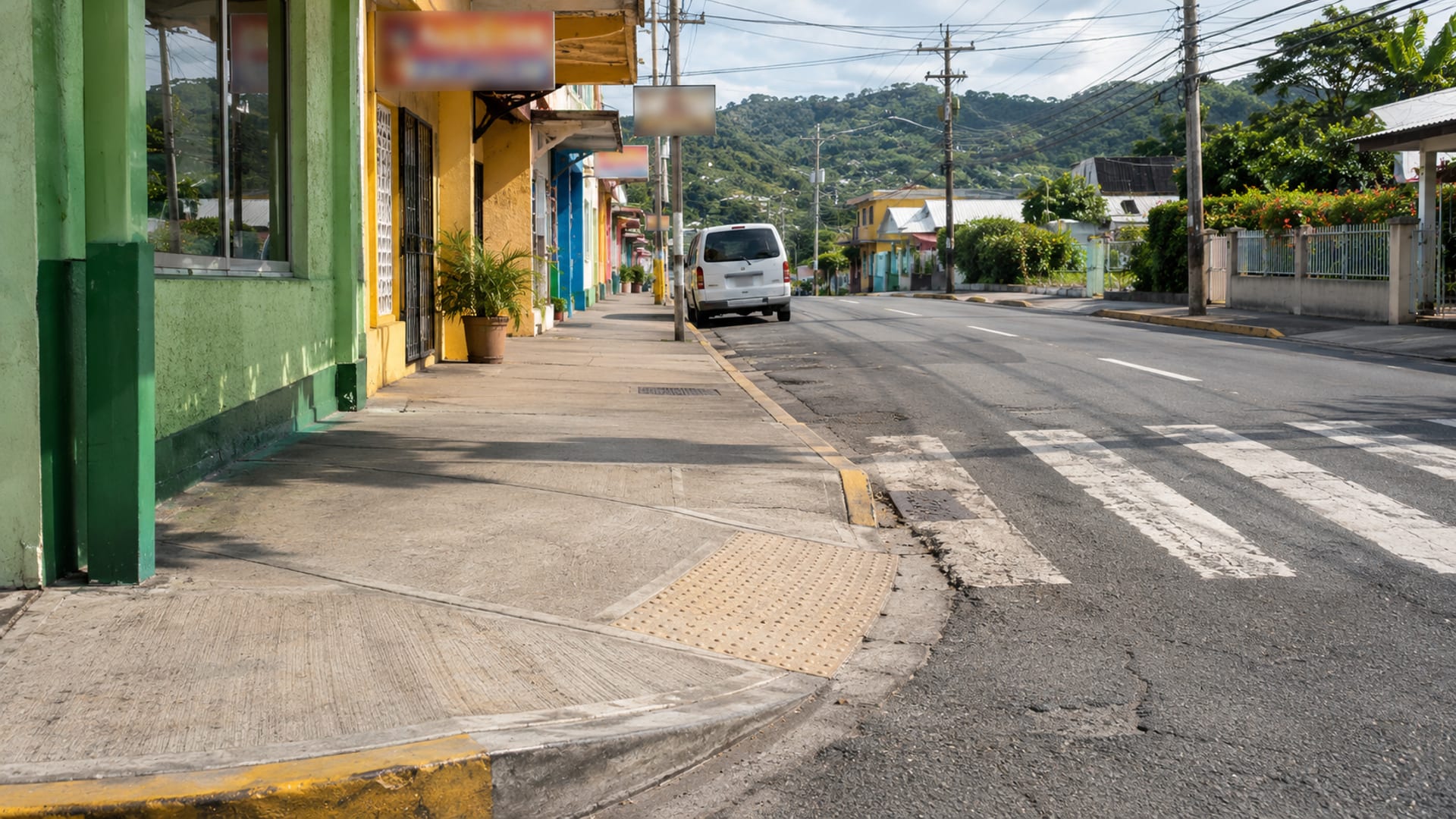
A ride that looks easy to book can fall apart at the curb if the vehicle cannot take your chair. In Jamaica, "wheelchair accessible" can mean a van with a lift, a car with a folding chair in the boot, or only a driver who is willing to help you transfer. Those are very different rides, and a booking page rarely says which one you are getting.
If you use a wheelchair or mobility scooter, or you are planning a trip for someone who does, a few questions asked before you pay will tell you most of what you need. They cover whether you stay seated in your chair, how the chair is held in place, and who checks it before the vehicle moves.
The sections below take those questions in the order you will need them. First you describe the chair, then you put the right questions to an operator, then you line up the airport, the route and the return trip.
Why Wheelchair Transport Questions Need Answers Before Arrival
Most trouble with accessible transport shows up at the moment of pickup, when it is too late to change anything. A van arrives with a ramp that is too steep for a manual chair, or a doorway that is too narrow for a powered one, or a driver who expected you to walk a few steps. Asking in advance moves all of that to a calm phone call or message at home.
The reasons behind the questions are practical. Whether you can stay seated decides what kind of vehicle you need. The size and weight of the chair decide whether it fits through the door and whether a ramp or lift can take it. The way the chair is secured decides how safe the ride is on a winding road with sudden stops.
There is also a simple fact about the island's roads that makes securement matter. The US State Department advisory for Jamaica describes potholes, inadequate signage and poor road markings, and warns that heavy rain can make roads dangerous or impassable. A chair that is only parked in a van, with its brakes on, can move on a road like that.
So, before you compare operators, it helps to know your own answers. The next section shows you how to describe the chair and the ride you need.
How To Describe The Wheelchair And Vehicle You Need
An operator can only answer you well if you describe the chair clearly. Write the details down once and send the same description to everyone you ask. The United Spinal Association advises travellers to ask about ramp width and steepness and whether the vehicle fits their equipment, so you need your own measurements ready.
Your description should cover these points:
- Type of chair: manual, powered, or a mobility scooter.
- Folded size and weight: if the chair folds, how large it is folded and how heavy it is, including any batteries.
- Open size: width and height when you are seated in it, since this is what must pass through the doorway.
- Removable parts: footrests, cushions or a headrest that come off and need space of their own.
- Transfers: whether you can move to a vehicle seat, with or without help.
Once you have that, you can choose between the two arrangements. Both are common, and neither is better in every case.
The second arrangement needs more of the operator. Philability's guide to wheelchair-friendly car travel notes that a chair carried in a vehicle needs a proper securement system and that the passenger needs a separate restraint. A chair's brakes alone are not a vehicle securement system.
What To Confirm With An Operator Before Paying
Think of the operator's answers as a short list you collect before you hand over any money. Philability's guide points out that "wheelchair accessible" can mean different things from one operator to the next, which is why the details matter more than the label. Accessible road travel guidance from a11y.enabled.in lists much the same questions.
A taxi that suits you may look like a van or small bus with a rear or side ramp, a platform lift, enough height and width inside, a level area for the chair, tie-downs and a passenger restraint. Some vehicles carry the passenger in the chair. Others carry only a folded chair after the passenger transfers to a normal seat. You will not know which until you ask.
Ask for the answers in writing, by message or email, so you have something to refer back to if the vehicle that arrives is not the one you were told about. A good operator will not mind giving them. If an operator cannot name the vehicle or describe how a chair is secured, that tells you something too.
Airport Assistance And The First Transfer
For many travellers the first ride is from the airport to the hotel, and that is where two separate arrangements meet. Help inside the airport comes from the airline and the airport. The vehicle outside is booked on its own.
The Jamaica Tourist Board airport page for Sangster International lists wheelchair assistance and accessible restrooms among the airport's passenger facilities, and MBJ Airports publishes contact details for general assistance, with listed hours that you should confirm before you travel. Norman Manley International Airport, which serves Kingston, is covered by each airline's own assistance procedures.
Airline assistance is requested when you book or manage your reservation. American Airlines says passengers can request wheelchair assistance to and from the gate, between connecting gates and to baggage claim, and can tell an airport team member on the day of travel. It asks you to say whether you need help to the aircraft door or your seat, and to give wheelchair dimensions and battery information where they apply. Other airlines have their own rules, so confirm with the airline that is flying you.
A common question is whether wheelchair users get priority boarding. Practice varies. American Airlines describes pre-boarding, deplaning and airport assistance for mobility devices, while Caribbean Airlines lists priority boarding as a benefit of certain fares and deals with wheelchair assistance separately. Ask the operating airline what it will do for you.
What none of this tells you is whether the vehicle at the curb can take your chair. That has to be arranged and confirmed on its own. If you are arriving with an older relative, the arrival-day transport guide for an elderly parent covers the timing of that first ride, and the list of what to tell your driver before you land is a useful model for the details you send.
What Changes The Route, Timing And Cost
Accessible rides usually take longer than ordinary ones, and the plan has to allow for it. Boarding and unloading take time, especially if tie-downs are used. Waiting at a toilet stop or a long attraction visit adds more.
Several things can change a day's plan. The Jamaica Tourist Board travel alerts page publishes current road and attraction status after major weather events, and the UK Foreign Office advice for Jamaica says protests can disrupt traffic and public transport and that hurricanes can cause flooding, fallen trees and blocked roads. On a normal day, plan for:
- Traffic: in Kingston, Montego Bay and other town centres, especially at school and commuting times.
- Weather and road surface: heavy rain, potholes and narrow, winding or poorly lit rural roads.
- Flights and airport queues: delayed flights, slow baggage and assistance queues.
- Holidays and closures: attraction opening days, public holidays and temporary closures.
Travel times are estimates, not promises. The Jamaica Tourist Board's travel agent reference guide lists Montego Bay to Ocho Rios at 107 kilometres, or 67 miles, and about 1.5 hours. That is a planning figure from a 2014 guide. Your real time depends on the starting point, traffic, stops and how long loading takes.
Cost follows the same factors. The price an operator quotes can depend on the vehicle, the hours, the route, the waiting time and any extra stops. Ask for a quote that names the vehicle, the pickup and drop-off points, the hours and what waiting costs, so that you can compare like with like.
Choosing Between A Driver, Taxi, Bus And Self-Drive
Your choices come down to how much control you want and how much equipment you need. A driver for the day gives you one vehicle, one driver and a planned return, which can mean fewer rounds of boarding and unloading. The questions that matter are whether that exact vehicle is accessible, whether the driver stays with it, how waiting time is charged and whether it fits the chair, your companions and your luggage.
Licensed taxis are the Jamaica Tourist Board's advice for airport transfers and sightseeing, as set out on its public transportation page. A licensed taxi is not automatically wheelchair accessible, though. A standard taxi may suit a passenger who can transfer and has a folding chair. A passenger who stays in the chair needs confirmation of the loading method and the securement system. The Transport Authority lists taxi associations by parish, which is a place to start when you want to find who operates where you are staying.
Buses are a third choice. The Jamaica Urban Transit Company says it runs about 200 routes across Kingston and nearby areas. The Disabilities Act, covered below, commits the government to accessible public passenger vehicles, but you should confirm the boarding equipment on the specific route before relying on it for a trip with a deadline.
Self-drive gives you control over time and route, and it also gives you left-side driving, parking, road conditions, navigation and the job of loading the chair yourself. The CDC travel notes for Jamaica and the government advisories both warn about road hazards. A rental car also needs enough space for the chair and any transfer equipment.
Planning Attractions, Meals And The Return Trip
A day out works best when you treat each stop as its own accessibility question. Name each place you want to visit, then confirm its entrance, toilets, parking and drop-off arrangements directly with that place for your date. A transport operator cannot answer for a gate or a path.
A workable order for the day looks like this:
Group stops that are in the same area, so you spend your day at the attraction instead of on the road. The tourism board's reopening page lists attractions by resort area and status, which helps with first-pass planning. It does not describe wheelchair routes or admission times, so it is a starting point only.
Public bodies publish their own hours. The Urban Development Corporation attractions page lists attractions it runs, with opening hours and admission subject to change, and the Montego Bay Civic Centre page lists hours of Tuesday to Friday 9 a.m. to 5 p.m., Saturday 10 a.m. to 3 p.m. and Sunday noon to 5 p.m., with bookings through the St. James Parish Council. These can change, so confirm them for your date.
Jamaica Specifics To Confirm Before The Day
Jamaica's Disabilities Act was passed in 2014 and came into effect on February 14, 2022. The Jamaica Information Service describes its transport provision as the right to access public passenger vehicles, saying the Government "will ensure the provision of public passenger vehicles that are accessible to and usable by PWDs." The JIS report on the Act coming into effect adds that it aims to protect equal rights and prevent discrimination.
A few other local points are worth confirming. The Jamaica Tourist Board recommends licensed taxis and minibuses for airport transfers and excursions, and visitors should verify the driver's credentials. The Jamaica Constabulary Force returning residents booklet advises keeping luggage out of plain sight when it is being moved from the airport.
For a wheelchair user, that means keeping the chair and any essential medical equipment with you where possible, confirming the vehicle before departure and carrying the operator's phone number. Allow extra time at both ends for boarding and unloading.
Preventing Problems On The Next Transfer
Most problems come from one of three gaps: the vehicle is not what was described, the details were never written down, or nobody owned the pickup. You can close all three before the day.
Before each ride, send your chair description again, name the pickup and drop-off points, and ask for the vehicle make and model and the securement method in writing. If a vehicle is replaced at the last minute, the replacement should meet the same description, so ask what the operator does in that case and who to call.
On the day, check the securement yourself before the vehicle moves, and ask who has checked it. Keep the operator's number where you can reach it, and give the driver the same details your companion has.
If any of those answers surprised you, that is a good sign the questions are doing their job. Take the ones you missed back to your list before you book.
Frequently Asked Questions
How do I get from the airport to the hotel in Jamaica if I use a wheelchair?
You can use a pre-arranged private transfer, a licensed taxi or another airport transfer service. Confirm the vehicle type, the ramp or lift, the chair capacity, luggage space and any help with boarding before you book, and get the answers in writing.
How do you transport someone in a wheelchair?
There are two main ways. The passenger transfers to a vehicle seat while a folding chair is stored safely, or the passenger stays in the chair while a ramp or lift loads it into a vehicle with tie-downs and a separate seat belt.
What does a wheelchair-accessible taxi look like?
It may be a van or small bus with a rear or side ramp or a platform lift, enough interior height and width, a level area for the chair, tie-downs and a passenger restraint. Ask for the make and model, doorway size, interior measurements and the ramp or lift capacity.
Do wheelchair users get priority boarding?
Airline practice varies. Request assistance when you book and confirm the boarding procedure with the airline that operates your flight.
Can I stay in my chair during an airport transfer?
Only in a vehicle fitted with a ramp or lift and securement equipment. Ask the operator whether that applies to the exact vehicle that will collect you.
Final Thoughts
A good accessible ride starts with a clear description of your chair and a short list of questions: can you stay seated, how is the chair secured, who checks it, and what room is there for a companion and luggage. Airport assistance and the Disabilities Act matter, but neither one confirms the vehicle that is coming for you.
Getting those answers in writing before the trip means fewer surprises at the curb and a day that runs closer to your plan. Confirm each attraction's entrance, toilets and drop-off access with the attraction itself.
At D-JARPS Transport Solutions, we arrange transport anywhere in Jamaica as each trip needs it, by phone from 6 AM to 10 PM every day or through the trip request form on our contact page. Send us the chair description, your pickup and drop-off points and your times, and we go over the details, give you the price and confirm the trip before the day. If you are planning an arrival, our airport shuttle service page explains how airport and cruise port transfers are arranged.