Travel guide
Conference and Meeting Transportation in Kingston: A Planning Guide
This guide may contain affiliate links. If you buy or book through one, we may earn a commission at no extra cost to you. Read our affiliate disclosure.
Kingston is confirmed, the venue is booked, and now a spreadsheet of delegates is staring back at you. Some land on the morning flight, others arrive in the evening, a few are staying in New Kingston, and the opening session is downtown. Conference transportation in Kingston, Jamaica comes down to moving the right people between the airport, their hotels, the venue and the evening events at the right time, with one person who can change the plan when something shifts. This guide takes the job in the order you will do it: what to gather before you ask for a quote, how to plan the movements stage by stage, what the options are, what moves the cost, and what delegates need to be told.
Why Does Conference Transport Become a Planning Problem in Kingston?
An organiser who has chosen Kingston soon learns that delegates are not one group. They come in waves by flight, stay in different hotels, work in one venue and eat at others. You must also solve for luggage, late departures, passenger lists and traffic, and decide who answers the phone on the day.
Kingston's conference activity sits in two main zones. The Jamaica Conference Centre is at 14-20 Port Royal Street on the downtown waterfront, and its official site describes conference rooms, caucus rooms, dining, parking, interpretation facilities and event support. New Kingston is a separate zone and a principal hotel and business district. Hotels there and nearby include the Jamaica Pegasus on Knutsford Boulevard, the Courtyard by Marriott on Park Close, the Courtleigh Hotel and Suites, the AC Hotel Kingston on Lady Musgrave Road, Terra Nova All-Suite Hotel on Waterloo Road, R Hotel on Renfrew Road and Altamont Court Hotel. ROK Hotel Kingston, at 2-4 King Street on the downtown waterfront, says the Jamaica Conference Centre is two blocks from its door. Because the venue and the main hotel district are separate, build the shuttle plan from confirmed road routes and loading points and not from hotel names alone.
How Do You Build the Delegate Movement Plan Before Booking Vehicles?
Before anyone gives you a price, collect the information they need. Without it, any quote is a guess.
Then divide the event into four operating periods and write a plan for each.
Appoint one transport lead, one venue-side contact and one provider dispatcher, and route every change through them. Our event shuttle planning guide covers headcount and return runs for larger gatherings.
How Do You Match Hotels, Venues and Pickup Points to the Real Routes?
Walk the route on a map and then on the ground. Ask where exactly a vehicle can load delegates at each hotel and at the venue. Find out whether the pickup point sits inside a security perimeter or on a public road, and whether a full-size vehicle can turn, wait and leave safely. Check that evening venues are not in a different traffic or security zone.
Published distance examples are only that. A 2026 conference accommodation page lists some hotels as a one-minute walk apart and others as a five-minute drive, but those are the organiser's own estimates for that event and not universal travel times. Portmore is across the causeway in St. Catherine, a major residential and employment zone, and some delegates and staff may come from there, so ask whether any route crosses the Kingston to Portmore causeway at a peak hour.
What Works Best for Arrivals, Shuttle Loops, Evening Events and Departures?
There are four main ways to move delegates: one coordinated provider for everything, scheduled shuttle loops, individual transfers, or a mix. One provider keeps a single contact and suits many delegates sharing fixed movements. Shuttle loops fit the hotel-to-venue runs. Individual transfers suit delegates who arrive on unusual flights. Most events end up with a mix, such as coordinated airport waves and a fixed loop between the hotels and the venue.
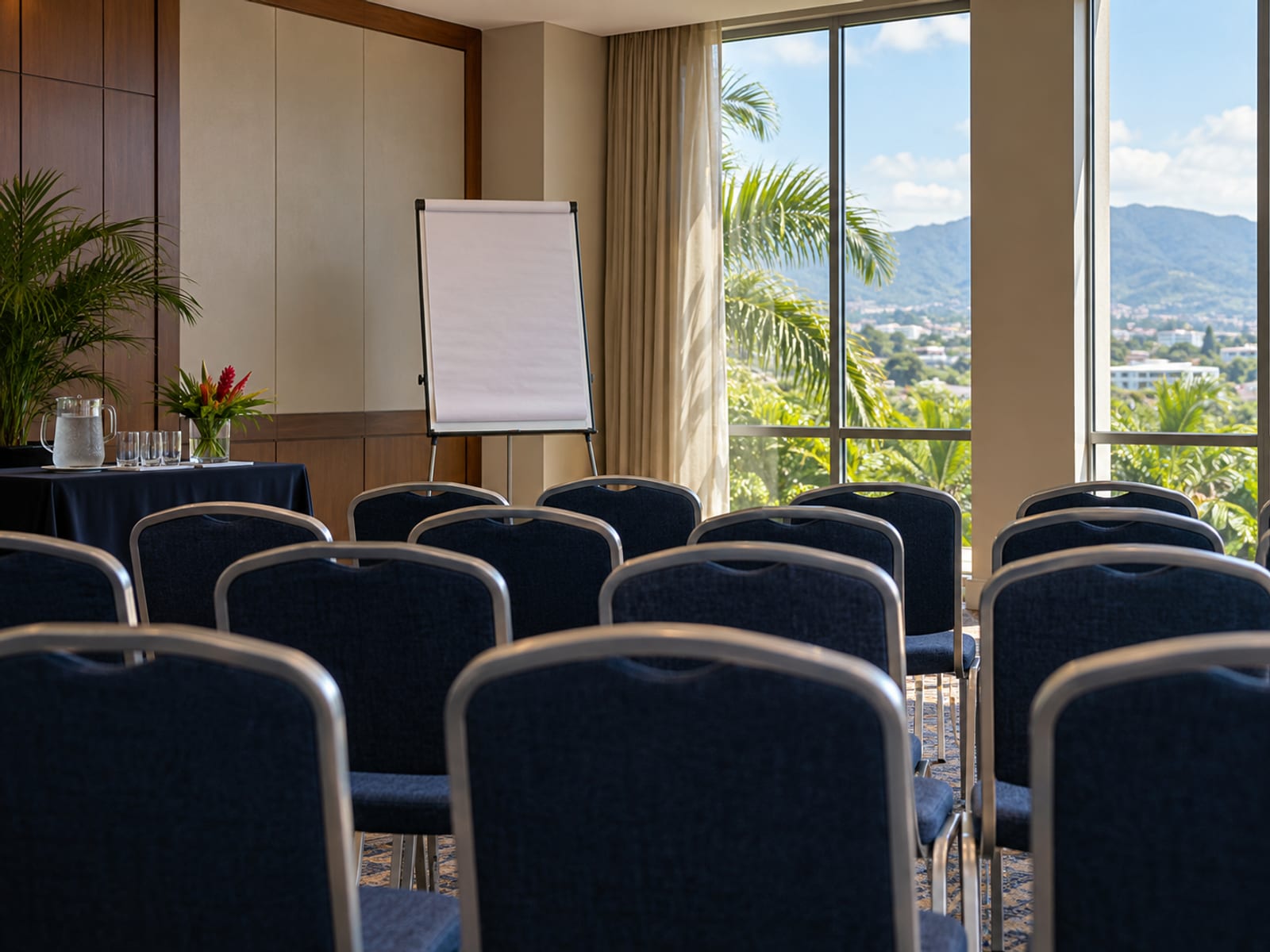
What are the different types of transportation available in Jamaica? On the road, the main options are JUTC buses, route taxis, hackney carriages, contract carriages, rental cars, private transfers and chartered vehicles. The Jamaica Tourist Board separates private charter taxis from route taxis, and the Transport Authority defines a contract carriage as a vehicle hired as a whole under an agreed rate or sum.
How do tourists get around in Jamaica? Commonly through pre-booked private transfers, charter taxis, hotel or airport shuttles, rental cars, route taxis, public buses and intercity coaches. The Tourist Board identifies Half Way Tree Transport Centre as a major Kingston interchange. Route taxis follow set routes and may need changes, and public buses are a poor fit when delegates must reach a fixed venue at a fixed time, so book point-to-point transport in advance for the core movements.
What Drives the Cost of Conference Transportation?
How much does a personal driver in Jamaica cost? Prices vary by operator, vehicle, duration, route, passenger count, airport or hotel location, waiting time and whether the booking is point-to-point or a full-day chauffeur arrangement. Operators publish their own figures. Each below is that operator's own, in US dollars, and none is a national tariff.
For a conference quote, the numbers that matter are your dates, routes, passenger numbers, vehicle type, number of trips, waiting periods, evening movements, airport details and the standby cover you need. Invoices may be based on trips, vehicle-hours, passengers or an agreed contract, and the agreement should say which. Ask whether tolls, waiting, parking, taxes and overtime are in the price.
Should You Choose Contracted Shuttles, Allowances or Individual Travel?
Compare the options on the same terms.

- Contracted transport: It offers scheduled service, central coordination, known routes, manifests and one operational contact. The trade-offs are advance planning, minimum charges or contracted hours, less flexibility for individual changes and a need to verify licensing, insurance, replacement cover and actual capacity.
- Transport allowance: It lets delegates choose their own transport and reduces your scheduling work. The trade-offs are inconsistent arrival times, uncertain vehicle standards, reimbursement paperwork and weak visibility of passenger movements.
- Route taxis or app taxis: They suit unscheduled local trips. The trade-offs are variable availability, less control over vehicles, separate receipts and no certainty that a group reaches a fixed session together.
- Company-owned vehicles: They give direct control, but you carry purchase or lease cost, maintenance, licensing, insurance, drivers and replacement capacity.
For delegates moving together on a fixed timetable, a contracted arrangement usually gives the most control. Our corporate transportation page explains how we handle group requests of this kind.
How Do You Protect the Plan Against Traffic, Road Closures and Security Changes?
Kingston event traffic is affected by ordinary congestion, construction, parades, political meetings, carnival routes, waterfront events, police diversions and security perimeters. The Jamaica Constabulary Force's carnival advisory names New Kingston, Half Way Tree, Liguanea, Hope Road, Knutsford Boulevard, Trafalgar Road, Waterloo Road, Eastwood Park Road and East Kings House Road as areas where delays or diversions may occur. A December 2025 advisory reported traffic changes around the downtown waterfront for a fireworks show, a 2025 report described temporary downtown closures for a school parade, and another 2025 report warned of roadblocks around political meetings in Half Way Tree and Cross Roads.
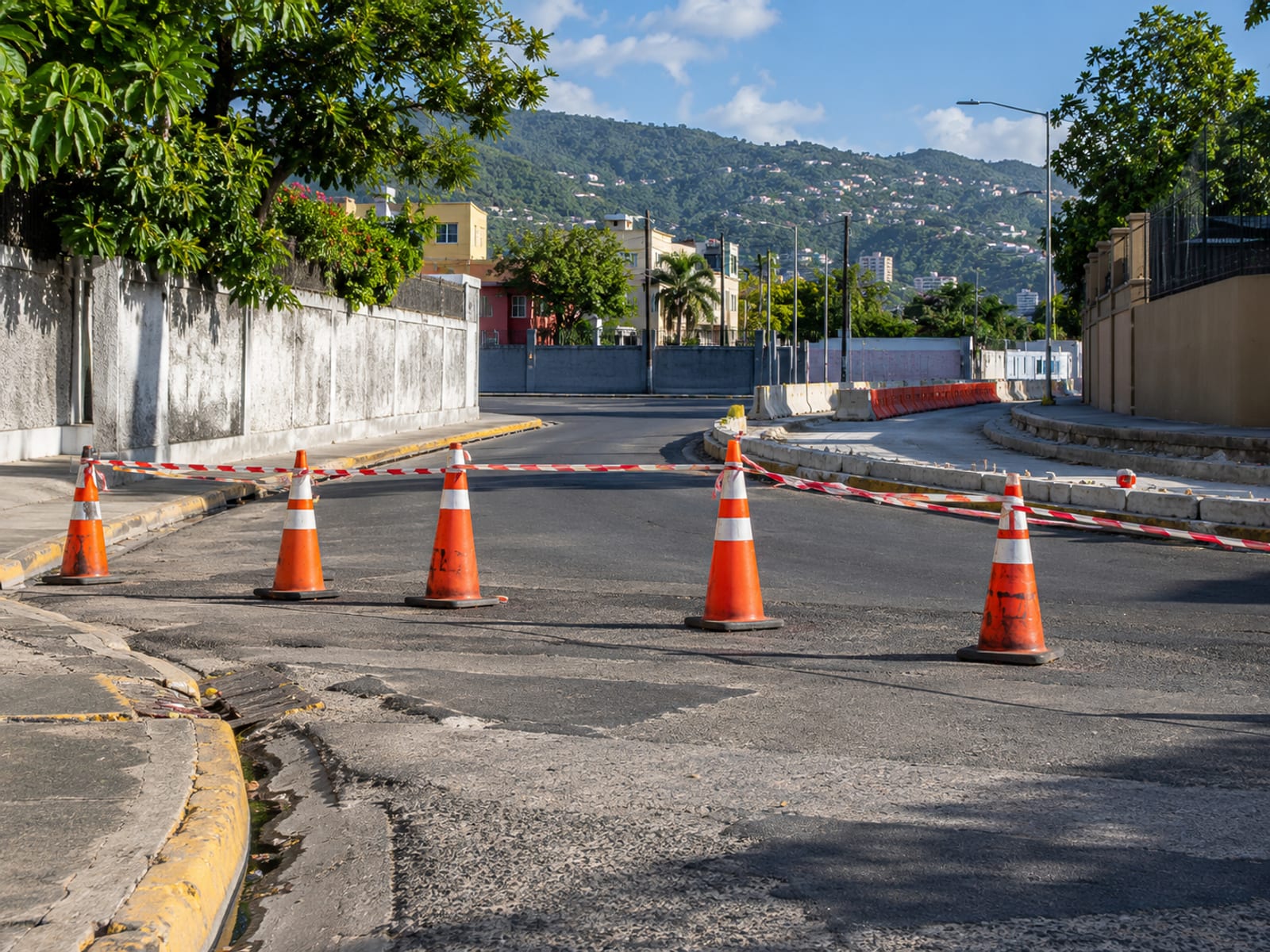
For official or high-profile events, ask the venue and the police liaison about access routes, vehicle staging, credential checks, drop-off points and restricted perimeters. Drivers should follow police instructions on the day. Treat quoted travel times as planning estimates, not promises, and ask what the plan is if police redirect traffic, a session ends late or a flight lands after the last scheduled airport run.
What Should You Confirm With the Transport Provider Before Event Week?
Put the arrangement in a written agreement that covers:
- Event dates, operating hours and every route and location
- Vehicle type, passenger capacity, luggage capacity and number of vehicles
- Driver identification, contact details and dispatch and escalation contacts
- Who owns the passenger manifest
- Permitted waiting time and how extra hours are treated
- What happens if a vehicle breaks down or is delayed, and replacement standards
- Valid road licence, public passenger vehicle or contract carriage status where it applies, insurance, inspection and driver badge
- Incident, complaint and lost-property reporting, and data handling for names and flight details
- Cancellation and amendment deadlines, rates, taxes, deposits and invoice format
- Who can authorise changes on the day
Ask the provider to show current documents. The Transport Authority says licensed passenger vehicles use red plates and that drivers must wear its identification badge, and it advises passengers to check the badge. Accessibility or special assistance should be written in only if the provider has expressly agreed to provide it. For another look at group airport runs, see our guide to group airport transfers in Jamaica.
What Do Delegates Need in Their Joining Instructions?
Delegates should receive a short, clear page. Tell them:
- The venue name and full address, and the hotel pickup location (not just the hotel name)
- Shuttle operating dates and times, and whether transport is continuous, scheduled or by reservation
- How early to be at the pickup point and how to identify the vehicle or driver
- The name and phone number of the transport desk or event contact
- What to do if a flight is delayed or a shuttle is missed
- Whether luggage is included and whether oversized luggage needs notice
- The final departure procedure and the flight information required
- Whether delegates may use independent taxis or app rides for unscheduled trips
- Any venue access, security, identification or parking instructions
- A reminder to follow police, venue and driver instructions during diversions
- Left-side driving information for anyone renting a vehicle
- The currency and payment method for any transport you do not cover
State plainly that individual arrangements may not follow the conference schedule.
Frequently Asked Questions
What are the different types of transportation available in Jamaica?
JUTC buses, route taxis, hackney carriages, contract carriages, rental cars, private transfers and chartered vehicles are the main road options for delegates in Kingston, along with intercity coaches for longer trips.
How do tourists get around in Jamaica?
Commonly by pre-booked private transfers, charter taxis, hotel or airport shuttles, rental cars, route taxis and public buses. For a conference, point-to-point transport booked in advance is more dependable than route taxis.
How much does a personal driver in Jamaica cost?
It varies by operator, vehicle, duration, route and waiting time. One operator publishes US$450 for a three-hour chauffeur package and US$800 for six hours, which is that operator's own figure and not a national rate.
What should I send for a quote?
Dates, routes, passenger numbers, vehicle type, number of trips, waiting periods, evening movements, airport details and the standby cover you need.
Who should coordinate changes on the day?
One transport lead from your team, one venue contact and one dispatcher from the provider.
Final Thoughts
Conference transport in Kingston works when you gather the facts first, plan arrivals, hotel runs, evening events and departures separately, and name the people who can change the plan. Compare contracted shuttles with allowances and individual travel on control and cost, expect traffic changes, and give delegates clear joining instructions.
A plan you can hand to a provider and to delegates saves time for everyone and leaves your team free to run the conference. It also gives you something to adjust, not rebuild, when a flight is late or a road is closed.
At D-JARPS Transport Solutions, we run our own vehicles and arrange transport anywhere in Jamaica as each trip needs it. Ask us for a quote on your conference movements by calling between 6 AM and 10 PM any day, or send a trip request through our contact page. We go over the details, give the price and confirm the trip before the day.