
Travel guide
How to Check a Driver Is Licensed in Jamaica
This guide may contain affiliate links. If you buy or book through one, we may earn a commission at no extra cost to you. Read our affiliate disclosure.
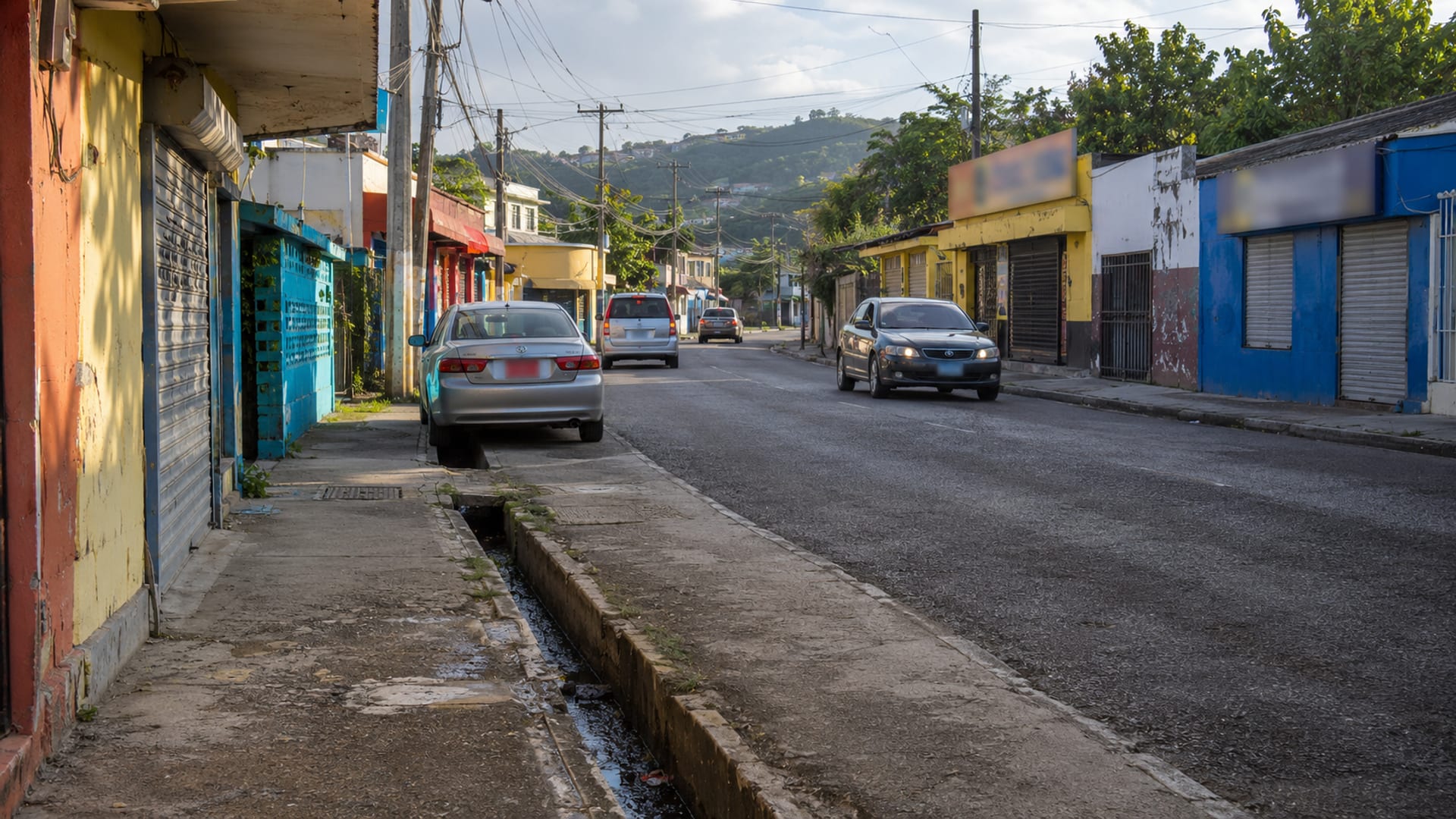
A car pulls up, the driver waves you over, and you have a few seconds to decide whether to get in. Whether you are a visitor with luggage or a local heading home after dark, you want to know that the vehicle is allowed to carry paying passengers. The good news is that most of the answer is visible from the pavement, before the door closes.
Jamaica's Transport Authority sets out what a licensed taxi looks like, and the Jamaica Tourist Board and the Jamaica Constabulary Force (JCF) add their own advice for passengers. Together they give you a short routine: look at the plate, look at the windscreen, look at the driver's identification, and write down what you see. None of it takes more than a minute.
Below, you will find what each marking means, how tourist taxis fit in, what to confirm when you book a driver ahead, and what to do if something looks wrong. If a vehicle fails the checks, stepping away is a sensible and polite choice.
Check These Signs Before You Get In
Start from the outside of the vehicle and work inward. The order matters because the first check takes two seconds and can end the conversation early.
First, look at the plate. The Road Traffic Regulations describe public passenger vehicle plates as having a red background with white letters and numerals, and the Transport Authority says legal public passenger vehicles carry red plates. Second, look at the windscreen for a current Transport Authority sticker. Third, ask to see the driver's Transport Authority badge or identification. The JCF says the badge number is worn above the right shirt pocket, so you know where to look.
If you are being collected for a tourist trip, add one more check: a blue Jamaica Tourist Board sticker on the windscreen and photo identification carried by the driver.
None of these checks is rude to ask for. A driver who runs a legal business usually expects them, and a driver who refuses reasonable identification has told you what you need to know.
What Red PPV Plates and Driver Badges Tell You
PPV stands for public passenger vehicle, the category of vehicle that is licensed to carry people for payment. The red plate is the first and most visible sign. It is an important first check, but it should not be the only one, so pair it with the windscreen sticker, the vehicle markings and the driver's badge.
The Transport Authority lists what it expects on a route taxi, which is a taxi that runs along an established route and may pick up other passengers. The list includes red PPV plates, "Route Taxi" written on the doors, route details on the outside of the front doors, a roof globe with the word "Taxi", a black and white horizontal checked pattern, a Transport Authority Driver Identification Card in the vehicle, an electronic monitoring device, a Transport Authority badge worn by the driver, and a PPV driver's licence held by the driver.
A hackney carriage is a taxi that you hire for your own trip rather than a shared route. The Transport Authority lists red PPV plates, a roof globe with the word "Taxi", a black and yellow checked pattern, the identification card in the vehicle, an electronic monitoring device, the driver's badge, and fare, mileage and charge details printed on the front doors.
The identification card inside the taxi should be in a conspicuous place and show a photograph, the driver's name and the driver licence number. Compare the photo to the person in the front seat. You do not need to read every detail; you are checking that the person, the card and the badge belong together.
How Tourist Taxis, JUTA and JCAL Fit In
Taxis that serve visitors work under tourism licensing as well. The UK government's travel advice recommends Jamaica Tourist Board approved taxis and minibuses for excursions, airport transfers and sightseeing, and notes that many hotels and resorts have assigned drivers who carry photo identification and display a blue JTB sticker on the windscreen. The Tourism Product Development Company says tourism-related service providers need Jamaica Tourist Board licensing, and its licensing material lists categories such as domestic tour operators and contract carriage vehicles.
You may also hear two names at the airport. JUTA is the Jamaica Union of Travellers Association, and JCAL is a separate tourism transport company. At Sangster International Airport, MBJ Airports points passengers to the common authorised airport taxi desk outside Customs, where JUTA and JCAL are the two authorised taxi companies listed. Using a desk like this means someone else has already matched the driver to the vehicle.
Away from the airport, the same idea applies. If a hotel, an airport desk or a licensed operator arranges your driver, ask which tourism licence covers the operator, then check the vehicle and the driver's identification when the car arrives.
What to Confirm Before Booking a Driver
Checking a stranger's car on the roadside is one situation. Booking a driver for a whole day is another, and here you have the time to ask questions before anyone arrives.
Tourism guidance supports arranging private or chartered taxis through your hotel, your accommodation or a licensed operator. Before you agree, ask for the operator's Transport Authority and tourism credentials, and ask what vehicle and driver will arrive. Then pin the plan down in writing where you can, so that nothing depends on memory:
- Pickup and time: the exact place and the departure time.
- Stops: every planned stop, in order, and the expected time at each.
- Waiting: whether the driver waits at each stop or returns later.
- Return: the destination and the latest acceptable return time.
- Group: the number of passengers and the amount of luggage.
The price of a day with a driver depends on the vehicle type, the number of passengers, the route, the duration, waiting time and any extra stops, so a fair quote starts with those details. Ask for the total before you go and keep the message that confirms it.
If your trip starts at the airport, our guide to meeting your driver at Norman Manley Airport covers how a pickup usually works on arrival.
Why Robot Taxis Create Extra Risk
A "robot taxi" is an unlicensed or improperly operated vehicle that carries passengers for payment. The Transport Authority says that operating a public passenger vehicle without the required road licence is unlawful, and that legal vehicles have red plates and current Transport Authority stickers on the windscreen. The JCF notes that such vehicles may be seized, and the Jamaica Information Service explains that seizure can also apply to a vehicle operating outside the category or route it is licensed for.
The practical concern is cover and accountability. In 2017, the Jamaica Information Service reported a minister's warning that unregulated taxis may lack public passenger insurance, may be driven by someone without a valid driver's licence and may not follow the regulations. The JCF has also urged the public to report suspicious or unlicensed operators after a case reported in June 2025.
That does not mean every unlicensed driver intends harm. It means you have no way to tell, and the markings above are how you tell. So, the simple rule is to decline a vehicle that lacks the licence indicators and wait for one that has them. At night, or when you are unfamiliar with the area, an official airport or hotel transport desk takes the guesswork out entirely. Our post on arriving late at an airport in Jamaica gives more detail on that case.
Choosing Between a Private Driver, Taxi, Bus or Rental Car
The right option depends on the trip, and licensing checks apply to most of them.
A pre-arranged driver for the day suits several stops, luggage, airport connections or a fixed return time. You agree the route, pickup, vehicle and waiting arrangement in advance, and you confirm the operator's credentials. A licensed taxi suits a point-to-point ride or a short local trip. Route taxis run along established routes and may carry other passengers, while a private or chartered taxi is more direct and can be arranged through a hotel, an airport desk or a licensed operator.
JUTC buses give scheduled public transport on listed routes, mainly in Kingston and the surrounding areas. The JUTC route guide says it operates about 200 routes and advises that route data and times should be verified, so check before you rely on a time. Buses are generally a weaker fit for several attractions in a day, heavy luggage, late returns or rural sightseeing.
Self-drive gives you control of the clock, but it asks more of you. You need a valid licence, you drive on the left, and official travel guidance warns of poor road conditions, aggressive driving, limited lighting and risks at night. A rental car is not automatically easier for an unfamiliar day with many stops. If you are deciding between the two, renting a car or booking a driver in Jamaica walks through the trade-offs.
For groups, a chartered vehicle arranged ahead is often simpler than several taxis, and our private charters are arranged as each trip needs.
Plan Around Jamaica's Roads, Weather and Attraction Hours
A licensed driver still cannot change the road. Traffic builds in Kingston, Montego Bay, Spanish Town and Ocho Rios; heavy rain can flood roads; and the U.S. State Department warns that night driving can be dangerous, that heavy rain can make roads impassable, and that roads may have poor signs, potholes and markings.
The Jamaica Tourist Board publishes indicative drive times. These are estimates, not promises of arrival:
- Norman Manley International Airport to Downtown Kingston: about 20 minutes.
- Norman Manley International Airport to New Kingston: about 30 minutes.
- Norman Manley International Airport to Ocho Rios: about 90 minutes.
- Montego Bay to Negril: 83 kilometres, less than 1.5 hours.
- Montego Bay to Ocho Rios: 100 kilometres, less than 2 hours.
- Ocho Rios to Kingston: 97 kilometres, less than 1.5 hours.
Traffic, roadworks, weather, stops, queues and the exact pickup point can change these times a good deal, so leave room in your day. Attractions also change their hours and sometimes close. The Jamaica Tourist Board keeps a page of open and closed attractions by resort area, and it is worth confirming each place you plan to visit, including its opening status, entry rules and last admission time, before you tell a driver where to go.
What to Record and How to Report a Problem
Recording the details takes thirty seconds and protects you if anything goes wrong later. The JCF advises passengers to note the vehicle's plate number, colour and make, to tell someone you trust when you board, to share live location where possible, and to be wary of drivers who ask to divert from the planned route.
For a suspected unlicensed public passenger vehicle, the Transport Authority has published a telephone line, a toll-free line, a WhatsApp number and the Travel Pal platform where available; the current details are on the Transport Authority site. Give the plate number, the vehicle colour and make, the location, the route, the time and a plain, factual description of what happened. Keep photographs, messages, booking records and payment evidence where it is safe to do so. For overcharging, the Transport Authority asks for the plate number and route and accepts images or video through its telephone and WhatsApp channels.
A few habits make every ride easier: keep luggage and valuables out of sight, wear a seat belt, decline route changes you did not agree to, and keep enough time and money for the return trip.
Frequently Asked Questions
How do I know if a taxi in Jamaica is licensed?
Look for red plates with white letters and numerals, a current Transport Authority sticker on the windscreen, and a driver wearing a Transport Authority badge. A licensed taxi should also have an identification card on display inside, showing a photograph, name and driver licence number.
What do the red plates on taxis in Jamaica mean?
Red plates identify public passenger vehicles, which are the vehicles licensed to carry passengers for payment. The red plate is the first check, but also look at the windscreen sticker and the driver's badge.
What does a blue JTB sticker mean?
The Jamaica Tourist Board approves tourism taxis and minibuses, and these commonly show a blue sticker on the windscreen. The driver should carry photo identification.
What should I write down before I get in?
Note the plate number, the colour and make of the vehicle, and the driver's details. Share them with someone you trust, and agree the fare and route before the vehicle moves.
Who do I report a suspected unlicensed taxi to?
For immediate danger, call Police Emergency 119 or go to the nearest police station. For a suspected unlicensed public passenger vehicle, the Transport Authority takes reports by telephone, toll-free line, WhatsApp and the Travel Pal platform where available, so give the plate, vehicle details, location, route and time.
Can I rely on forum posts to tell me what is legal?
Forum and community posts describe what other travellers experienced. For licensing rules, check the Transport Authority, the Jamaica Tourist Board and the JCF.
Moving Forward
The routine is short. Check the red plate, the Transport Authority windscreen sticker and the driver's badge; add the blue Jamaica Tourist Board sticker and photo identification for tourist transport; record the plate, colour and make; agree the fare and route; and step away if anything is missing. Those checks work in Kingston, Montego Bay, at the airport and on a quiet road at night.
Running them every time costs a minute and gives you something solid to share with the person who is expecting you. If you would rather have the arrangements settled before you land or leave, a driver booked ahead removes the roadside decision altogether.
At D-JARPS Transport Solutions in Jamaica, we run our own vehicles and arrange trips anywhere in Jamaica as each trip needs, across airport shuttle transfers, private charters, car rentals, school, corporate and event transport. Trips are arranged by phone between 6 AM and 10 PM every day, or through the trip request form on our contact page; we go over the details, give you the price and confirm the trip before the day.