Travel guide
Hiking Groups: Getting to Trailheads in Jamaica
This guide may contain affiliate links. If you buy or book through one, we may earn a commission at no extra cost to you. Read our affiliate disclosure.
The trail is picked, the date is set, and now someone has to get a dozen people to a gate in the hills before sunrise and bring them home again hours later. Hiking transportation in Jamaica rarely fails at the hike itself. It fails at the edges: a vehicle that cannot make the last stretch of road, a driver who does not know the group finishes somewhere else, or a pickup time that left no room for a slow descent. As the organiser, you are the one people will text when the van is not where it should be. A short, clear transport brief sent early can head off most of that. The details below show what to put in it and what to ask back.
Trailhead Transport Needs More Planning Than an Ordinary Day Trip
An ordinary day trip has a place, a time and a return. A hike adds a start that may be in darkness, a road that may not suit every vehicle, and an end time nobody can fix in advance. The Blue Mountain Peak route is the clearest example. Visit Jamaica describes a start around 2:00 a.m. and roughly four hours of climbing to the summit, so the vehicle has to be there while most people are asleep.
The group also tends to arrive at the trailhead with bags, water, lights, rain gear and warm layers, which takes space. And the driver has to know whether to wait through a multi-hour hike, leave and return, or meet you somewhere else entirely. If you are choosing between hiring a vehicle and relying on public buses, the Visit Jamaica transport page separates scheduled JUTC buses, privately run coaster buses, chartered taxis and private charter coaches. Scheduled buses run on set routes, which is a different product from a vehicle booked for your group and your plan. That second product is a private charter, and it is the one hiking days call for.
Choose the Trailhead Before You Choose the Vehicle
Start with where the group is actually walking. Place names like "Blue Mountains" or "Fern Gully" cover a lot of ground, and the vehicle you need depends on the exact entrance.
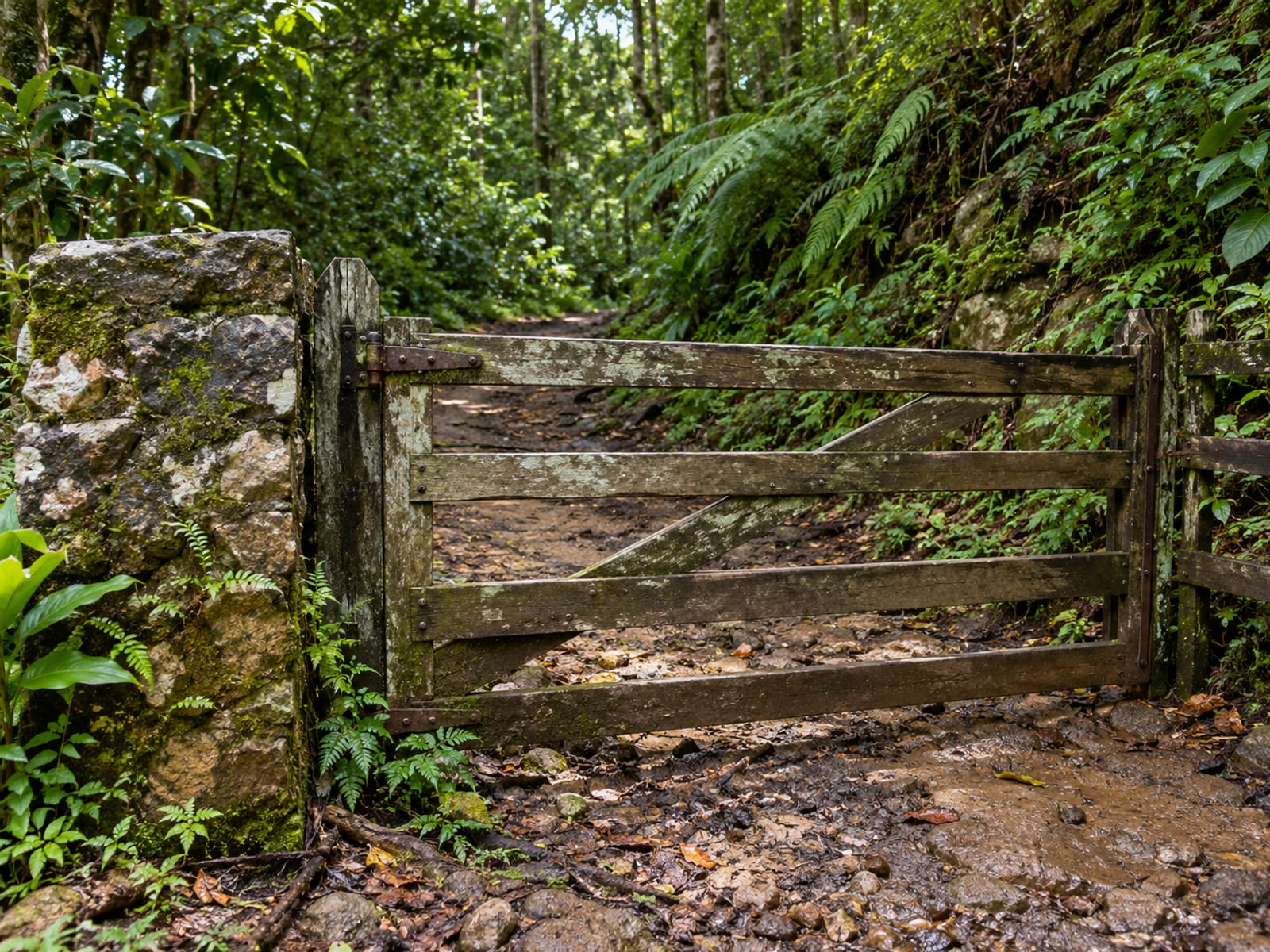
The Jamaica Conservation and Development Trust (JCDT) manages recreation in the Blue and John Crow Mountains National Park, including Holywell, Portland Gap and the Blue Mountain Peak Trail. JCDT presents Holywell as suitable for easy hiking, picnics and group visits. The Blue Mountain Peak Trail begins from the Portland Gap area, and Visit Jamaica describes it as about 9.3 kilometres, steep and challenging. Those are very different days, with different start times and different pickup plans.
Cockpit Country is a protected area under the Natural Resources Conservation Authority Act, according to NEPA. It holds protected forest, caves, private land and communities, so arrange hiking there through a recognised local guide or an approved attraction, and give your transport operator the entrance that guide names.
Fern Gully is a different case again. The Ministry of Agriculture describes it as a 4 kilometre stretch of roadway in northeast St. Ann near Ocho Rios, lined with ferns and tree canopy. It is a road corridor, not one standard trailhead, so identify the specific walking attraction, property or trail entrance before you book transport.
A few questions settle this step:
- Trailhead or meeting point: Is the drop-off the real trailhead, a lodge, or a meeting spot some distance from it?
- Shape of the hike: Is it point-to-point or out and back?
- Guide or permission: Does the group need a local guide or park permission at the entrance?
Build the Morning Around the Hike, the Road and the Weather
Work backward from the time the group needs to be on the trail. If the summit is the goal, the start is in the dark, so the vehicle leaves earlier still. Add the drive time to that. Road conditions and traffic change it, and every figure you read is an estimate. Whitfield Hall, which sits above Mavis Bank, publishes about one hour from Papine to Mavis Bank and about one hour from Mavis Bank to the lodge, and it warns that mountain road conditions can slow the trip. Visit Jamaica puts Holywell at under an hour from Kingston.
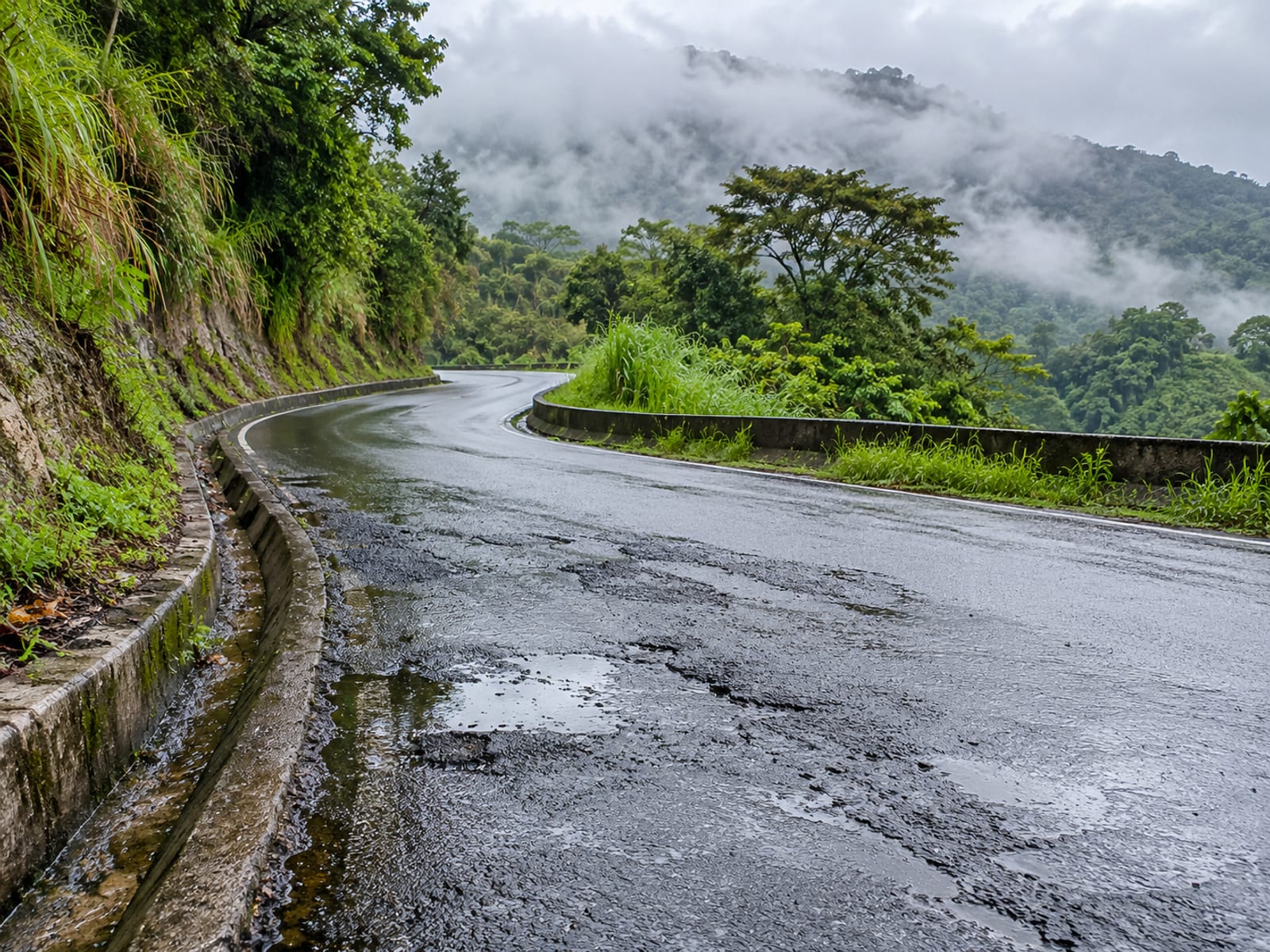
Weather deserves a place in the plan too. The Meteorological Service of Jamaica publishes daily forecasts and weather alerts, and mountain rain can change visibility, trail footing and how long the road takes. Check both the night before and again before the vehicle leaves. Agree with the driver in advance what happens if the forecast turns, whether that is a later start, a different trail or a postponed day.
Tell the group what to carry: sturdy footwear, lights for a dark start, water, food, rain protection, warm layers for high ground and a charged phone. A power bank is easy to forget and useful on a long day when the phone doubles as your link to the driver. That link matters, so share the driver's number with a group leader who will actually have signal and battery.
Plan Drop-Off and Pickup as Two Separate Movements
If the group walks from one point to another, the vehicle that dropped you cannot follow you. Treat the day as two movements, each with its own place and time. Whitfield Hall's published one-way transport between Kingston, Mavis Bank, Hagley Gap and the lodge shows why the exact start and finish points matter; two points that sound close can be an hour apart on mountain roads.
If the start and finish are far apart, ask for a point-to-point transfer rather than assuming the first vehicle will trail the group. Our guide to chartering a bus in Jamaica walks through booking a vehicle step by step, which helps when you have not hired one before.
Finally, decide what happens if the group finishes early or late. A pickup window handles most of it, and a phone call from the group leader handles the rest. The driver also needs somewhere safe to wait during a long hike, so ask where that will be.
Match Passenger Capacity to People, Bags and Mountain Roads
"Minibus" covers several sizes, and published figures vary. A Jamaican operator's website lists one small van for up to 10 passengers, or 8 when luggage is loaded, and a larger minibus for up to 25. Another operator lists a van with seating for up to 15. These are examples of how listings read, not a rule for every vehicle, so ask for the licensed passenger capacity and the usable luggage space of the exact vehicle you are being quoted.
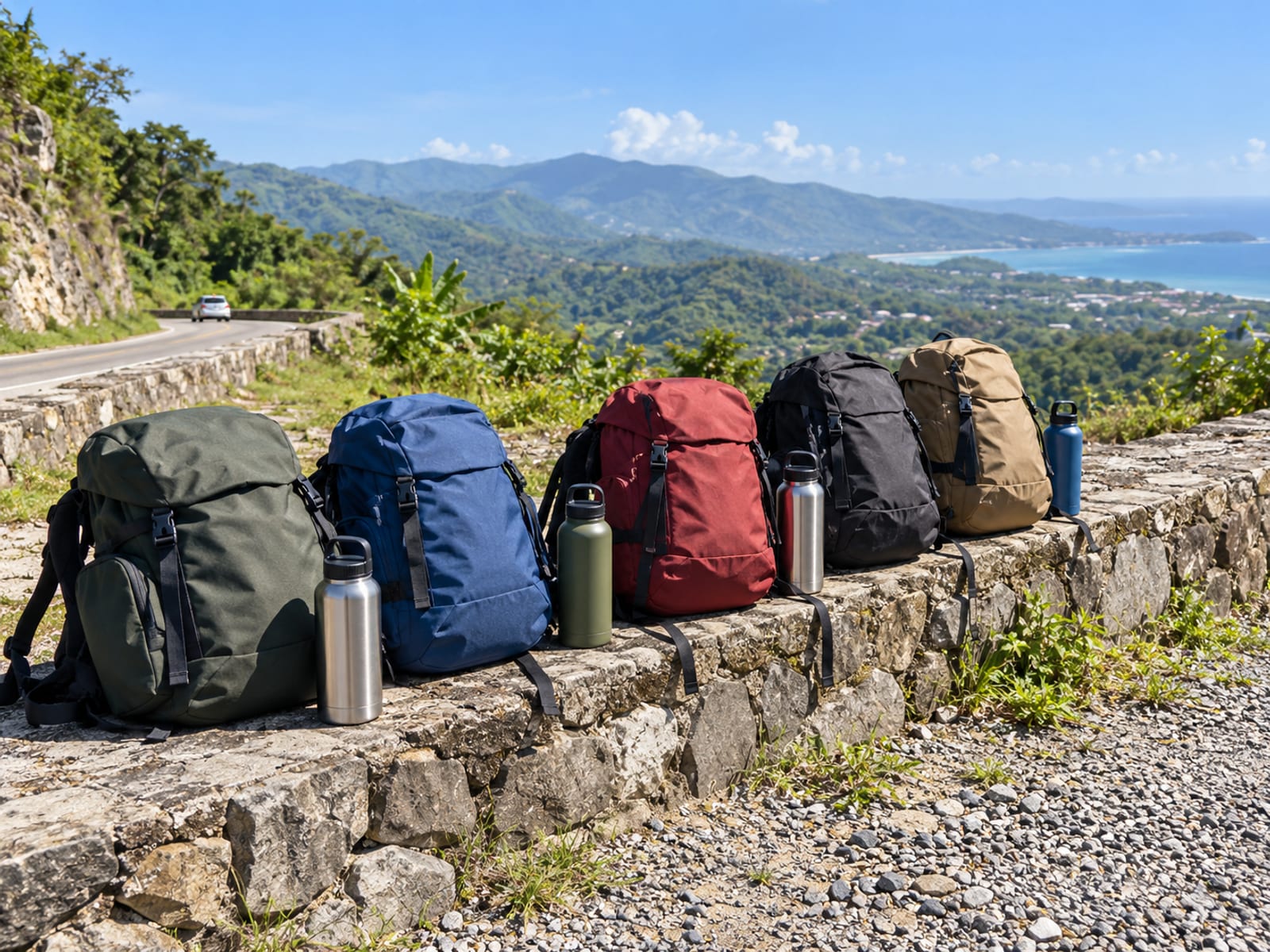
Luggage counts on a hiking day. Day packs, water and spare layers use floor and rack space, and heavy luggage can affect a vehicle's clearance and capacity on a steep or rough road. If your group sits right at a vehicle's limit, move up a size. For help choosing, see what size bus a group needs, which compares seat counts across common vehicle types.
The road can also decide who rides where. Whitfield Hall states that the road from Mavis Bank or Hagley Gap up to the lodge is steep and in poor condition, and it requires a 4 wheel drive vehicle, specifically not an all-wheel-drive one. For your own trailhead, ask:
- Final point: Where exactly can the vehicle go, and is the last stretch paved, gravel, steep or narrow?
- Vehicle suitability: Does the operator have a vehicle that suits that road?
- Turning and parking: Can it turn around and park safely at the top?
- Transfers: Do passengers have to change to a local vehicle for the final section?
What a Jamaican Charter Quote Should Include
A private charter in Jamaica is normally a vehicle booked for your group, with a driver and a defined route or period of hire. Prices are set for the particular trip. If you have wondered how much a 40 seater bus costs, there is no single Jamaican figure to give, because the price changes with the operator, the date, the route, the hours, the mileage, the waiting time, the stops, fuel, tolls and what is available that day. Published prices from different operators describe different vehicles and trip shapes, so do not average them.
What does move a quote is easy to list:
- People and vehicle: Passenger count, licensed seat capacity and luggage volume.
- Distance and time: Pickup and finish locations, total mileage and the number of hours or days.
- Waiting and stops: Waiting during the hike and any extra stops.
- Road demands: Rural, steep or difficult access, and any 4x4 or high-clearance requirement.
- Pass-through costs: Fuel, tolls, parking and any driver overnight arrangements.
- Timing: The date, vehicle availability, one-way versus return travel, and late changes.
For a sense of how a local figure looks when it is stated clearly, here is one lodge's own listing for its transport, noted as of October 2026. It applies only to that lodge's service and says nothing about charters elsewhere.
A good written quote also says whether the price is hourly, daily, distance-based or per trip, and it lists fuel, tolls, parking, driver meals, additional waiting, extra stops, route changes and late-return charges separately. Do not assume any of those are included just because the word "charter" appears. What changes the cost of a bus charter goes through those items in more detail. Also ask for the deposit amount, the balance date, the cancellation terms, the weather postponement terms, the breakdown or replacement-vehicle arrangement, and how to change the finish point or pickup time on the day.
On tipping, it is discretionary. Travel 80 gives a private driver guideline of 10 to 15 percent of the fare. Check first whether a service charge or gratuity is already in the price.
Licensing, Seatbelts and Questions to Ask Before Departure
A charter booked for your group is what Jamaican law calls a contract carriage. The Transport Authority Act defines it as a motor vehicle carrying passengers for hire under a contract for use of the vehicle as a whole at an agreed rate or sum. The Transport Authority lists contract carriage among its licensing categories, and the Jamaica Information Service explains that public passenger vehicles can be recognised by a red plate and a special windscreen sticker. The Authority's 2025 contract-carriage requirement sheet says a driver or conductor of such a vehicle must have a badge, and that the vehicle needs current registration, a certificate of fitness and insurance.
Before the day, ask the operator for a licensed contract-carriage vehicle, a driver displaying the required badge, and a capacity that matches your headcount. Ask how the company handles long days, driver rest and any change of driver. These are fair questions for any operator, and a clear answer is a good sign.
Blue Mountain, Cockpit Country and Fern Gully Transport Details
Each of these areas asks something different of the vehicle and the plan, so a short comparison helps.
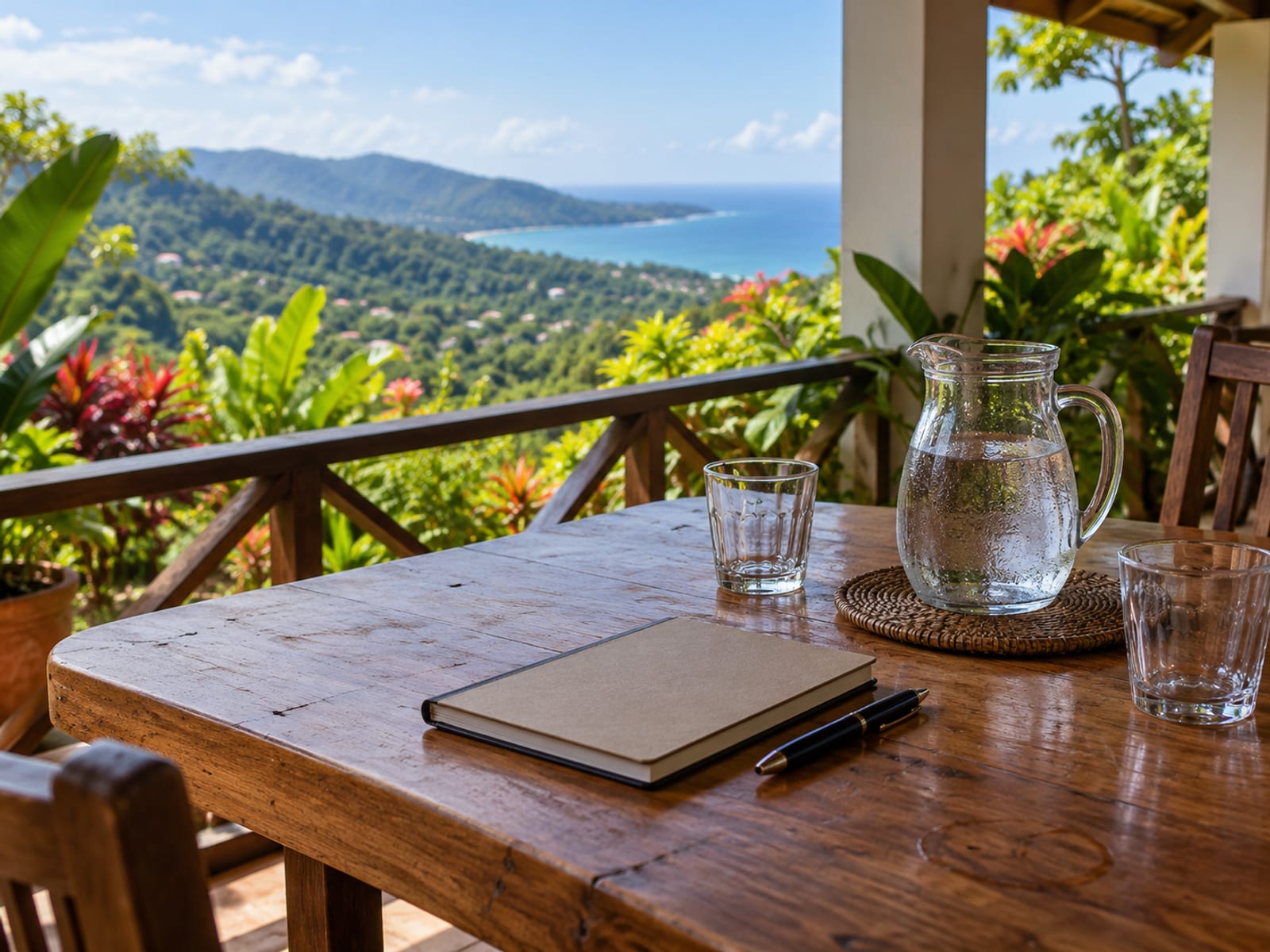
For the Blue Mountain area, the Peak Trail begins from the Portland Gap area, and the JCDT trail guide identifies road sections around Penlyne Castle and Abbey Green and separates transport modes on the approach. The JCDT management plan notes varying levels of access challenge and a need for better signage in that area. So, confirm the last drivable point with the operator and the park before the day, and expect a very early start for a sunrise summit. Holywell, by contrast, is under an hour from Kingston according to Visit Jamaica, with several shorter walking paths, which makes it a gentler first hike for a mixed group.
For Cockpit Country, the access question comes first. Because it is a protected area with private land and communities, the entrance and permissions come from your guide or approved attraction, and the driver follows that.
For Fern Gully, the question is which attraction or property you are walking. The gully is a scenic road, so the right drop-off is the specific entrance.
Some other drive-time examples help with planning, always as estimates. Tourism-board figures give Kingston to Mandeville as about 98 kilometres and 1.5 hours, Ocho Rios to Kingston as about 97 kilometres and under 1.5 hours, and Port Antonio to Kingston as about 109 kilometres and under 2 hours. Traffic, roadworks, weather, stops and loading time all move those numbers.
Prevent Delays on the Return Trip
Most late returns come from a few causes: a slower descent than planned, a pickup spot that is hard to reach, or nobody with the driver's number. You can reduce each of them before the day.
Share the plan for a slow finish, and agree what the driver does when the group is early. Confirm whether the pickup point has space for the vehicle to park, and whether the group will have water, food, a bathroom and phone signal there. Name an emergency fallback in case a hiker cannot continue, and make sure the group leader and the guide both know it.
If rain slows the road or the trail, a pre-agreed postponement or later-pickup plan saves an argument at dusk. Keep the quote's late-return terms in view, since extra waiting is one of the items that changes the price. For a group that wants to link a hike with a river stop afterward, group trips to rivers and waterfalls covers how to plan the charter around a second stop.
Frequently Asked Questions
What is the best bus company in Jamaica to hire for a private hire day trip?
There is no one best company for every route. Compare licensed private charter operators on vehicle capacity, whether a driver is included, access to rural roads, pickup flexibility, waiting arrangements and cancellation terms. The Visit Jamaica transport page points travellers toward private charter coach services for large groups, and JUTC also lists charters, tours and special trips.
How many seats are in a minibus?
The word covers several sizes. Published Jamaican examples include a van for up to 15 passengers, a van for up to 10 passengers or 8 with luggage, and a larger minibus for up to 25. Ask for the licensed passenger capacity and usable luggage space of the specific vehicle you are quoted.
How much is a 40 seater bus?
A 40 seat charter is priced for the particular trip. The operator, date, route, hours, mileage, waiting, stops, fuel, tolls, overnight arrangements and availability all change the figure, so ask for a written quote with those items listed.
How much to tip a driver in Jamaica?
Tipping is discretionary. Travel 80 gives a private driver guideline of 10 to 15 percent of the fare. Check first whether a service charge or gratuity is already included.
Do I need a 4x4 to reach a trailhead?
It depends on the trailhead. Whitfield Hall says its access road needs a 4 wheel drive vehicle, not an all-wheel-drive one, so the answer changes from trail to trail. Ask the operator about the final road section for your specific trail.
Where does the driver wait during the hike?
That is something to agree in advance. The driver can wait nearby, return later or collect the group at a set time, and the right choice depends on the length of the hike and where the vehicle can park safely.
What This Means for You
For a hiking day, the transport comes down to a few clear decisions. Name the exact trailhead and the finish point, treat a one-way hike as two movements, give the driver a pickup window, and ask for the licensed seating and luggage space of the exact vehicle. Get the quote in writing, with the cost items listed one by one.
Doing that work up front means the early start and the pickup at the end both happen the way you planned, and your group spends its energy on the trail.
D-JARPS Transport Solutions runs its own vehicles and arranges private charters anywhere in Jamaica as each trip needs it. We arrange trips by phone, from 6 AM to 10 PM every day, or through the trip request form, and we go over the details, give the price and confirm the trip before the day. Send us your pickup address, trailhead, finish point, date and headcount through our contact page.