Travel guide
Beach and River Day Packing List for Jamaica
This guide may contain affiliate links. If you buy or book through one, we may earn a commission at no extra cost to you. Read our affiliate disclosure.
You have decided on a day at the beach, the river or the falls, and now the questions start. What do you bring to the beach in Jamaica when the day might mean hot sand, a rocky riverbed, a picnic, a group of kids and a ride home with everyone damp? The good list covers sun, water, food and, just as important, getting home dry. It also scales: a family of four and a group of fifteen need the same kinds of things, in different amounts. Packing for a sandy beach, a freshwater river and a waterfall is not quite the same either, so each group of items below says which outing it suits. Tick off the list at the end, check a few things about the place before you go, and tell your driver about the wet gear.
What Should You Pack Before You Leave for a Jamaican Beach or River Day?
Start by splitting the packing into six groups: sun and heat protection; water and swimming gear; dry storage; food and drinks; safety and health supplies; and clean, dry items for the ride home. The exact needs depend on whether the day is a sandy beach, a freshwater river, a waterfall visit, a boat trip or a mix.
Before you leave, find out what the place provides. Ask about towels, shade, food, lockers, changing facilities, life jackets and lifeguards. If the place provides it, you can leave it at home. If not, it goes in the bag. The Visit Jamaica list of activities and its travel tips are a good start, and our general guide to day-bag essentials covers the core items for any outing.
If you are the organiser packing for several people, give each adult one job: someone carries the water and food, someone carries the dry clothes, someone carries the first-aid items and medication. A split like that keeps one dropped bag from ruining the day.
What Sun, Heat and Insect Protection Do You Need for a Full Day Outside?
The tropical sun, light reflecting from sand and water, and long hours outside all raise the need for shade, protective clothing and regular sunscreen. For sun, bring:
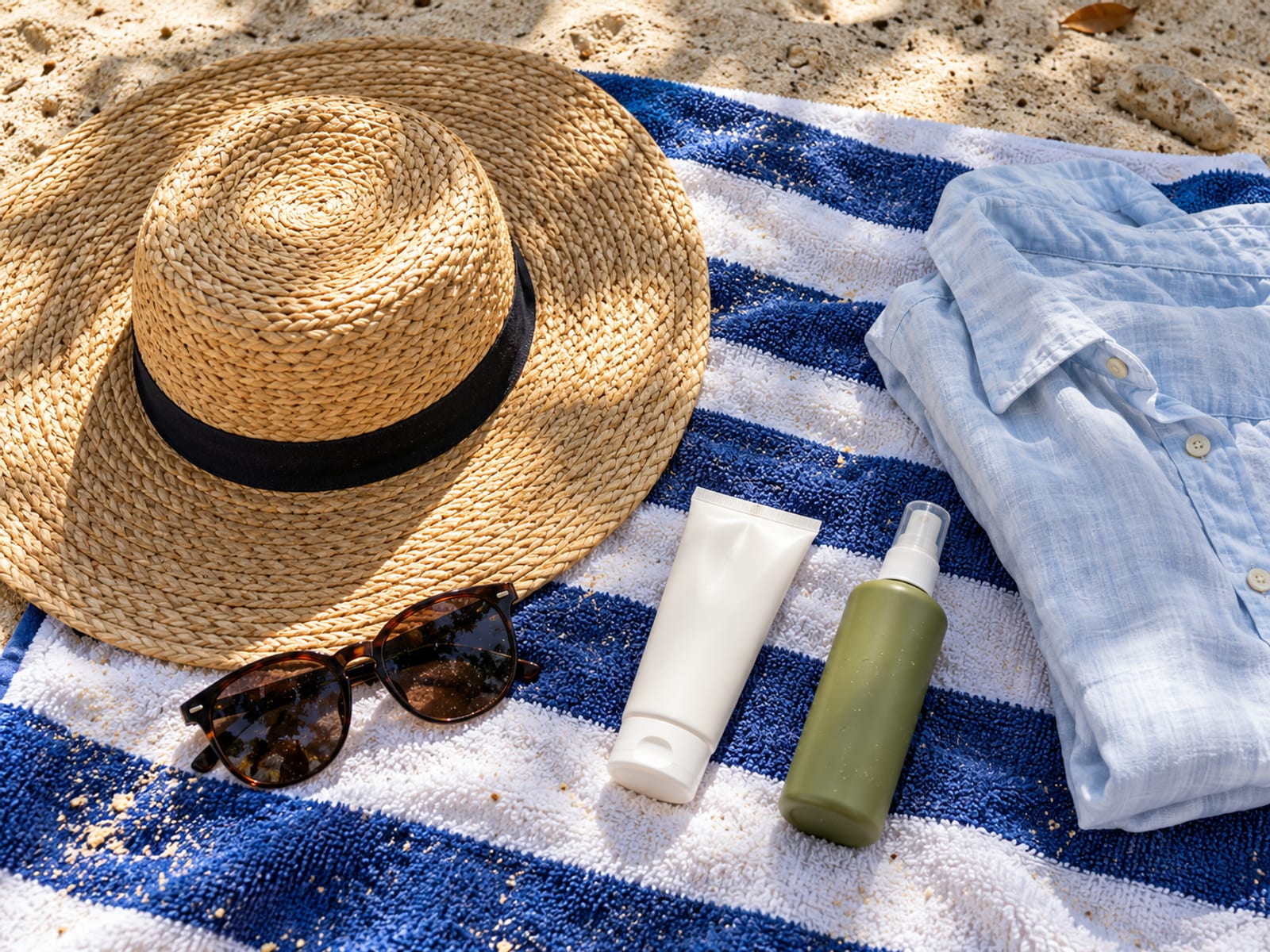
- Sunscreen that blocks UVA and UVB; a mineral sunscreen is one option
- Sunglasses and a wide-brimmed hat or cap
- A long-sleeved swim shirt or lightweight cover-up
- Lip balm with sun protection
- A small shade option, such as an umbrella, if the place has no shade or trees
CDC guidance recommends seeking shade during the hottest part of the day, especially between 10 a.m. and 4 p.m., and reapplying sunscreen at least every two hours and after swimming or heavy sweating. Apply sunscreen first and insect repellent second.
For insects, the CDC recommends long sleeves, long trousers and hats where practical, and insect repellent used according to its label. It lists repellent containing 20% or more DEET as protecting against ticks and mosquitoes for several hours, with picaridin, oil of lemon eucalyptus or PMD, IR3535 and 2-undecanone as other accepted ingredients. An insect repellent with one of those is worth having near rivers and in the evening. Insects tend to be more of a concern in wet conditions.
Which Water Shoes, Towels and Waterproof Storage Should Go in the Bag?
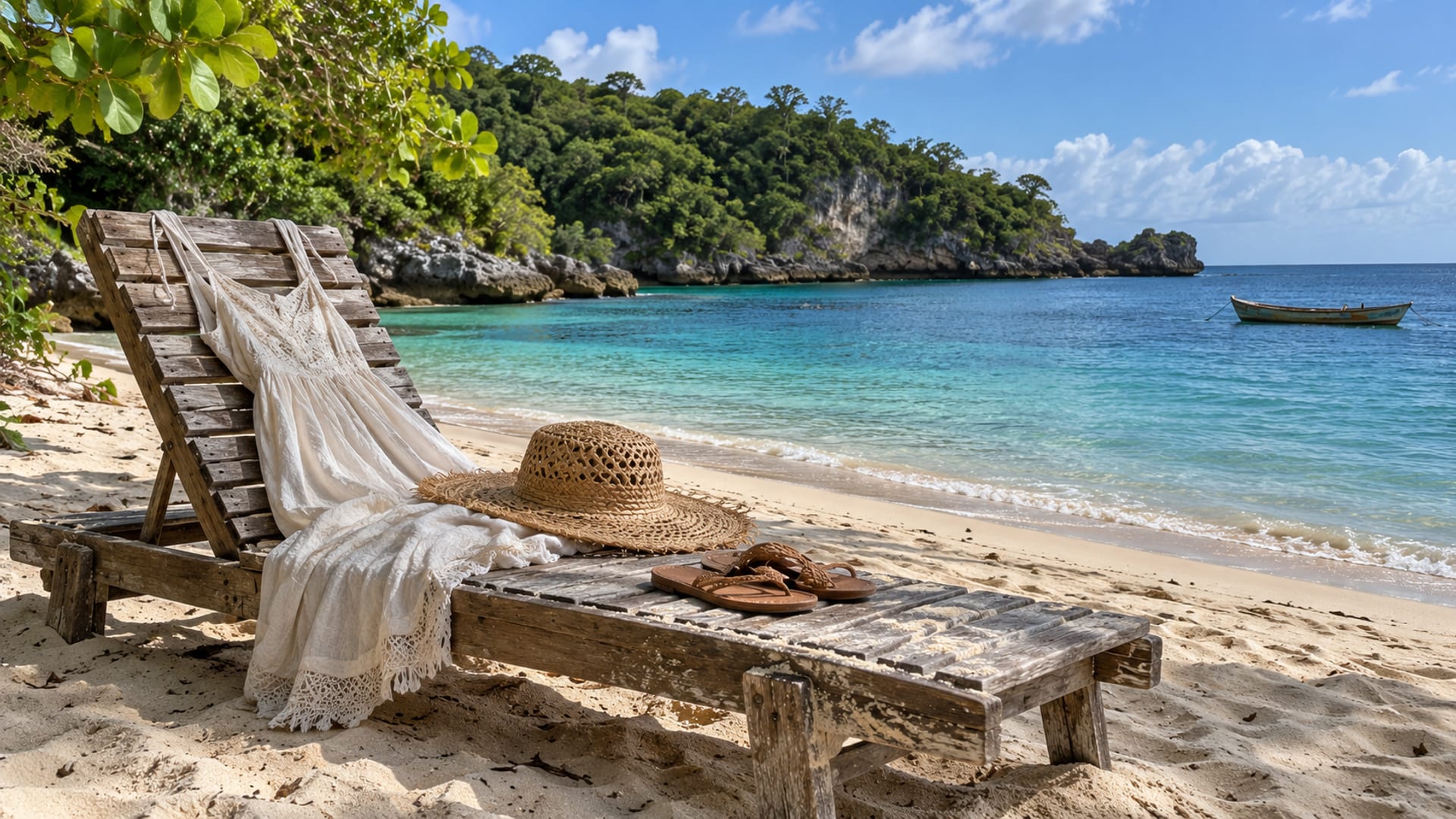
Footwear first. Water shoes are useful for rocky shorelines, slippery riverbeds, uneven waterfall approaches, hot sand, shells and areas where shoes are recommended for hygiene. Visit Jamaica specifically lists water shoes for exploring rivers, waterfalls and natural attractions. Water shoes are also the thing travellers most often say they wish they had brought. On a plain sand beach, a pair of rubber flip-flops is enough for the walk to the water.
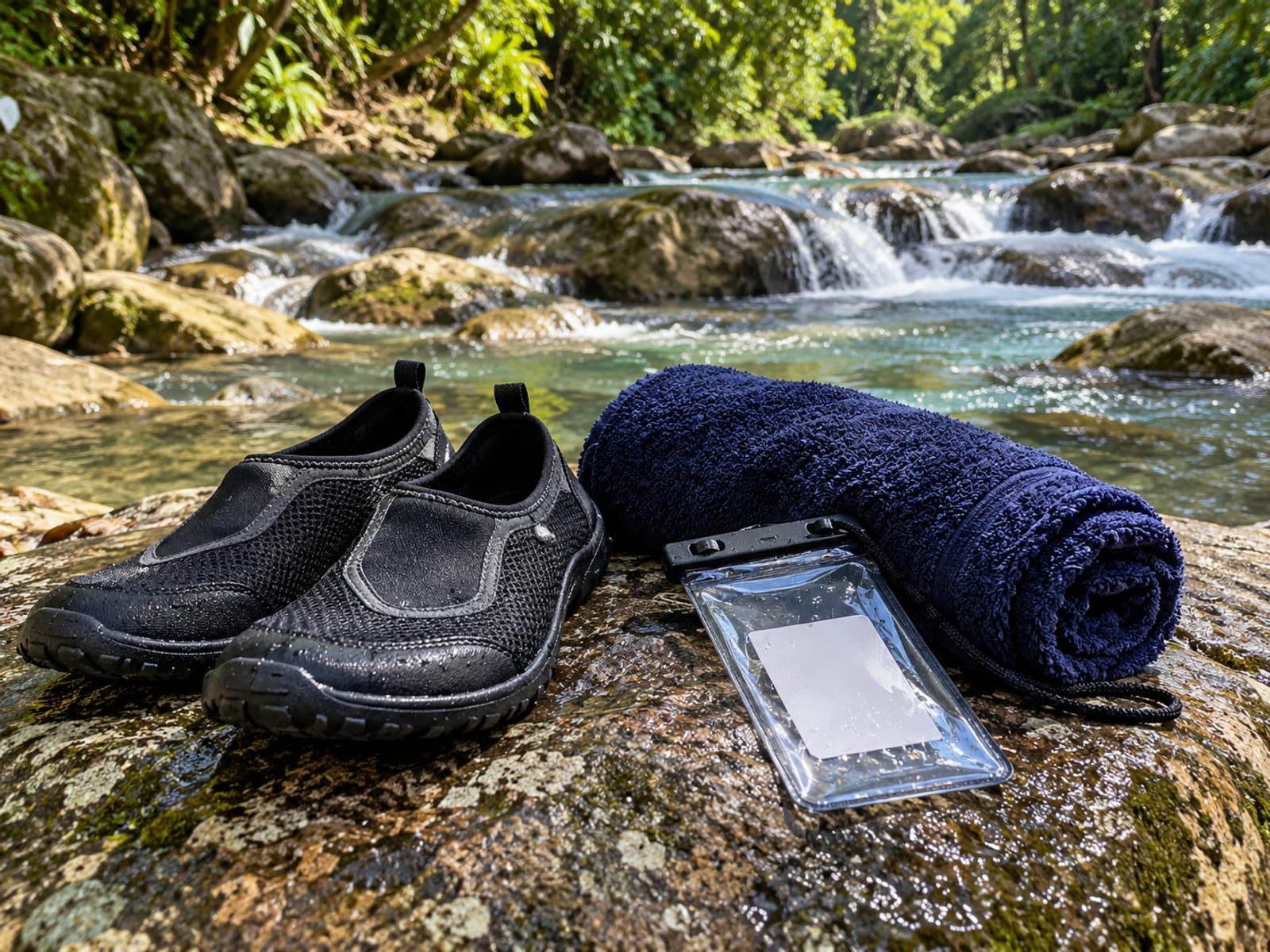
Towels: bring a compact one unless the beach, resort or attraction confirms it provides them. A separate towel stops the group from carrying hotel-room towels outdoors and gives everyone a dry option after swimming.
Dry storage matters as much as the towel. Use a dry bag, waterproof pouch or sealed plastic bag for phones, keys, medication, ID, cash and electronics. A waterproof phone pouch is one way to keep your phone usable at the river. Keep a separate wet bag for swimsuits and damp towels so they do not soak the dry clothes. Community threads about wet-dry bags are common, with some travellers using a dry bag at Dunn's River Falls and at the beach, though these are individual accounts, not rules.
How Can You Stay Safer in the Ocean, Rivers and Waterfalls?
Is it safe to swim in the ocean in Jamaica? Safety varies by beach and by weather, so check the water before you enter. Look for lifeguards, flags, signs, buoys, designated swimming areas, piers, boats, rocks, drop-offs and visible currents. NEPA's beach safety tips advise:
- Swim at a lifeguarded beach wherever possible
- Stay inside the designated swimming area
- Obey posted signs and instructions
- Never swim alone
- Supervise children closely
- Stop when bad weather begins
- Avoid alcohol before swimming, diving or boating
- Swim parallel to shore when travelling across the beach
- If caught in a current, swim sideways out of it rather than directly against it
- If someone is in trouble and no lifeguard is present, call 119 or 110 and ask for the Coastguard
Jamaica's Beach Control regulations require licensed swimming areas to have lifeguards, visible lifeguard stands, warning signs and marked swimming zones.
Rivers and waterfalls have their own risk. ODPEM describes flash floods as destructive flood waves caused by heavy rainfall over a relatively small drainage area, especially common in mountainous or steep areas with narrow stream channels. A river that is safe in the morning can change after rain upstream, even when the local area looks calm. Do not enter a river during heavy rain, rising water, thunder, strong flow, murky water, floating debris or warnings from operators or local authorities.
The CDC adds that visitors should swim only in designated areas, obey lifeguards and warning flags, avoid diving into shallow water, avoid swallowing untreated water and avoid swimming in freshwater where sanitation is poor. Marine parks are another thing to know: Jamaica has marine parks and protected areas, including the Negril Marine Park, Montego Bay Marine Park and Ocho Rios Marine Park. In those areas, do not touch, stand on or remove coral, do not collect shells or marine life, and follow the rules of the park or the beach operator. A reef-conscious approach to sunscreen is to choose a sunscreen suitable for swimming, apply it before entering the water, and wear a swim shirt to reduce how much you need.
What Food, Drinks, Shade and Supplies Does a Group Need?
Can you drink tap water in Jamaica? Visit Jamaica says the island's drinking water is purified and filtered by modern treatment systems and is safe for drinking, brushing teeth, bathing and washing clothes, and bottled Jamaican spring water is also widely available. If you have specific health needs, or are visiting a rural area or a place with uncertain sanitation, follow current medical advice and avoid swallowing untreated water, particularly from rivers.
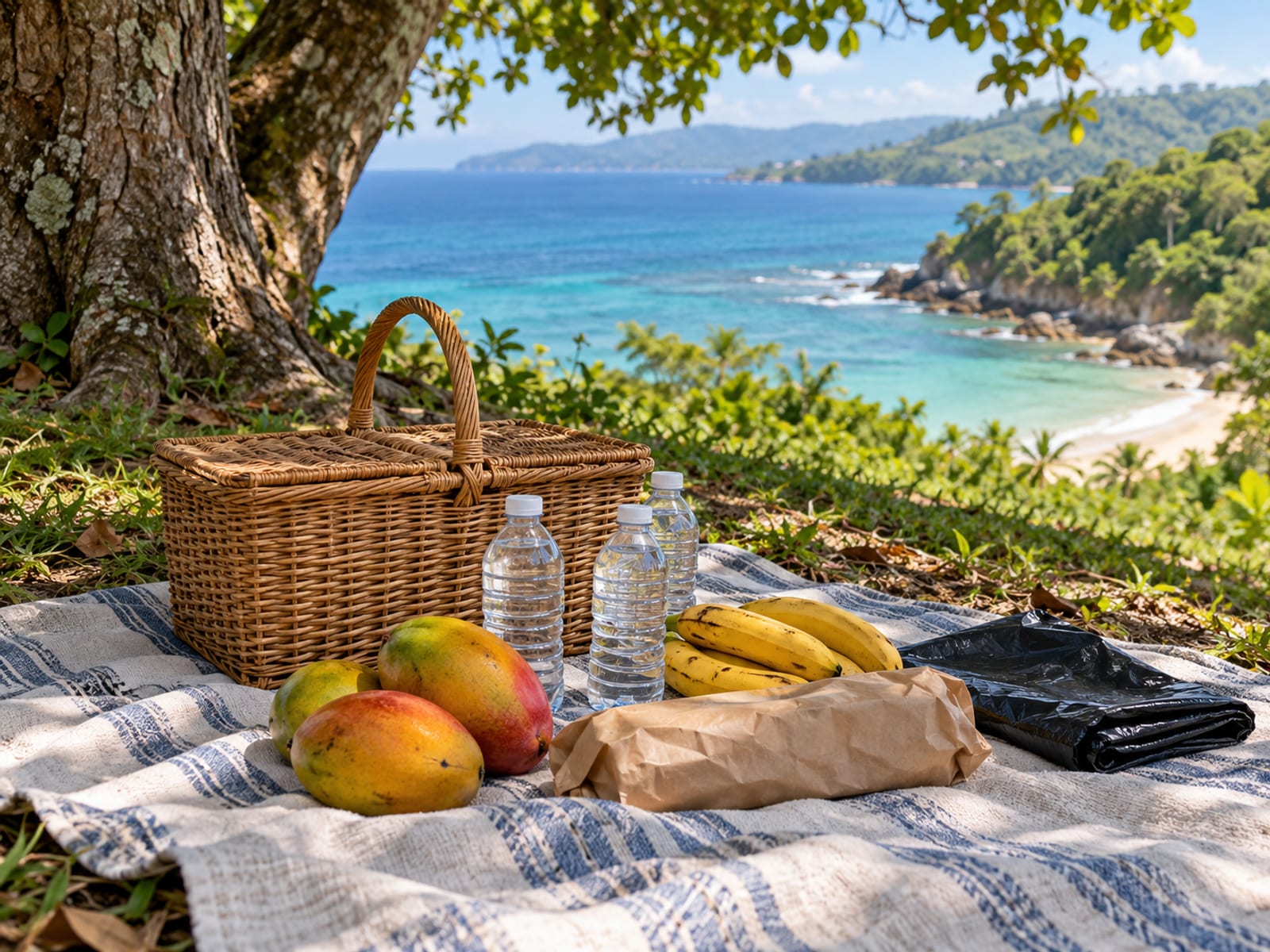
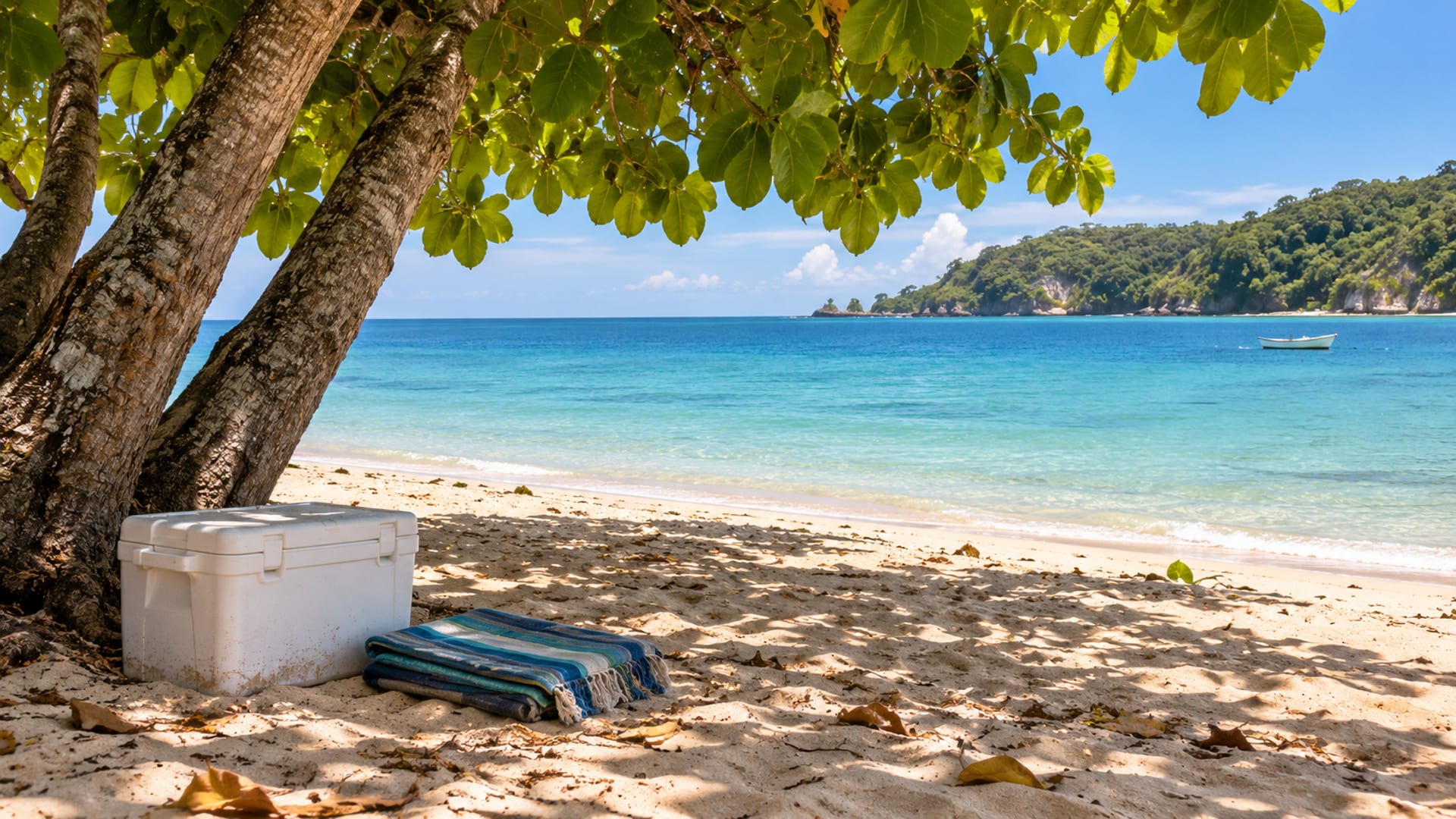
Pack drinking water in a refillable bottle for each person. For food, choose sealed, easy-to-carry options that tolerate heat, such as crackers, sandwiches, energy bars, salty snacks and fruit that is permitted at the destination. Salty snacks help replace salt lost through sweating. A small soft cooler keeps drinks and perishable food cold for the day. Check whether the place allows outside food, alcohol, hard coolers or disposable ice packs, and do not leave food waste behind.
For supplies, take a small first-aid kit, hand sanitiser and personal medication. The CDC advises bringing all regular prescription and over-the-counter medicines for the trip, plus extra in case of delays, in original containers, with a copy of prescriptions and a list of generic medicine names. Add a portable power bank if your phone is your camera, map and payment tool for the day.
What Should You Pack for Wet Clothes, Sand and the Ride Home?
Pack for a wet return rather than assuming everything will dry before you leave. Useful items include a dry change of clothes for everyone, a separate swimsuit for the ride home, a lightweight cover-up, a wet bag or dry bag, a small towel, plastic or reusable bags for sandy footwear, flip-flops or sandals kept apart from dry clothes, a brush or cloth for loose sand, and waterproof protection for phones and vehicle seats. Bring a child-sized change of clothes for every child, a spare undergarment, and a light sweater if the air-conditioned vehicle may feel cold.
Before getting in the vehicle, shake out towels and clothing, rinse or brush off visible sand where facilities allow, put wet items in a sealed bag and keep food and drinks upright. A wet swimsuit dropped straight into luggage can make the whole bag damp, so a sealed wet bag makes the ride, and the unpacking later, much easier. Sit on a towel if the seats are fabric.
Tell the transport operator how many passengers, bags, coolers and wet items will be carried, so the vehicle can be matched to the group. For ideas on arranging a day out, see planning a group beach day from Kingston and group trips to rivers and waterfalls.
How Do Airline Bags and Transfer Vehicles Affect Beach Gear?
If the beach day is part of a longer trip, airline limits come first. Rules depend on the carrier, route, fare, aircraft and status, so check your booking.
Those come from the airlines' own pages for Delta, JetBlue and Southwest, and Southwest states that Montego Bay has seasonal limits, including a maximum of two checked bags and restrictions on oversize, overweight and certain containers. Check your own ticket before packing.
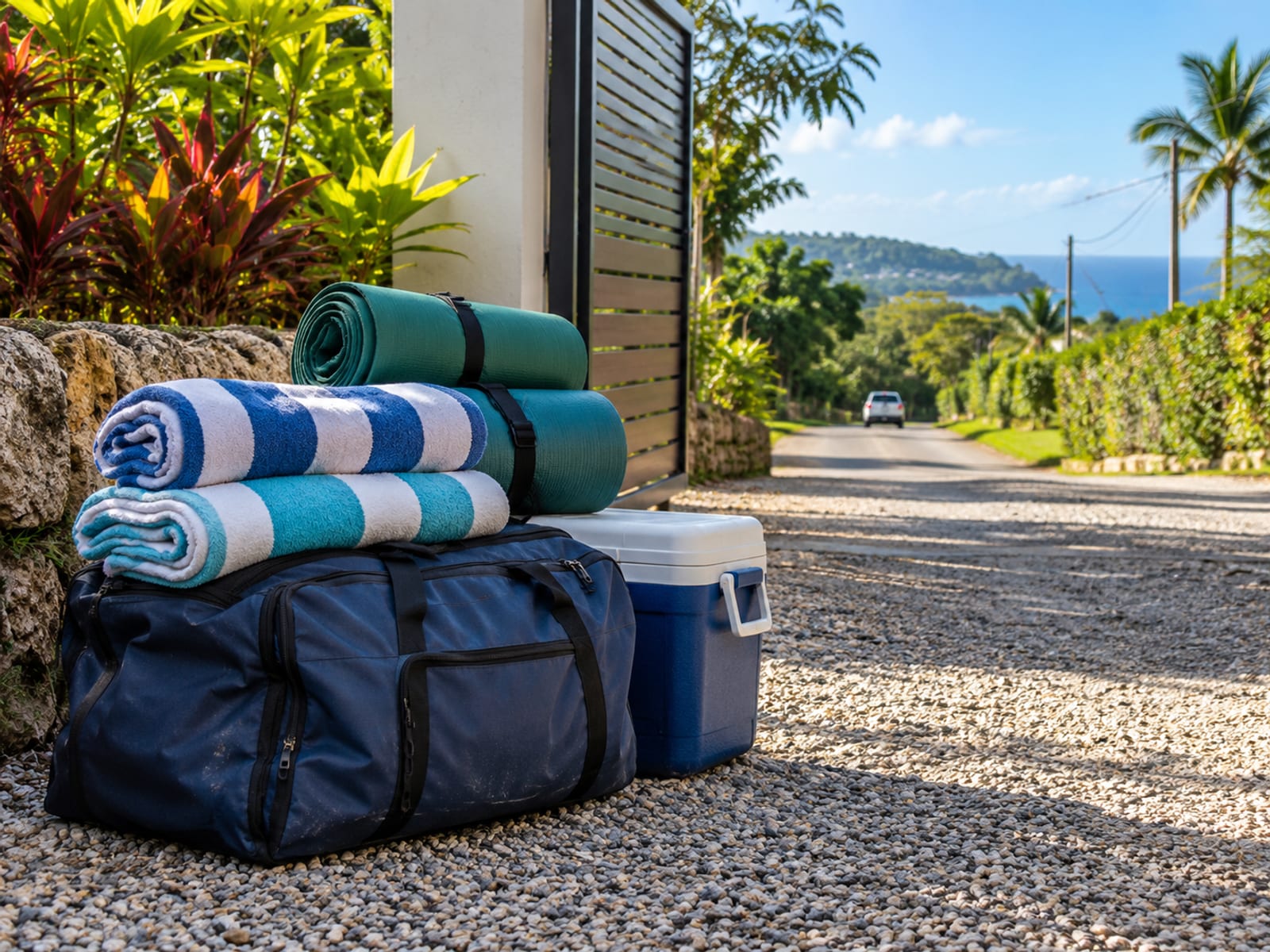
Vehicle space is a different limit. Operators publish their own figures, and they differ: Aurum Transfers says its wagon fits up to 3 standard bags, its SUV and van options hold 4 bags, a shuttle handles 10 bags and an executive coach has room for 20 or more pieces, and Holiday Services lists a full-size minivan for up to 9 transfer passengers with one suitcase and one roller bag per person. Each is that operator's own figure, not a standard for every vehicle in Jamaica. Beach chairs, a large hard cooler, sports equipment or an oversized suitcase all reduce usable space, so give the passenger count, suitcases, carry-ons, coolers and any special equipment when you book. D-JARPS Transport Solutions runs its own vehicles, and when we arrange a private charter for your group, that list is what we use to choose the vehicle.
What Does Jamaica Customs Allow, and What Is Worth Buying Locally?
Jamaica Customs states that arriving passengers aged 18 and older have a duty-free allowance of US$1,000 for personal and household goods not meant for sale, as set out on its personal items page. The duty FAQ lists duty-free quantities where properly declared: 170 ml of perfume, 340 ml of eau de toilette, 2 litres of alcoholic beverages, and tobacco up to 200 cigarettes, 50 cigars or 230 grams of processed tobacco. Declare goods accurately and keep receipts.
Restricted or prohibited categories include camouflage clothing and materials, clothing resembling Jamaica Constabulary Force apparel, firearms and ammunition, explosives and fireworks, pesticides, agricultural products such as fruit and vegetables without permits, illicit drugs, and pharmaceuticals that need permits. Do not pack a drone casually, since aviation, customs and security requirements may apply; confirm them with the Jamaica Civil Aviation Authority before you arrive. The CDC advises checking with Jamaica's embassy that your prescription medicines are legal.
What is worth buying in Jamaica? Visit Jamaica highlights Blue Mountain coffee, local sauces, jams, spices, Jamaican-made clothing, crafts, pottery, baskets, wood carvings, jewellery, rum and other locally made products. Easy to pick up after arrival: bottled water, snacks, basic beach clothing, flip-flops, sandals, hats, some sunscreen and toiletries, and water shoes, which Visit Jamaica says are found at shops and craft markets. Harder to replace or less predictable: prescription medicines, specific brands, special dietary products, child-specific medical supplies, specialty sun-protection clothing, unusual electronics and a particular size of water shoe or swimsuit. Check airline baggage limits and the destination country's import rules before buying food, alcohol, plants or large items to take home.
On weather, Visit Jamaica describes the island as hot and humid year round, with temperatures of about 19 to 32 degrees Celsius, two rainy seasons (May to June and September to November), and hurricanes possible from June to November. Pack a thin layer for evenings and air-conditioned vehicles, and a light rain layer in the wet months. The electrical supply is 110 volts and 50 cycles with flat two-pronged plugs, so bring an adapter or converter if your devices need one.
Frequently Asked Questions
What should I bring to the beach in Jamaica?
Bring sun protection, water and swimming gear, dry storage, food and drinks, safety and health supplies, and clean dry clothes for the ride home. Check ahead whether the place provides towels, shade, food, lockers and lifeguards.
Can you drink tap water in Jamaica?
Visit Jamaica says drinking water is purified and filtered and is safe for drinking, and bottled Jamaican spring water is widely available. Follow current medical advice if you have specific health needs, and avoid swallowing untreated river water.
Is it safe to swim in the ocean in Jamaica?
It varies by beach and weather. Swim at lifeguarded beaches inside marked areas, read signs, supervise children, and swim sideways across a current instead of against it.
What is worth buying in Jamaica?
Visit Jamaica highlights Blue Mountain coffee, local sauces, jams, spices, Jamaican-made clothing and crafts. Check customs rules and airline baggage limits before buying food, alcohol or large items.
Do I need water shoes for rivers and waterfalls?
They are useful on rocky shorelines, slippery riverbeds and uneven waterfall approaches, and Visit Jamaica lists them for exploring rivers and waterfalls. They can be bought at some shops and craft markets, though a particular size may be harder to find.
Moving Forward
A good beach and river day comes down to six groups of items, a quick check of what the place provides, and a plan for the wet ride home. Swim where there are lifeguards and marked areas, stay out of rivers after heavy rain, and keep medicine, ID and your phone dry.
With the bag ready, the day can be about the water and the people you came with, and the ride home is easier when everyone has dry clothes waiting.
At D-JARPS Transport Solutions, we run our own vehicles and arrange transport anywhere in Jamaica as each trip needs it. Trips are arranged by phone between 6 AM and 10 PM every day, or through the trip request form on our contact page. Tell us how many people are coming and what you are carrying, including coolers and wet gear, and we will go over the details, give you the price and confirm the trip before the day.