Travel guide
SUV or Sedan for Jamaican Roads
This guide may contain affiliate links. If you buy or book through one, we may earn a commission at no extra cost to you. Read our affiliate disclosure.
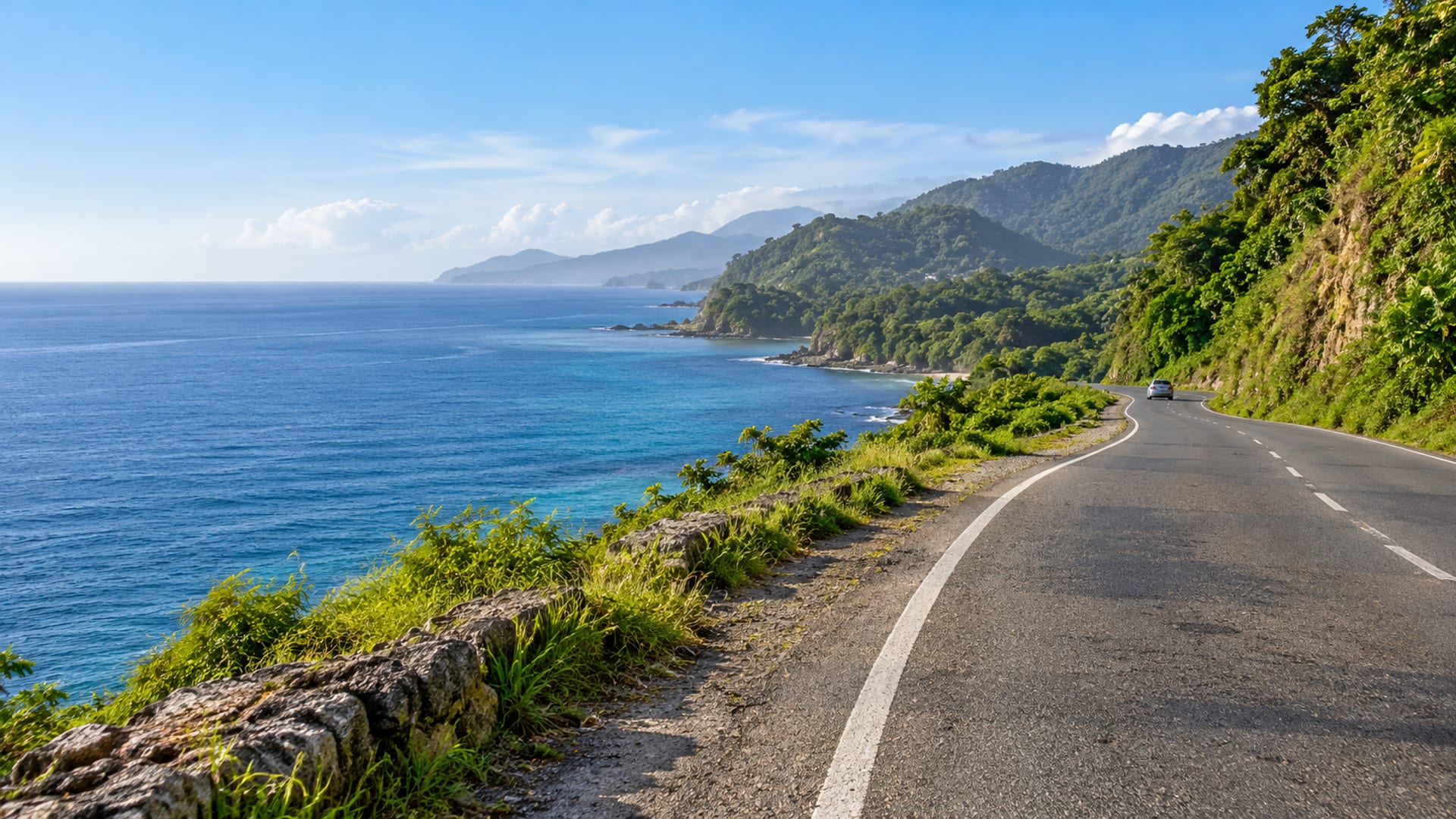
If you are comparing an SUV rental in Jamaica with a sedan, you have probably already read the forum threads. One person says Jamaica is a sedan country and a small car handled a whole month. Another says you will want a 4x4 the moment you leave the highway, and someone else asks whether Reach Falls needs one at all. Every answer sounds sure of itself, and none of them knows which roads you plan to drive. The better question is where your car will actually go, because the places on your list decide the class far more than the reputation of the vehicle. Write down each leg of your trip, and the choice usually gets much easier. This post walks through the questions that settle it, and what to ask a rental company before you pay.
Why The SUV Or Sedan Decision Depends On Your Route
Jamaica is not one kind of road. A trip between Kingston and a north coast resort on the highway is a very different drive from a climb to a guesthouse above a village, and the same car will not be equally comfortable on both. That is why "what is the best car rental option in Jamaica?" has no single answer. The best option is the vehicle that matches your roads, your passengers, your luggage and your budget.
Visit Jamaica describes the major highways as modern toll roads and treats urban, rural and mountain roads as separate driving conditions. In plain terms, a sedan is generally adequate for major highways, towns and paved coastal routes. A higher-clearance SUV is more suitable where the itinerary includes rougher rural or mountain roads, steep grades or unpaved access roads. Neither statement means the other vehicle is wrong, only that one has more room for error in certain places.
So, start with your list of stops. Note which are on highways, which are in towns, which are on coastal roads and which end on a steep, broken or unpaved track. Include your accommodation, because a driveway can be the roughest road of the whole trip.
Match the Vehicle to Jamaica's Roads
Road quality changes from one corridor to the next, and it changes with the weather. Major highways are generally smoother and faster than secondary roads. Coastal roads connect many tourist towns, but they can include congestion, narrow sections, pedestrians, roadside activity, potholes and uneven pavement. A sedan can be a practical choice on established coastal routes when it is driven carefully.
Hill and mountain roads are more likely to be steep, winding and narrow. Renters describe the Blue Mountain range as difficult to find your way around, with tight roads and sharp curves. Even so, the Blue Mountains are not a reason to assume every trip needs four-wheel drive. The surface, the weather, the clearance and your own driving experience all matter.
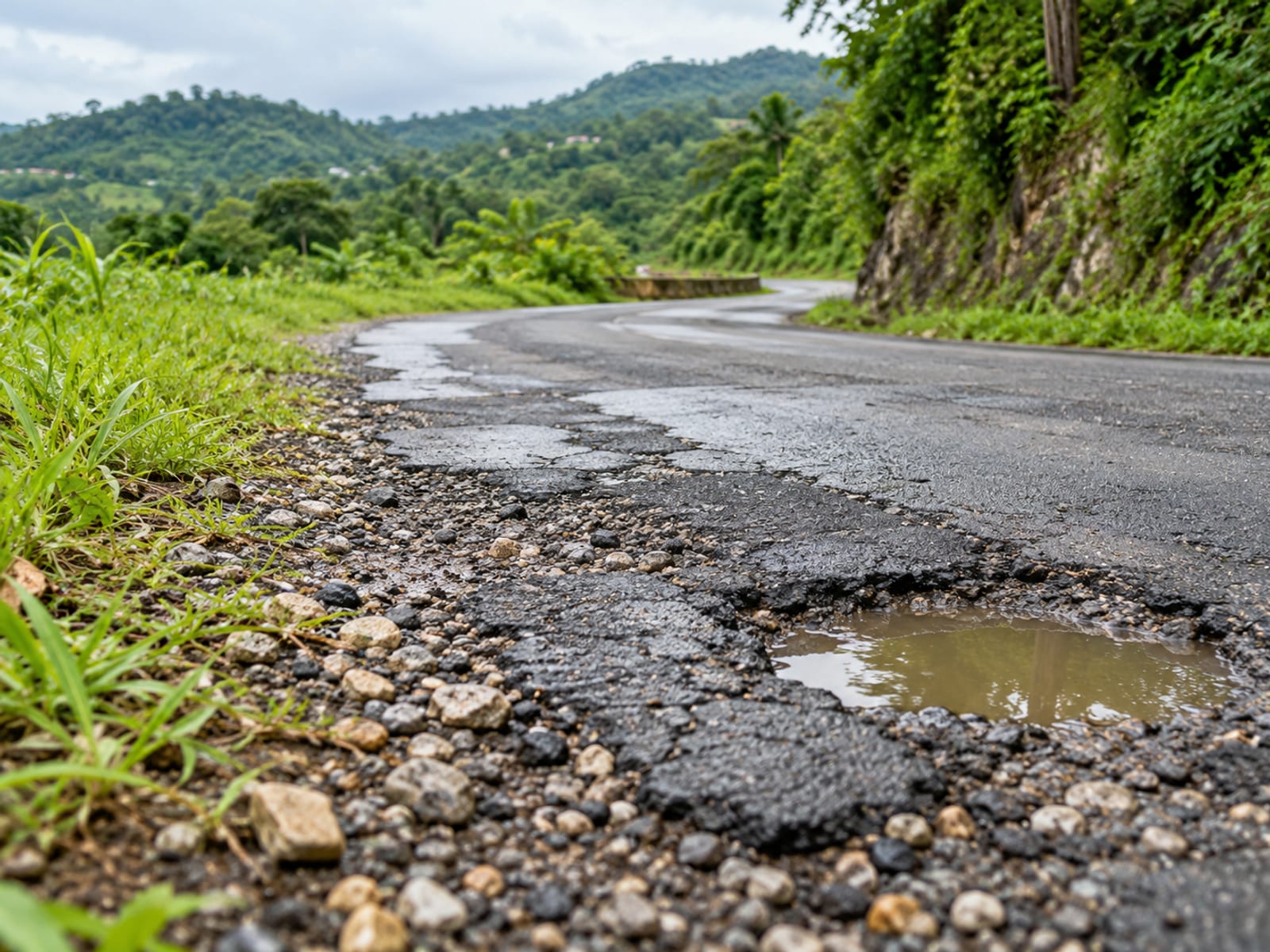
Rural roads vary the most. The National Works Agency has posted notices about road closures, rehabilitation work in the northeast, collapsed embankments, fallen trees, debris and drainage work across parishes including Hanover, St. James, Portland, St. Mary and St. Ann. A road that is fine in dry weather can become harder after heavy rain, which is also the reason the answer for a place like Reach Falls depends on the road and the weather on the day you go.
Ground clearance is the distance between the lowest part of the vehicle and the road. More clearance can reduce the chance of scraping on pothole edges, broken pavement and steep driveway transitions. It does not prevent tyre damage, and it does not make a vehicle suitable for every track. One renter reported two blown tyres in St. Elizabeth, a reminder that personal accounts describe a single trip, but they do show why tyre and spare terms deserve a question at the counter.
Sedan Or SUV: The Practical Choice By Trip Type
Most trips are a mix of road types, so it helps to sort the legs of your trip and then let the hardest one decide. If it is mostly highways, towns and paved coastal roads, a sedan is generally adequate. If one stop sits at the end of a rough, steep or unpaved access road, the SUV may be worth the extra cost for the whole rental.
Passengers and luggage count as much as the road. An SUV offers more vertical space and often more luggage flexibility, but it can be wider and harder to manoeuvre in dense town traffic. A sedan is usually easier to park and turn around on narrow streets. Fuel use depends on the engine, the weight, the tyres, your speed, traffic, hills and air-conditioning, and SUVs commonly weigh more, so a comparable SUV may use more fuel than a sedan.

Because body style alone does not settle the question, ask the rental company about actual clearance, tyre condition, the spare tyre, luggage space, automatic or manual transmission and any roads the company does not allow. If you are still comparing a higher class for comfort rather than road conditions, our post on whether higher-end car rentals are worth it in Jamaica covers that side of the choice.
What The Rental Quote Really Includes
The daily rate on a website is only the start. A Jamaica rental price commonly combines a base daily or weekly rate with taxes, a waiver or insurance choice and charges for extras. The total changes with the vehicle class and availability, the dates and season, airport or location charges, the deposit or card authorization, the damage waiver, third-party liability arrangements, mileage, additional drivers, young-driver rules, one-way return or delivery charges, the fuel policy, and tolls and parking. Tyre, glass, key or roadside cover can be priced separately too.
Here are some dated examples. Each is one company's own published figure from 2026, and none is a Jamaica-wide rate or a price for two weeks.
Look at how much the same decision moves the number. On the figures above, an SUV can cost noticeably more per day than a sedan, and the waiver for an SUV can also cost more per day than the waiver for a car. Avis Jamaica also recommends checking whether a credit card's rental insurance applies in Jamaica at all, and it states that renters pay for tolls, parking and moving violations.
So, if you want to know how much it costs to rent a car for two weeks, ask each company for a complete written total for your exact dates. It should show the base rate, tax, protection, deposit, card hold, fuel rule, mileage, extra-driver charge, airport charge, toll handling and return conditions. Class labels also vary between companies, so ask what vehicle, liability and deposit actually apply to the class you are booking.
When Renting Yourself Makes Sense, And When A Driver Is Better
A self-drive rental suits a trip with several independent stops, many driving days, accommodation away from the main tourist corridors, flexible departure times or a lot of luggage. It also suits someone who is comfortable driving on the left and adapting to narrow, hilly or rough sections.
A driver is often the better fit when you are based at one resort, when excursions already include transport, when airport transfers are your main need, or when the route includes difficult mountain roads. It also suits anyone who is uneasy about driving on the left or who expects to drink. A driver handles parking, tolls, fuel, breakdowns and insurance exposure, so you can spend the drive looking at the view.
Visit Jamaica presents rental cars as useful for flexibility but advises caution on lonely, rural and mountain roads, and renters on community forums are split between the two approaches. A mixed plan is a sensible middle: a driver for the airport and the hardest roads, and a rental for the days you want to move on your own. If you are comparing the two seriously, our post on renting a car or booking a driver in Jamaica goes through that decision. D-JARPS Transport Solutions offers car rentals alongside airport transfers and private charters, so one company can cover both sides of that plan.
Driving Rules, Licences And Safety Details To Set Up Before Pickup
Jamaica drives on the left. Visit Jamaica says visitors may drive with a valid foreign licence or a country-issued permit, that the physical licence must be carried, and that digital or photocopied versions are not accepted. It gives North American licences up to three months per visit, United Kingdom licences up to twelve months and Japanese licences up to one month. Check your own period before you rely on it, and ask the rental company whether it adds its own requirements.
The Road Traffic Act 2018 and the Road Traffic Regulations 2022 took effect on February 1, 2023 (Ministry of Transport). The Act requires the right valid licence, seat belts for the driver and passengers, and the prescribed child restraint for a child in the vehicle. It also covers speed limits, mobile phones and other devices, and careless or dangerous driving. Speed limits can vary by road or zone, so follow the posted signs.
The Tourist Board Act defines car rental as a tourism enterprise, and TPDCo lists car rental as a licensing category, so it is fair to ask any rental company about its licence.
Tolls, Fuel And The Route Details That Affect The Choice
Highway 2000's East-West system is run by TransJamaican Highway and uses toll plazas. It sets vehicle classes partly by height and length, and its T-Tag supports electronic payment in designated lanes, with cash, debit and credit options at the relevant sales or toll locations. The North-South Highway is run by the Jamaica North South Highway Company. Its FAQ once described cash-only payment, while the Jamaica Information Service reported in August 2025 that debit and credit cards were accepted at all six toll plazas. Confirm the current method before you travel.
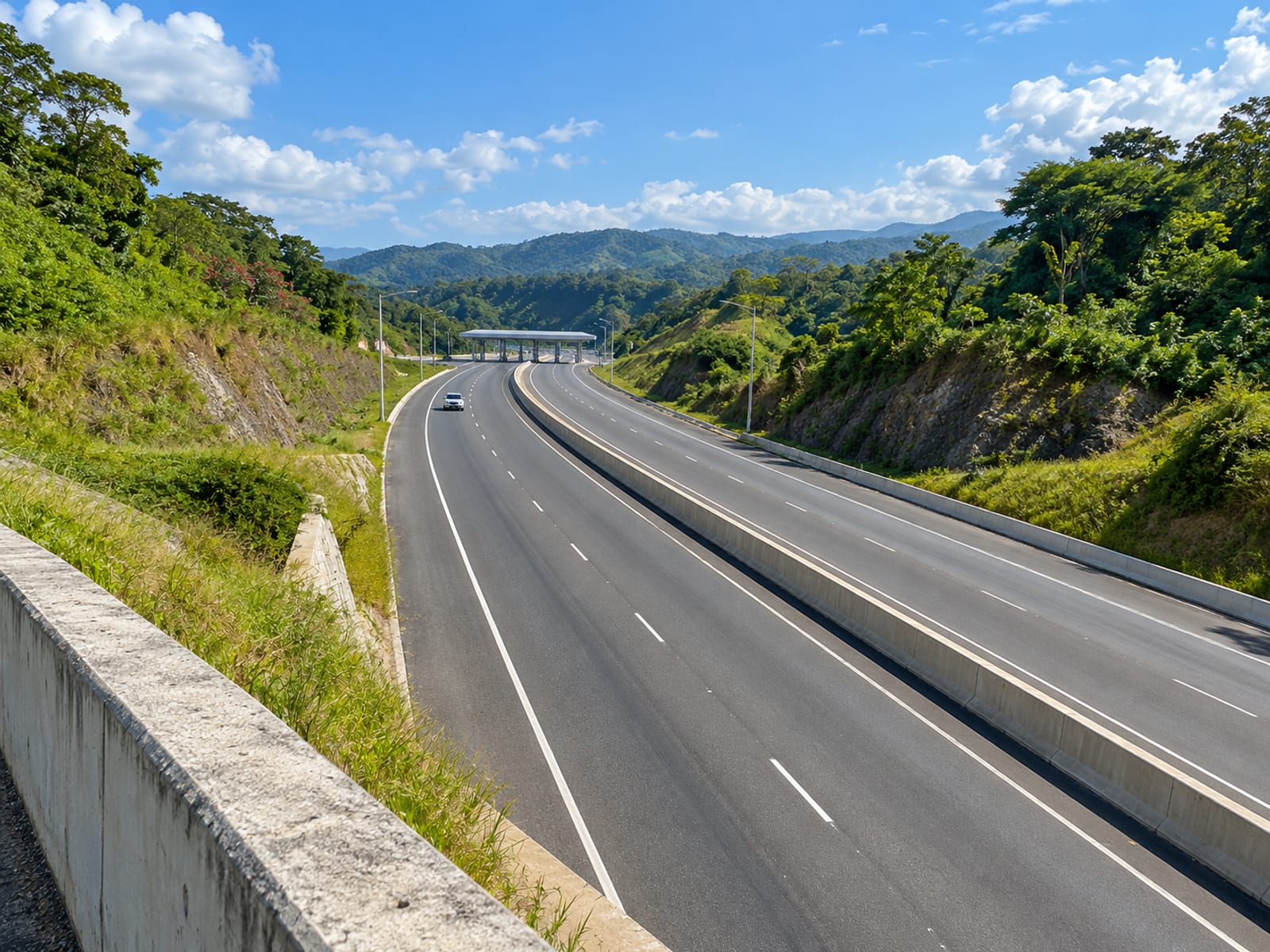
Ask the rental company whether the car already has a toll tag, whether tolls are paid directly or charged to you later, and whether an administrative fee applies. Fuel stations operate island-wide according to Visit Jamaica, so also ask which fuel type the car takes, what level it will have at pickup, what level is expected at return, whether fuel is prepaid and what the company charges to refuel. Avis recommends refuelling before you return the car, because its own refuelling service costs more than pump fuel.
These route details can tip the choice. A larger vehicle costs more to fuel, and long highway legs add tolls, so a plan with many highway miles may favour the smaller car while a plan with one rough access road may favour the SUV.
Questions To Ask Before You Accept The Vehicle
Before you sign, put the route, the class and the costs into a written message to the rental company. These questions cover what people most often forget to ask, and they are worth sending in writing so the answers are on record.
When the answers come back, compare them side by side with the leg list you wrote at the start. If one answer makes a leg look uncomfortable, that tells you whether to change the class, change the route or arrange a driver for that day.
Frequently Asked Questions
What is the best car rental option in Jamaica?
There is no single best class. The best choice matches your roads, passenger count, luggage and budget. A sedan is generally adequate for major highways, towns and paved coastal routes, and a higher-clearance SUV suits rougher rural or mountain roads. Compare the total price, liability, deposit, fuel policy, mileage and roadside help, not only the daily rate.
Is renting a car in Jamaica a good idea?
It can be, if you are a confident driver who wants flexibility and will use the car on most days. It may not suit a first-time left-side driver, a guest who stays mainly at one resort, or anyone who expects to drive at night. Visit Jamaica advises caution on rural and mountain roads, and a hired driver is a reasonable alternative.
Are higher-end car rentals worth it?
They are worth considering when comfort, presentation or extra space matters more than keeping the cost down. They are less appealing when the plan includes potholes, narrow rural roads, steep access roads or crowded parking. A higher class can also carry a higher waiver price and more liability.
Do rental class names tell me which vehicle I will get?
Not reliably. Class labels differ from company to company and do not promise a particular model or equipment. Ask what vehicle class, features, liability and deposit apply to your reservation.
How much does it cost to rent a car for two weeks in Jamaica?
The total depends on the class, dates, company, waiver choice, taxes, deposit, mileage, fuel, extra drivers, airport charges and tolls. The company figures above show the range for single days, not a two-week price, so ask for a complete written total for your dates.
Do I need an SUV to get to Reach Falls?
It depends on the state of the road and the weather on the day. Check current National Works Agency notices, ask the rental company about the exact route, and choose a higher-clearance SUV if any stretch is rough, steep or unpaved.
Final Thoughts
The choice between a sedan and an SUV comes down to your list of stops. A sedan is generally adequate for highways, towns and paved coastal roads, a higher-clearance SUV gives more margin on rough or mountain roads, and neither one replaces slow, defensive driving. Ask for a written total that includes the waiver, deposit, fuel and tolls, and treat any single price you see online as one company's figure.
Doing this once, before you pay, saves you from learning the terms at the counter or on the road. You also leave room for a mixed plan, with a driver for the days you would rather not drive.
If you want to rent a vehicle or arrange a driver for part of your stay, D-JARPS Transport Solutions can set it up anywhere in Jamaica as your trip needs. We arrange trips by phone between 6 AM and 10 PM every day, or through the trip request form on our contact page, and we confirm the details and the price before the day.