Travel guide
Rental Car Breakdown or Flat Tyre in Jamaica: What to Do
This guide may contain affiliate links. If you buy or book through one, we may earn a commission at no extra cost to you. Read our affiliate disclosure.
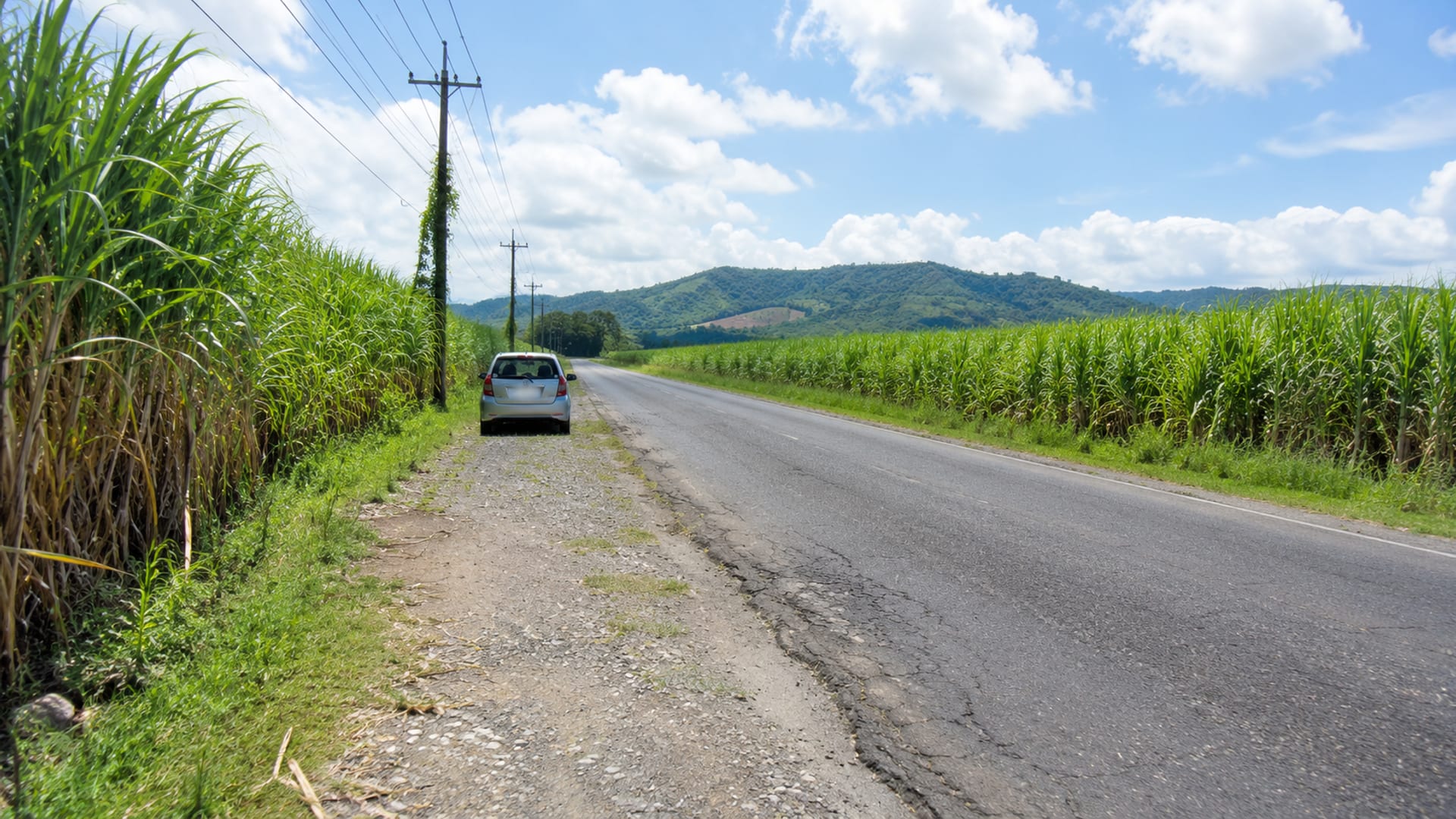
The car has slowed, a warning light is on or you can feel a flat tyre pulling the wheel, and you are somewhere you do not know. Before you think about the repair, think about where you are standing and who knows you are there. The first few minutes are about keeping everyone safe; the rest is a phone call and some careful record keeping.
This page walks through that order. It starts with the roadside, including what to do on a toll road, then moves to the rental company, the evidence worth keeping and what a breakdown or flat tyre may cost you under a rental agreement. If anyone is hurt, threatened or in immediate danger, call 119 for police or 110 for fire and ambulance before anything else.
You will also find some background on Jamaica's roads and driving rules, and a short section on when a driver or transfer is the easier choice for the rest of your trip.
Get Everyone Safe in the First Few Minutes
Slow down and stop in the safest place available. Turn on the hazard lights. Under Jamaica's Road Traffic Regulations 2022, hazard lights may be used when a vehicle is stationary in an emergency on or within two metres of the roadway, or when a dangerous circumstance arises and you need to warn other road users. A stopped rental car in a risky spot fits that. Switch them off before you use normal direction indicators again.
The Jamaica Tourist Board advises a driver whose car stalls to use hazard lights, stay with the car and wait for the proper authorities. Do not stand between your vehicle and moving traffic, and do not accept pressure from a stranger to leave the car or walk with them to an isolated place.
If anyone is injured, threatened or in immediate danger, call 119 for police or 110 for fire and ambulance. The Jamaica Constabulary Force lists 119 as the police emergency number, and the Ministry of National Security lists 110 for the Fire Brigade.
Stay Safe Beside a Jamaican Road
Where you wait matters as much as who you call. Move away from the traffic lanes only if a safe spot is immediately available. If the car is in a dangerous place, passengers can wait clear of it, but not in a position that puts them closer to traffic.
Jamaica drives on the left, and the Tourist Board notes that rural and mountain roads can be winding, bumpy and narrow. It also advises avoiding lonely or isolated areas at night. That is worth remembering if the breakdown happens after dark or far from town: keep the doors locked, keep your phone charged and tell the rental company exactly where you are.
The Road Traffic Regulations 2022 generally require two emergency warning signs when a motor vehicle is stationary on a roadway or shoulder, placed at least 45 metres from the vehicle in each direction. The regulation excludes a motor car from the definition for this particular requirement, so check what your rental car supplies and follow the rental company's instructions. Never step into live traffic to place a sign if doing so adds danger.
Call the Rental Company and Know What It Handles
Your rental papers should carry a breakdown number. Call it right away, tell the company where you are and describe the problem factually. Do not arrange a tow, a tyre shop or a mechanic first. Island Car Rentals, for example, says unauthorised repairs or towing are not reimbursable, and its terms say to use the number in the rental wallet immediately.
Companies set their own roadside terms, so the answers differ. Avis Jamaica says complimentary roadside assistance is available 24/7 and includes flat tyres, locked keys and jump starts. Enterprise Jamaica says free breakdown assistance covers mechanical failure that is not considered the renter's fault. Island Car Rentals asks renters to contact its roadside team immediately and, after a collision, to call emergency services first if anyone is injured, then notify the company within two hours.
Independent roadside businesses exist too, and the Jamaica Automobile Association publishes flat tyre service and island-wide towing. Even so, a private provider may not be authorised to tow a rental car. Ask your rental company which provider it approves, where the car should go and whether it will pay directly or reimburse an approved cost.
Know What Happens After You Report the Problem
Once you have called, the rental company decides the next step. Ask whether the car can be repaired on the spot, replaced or recovered, and whether the charge is covered under your agreement. If it cannot be fixed the same day, ask who arranges transport to your hotel, the airport or the cruise port.
Useful questions for that call are whether your roadside assistance covers a flat tyre or tyre replacement, who the approved tow or repair provider is and where the car will be taken, and whether you pay first and claim back or the company pays directly. Ask too whether a replacement car will be sent, what happens to your passengers and luggage if the car is towed, whether you need a police report or incident form, and whether you can have the authorisation in writing or by message.
If you are in an accident, Enterprise asks renters to report it as soon as possible to the nearest branch and to the police, and to capture as much information as they can. Do not admit liability, promise payment or sign an unfamiliar repair authorisation. Tell the company what happened and ask what evidence it needs.
If the answer is unclear, ask the company to classify the incident before you pay for anything that is not an emergency. Published terms vary on punctures, sidewall damage, wheel damage, towing distance and replacement transport, so your signed agreement is what counts.
Understand What a Breakdown or Flat Tyre May Cost You
The cost depends on your agreement, the vehicle, and whether the problem counts as a mechanical fault, your own damage or something else. Tyre damage in particular can sit outside a damage waiver. Enterprise says its collision damage waiver with theft protection (CDW TP) is not insurance and does not cover tyre damage at its Kingston Norman Manley Airport location, where it also carries a US$250 deductible.
The table below gives examples of what rental terms can involve. They are each operator's own figures, they change, and they are not a Jamaica-wide average. Ask for a full written quote for your dates, vehicle and pickup place.
Other charges can appear on the final bill, including tolls, parking, traffic violations, fuel and refuelling fees and extra days for a late return. Avis and Enterprise both say tolls, parking and violations are the renter's responsibility under their terms. Ask the company for a written list of every charge that could apply.
Photograph and Keep What You Will Need for a Claim
Evidence gathered in the first hour is the evidence you will rely on later. Record it before the car is moved, if it is safe to do so.
Ask the rental company and any insurer for their own claim checklist, and keep the original rental agreement, any police report and your receipts. The documents needed differ by company and by type of incident.
Check the Jamaica Details That Change Your Plan
Some questions only come up on Jamaican roads. A few are worth knowing before you set out.
Licences. The Jamaica Tourist Board says a visitor may drive with a valid foreign licence or a country-issued permit, and the physical licence must be carried. North Americans may use their home licence for up to three months per visit. An international driving permit is generally not required if the licence is in English, though a rental company may set its own rules. Avis, for example, says the licence must be valid throughout the rental and issued at least a year before. Our guide on driving in Jamaica with a foreign licence goes through the details.
Driving rules. The Road Traffic Act 2018 and Road Traffic Regulations 2022 were implemented on February 1, 2023, according to the Ministry of Transport and Mining. Seat belts are required for the driver and relevant passengers, children must use the prescribed child restraint, and handheld devices are not allowed while driving except in hands-free mode.
Tolls. Ask your rental company whether the car has a toll tag or swipe card, whether tolls are paid at the plaza or charged later to your card, and keep your receipts.
Insurance. Under the Motor Vehicles Insurance (Third-Party Risks) Act, a vehicle on a Jamaican road must have third-party risk cover. Rental companies normally arrange that under their terms. Collision or theft protection is separate, and a card benefit or foreign policy should be confirmed in writing as valid in Jamaica.
Reduce the Chance of a Second Roadside Problem
Before you drive away from the counter, check that the car has a spare tyre, a jack and a lug wrench, and note any existing damage on the agreement. Photograph the fuel gauge and odometer at pickup and return. Save the rental company's breakdown number in your phone and write it down in case your battery fails.
Plan daytime driving on routes you have mapped, especially on rural and mountain roads. If the trip includes night driving or several long legs, ask yourself whether you want to carry that roadside responsibility. Our guide on what to check before you drive off in a rental car covers the pickup walk-around in detail.
A self-drive car suits a confident driver who wants independent daytime travel and several stops. A driver or transfer suits someone who would rather not carry the roadside responsibility, and our comparison of renting a car or booking a driver in Jamaica shows how to decide. Some travellers combine both, using a pre-booked transfer for arrival and renting only for independent sightseeing days.
A few terms in this page may be new to you, so they are collected below.
Frequently Asked Questions
Can I drive in Jamaica with a US driver's license?
The Jamaica Tourist Board says a valid foreign licence can be used by a visitor, and North Americans may use their home licence for up to three months per visit. Carry the physical licence, since photocopies and digital copies are not accepted. The rental company's own document rules still apply.
Is renting a car in Jamaica a good idea?
It can suit a confident driver who wants independent daytime travel and several stops. Jamaica drives on the left, and rural and mountain roads can be narrow and winding. A driver or transfer can suit someone who prefers not to manage driving, tolls, fuel or roadside problems.
How much to rent a car in Jamaica per day?
The daily amount changes with the vehicle, dates, branch, waiver, taxes, deposit, extra drivers, fees and fuel terms. There is no single Jamaica-wide figure, so ask each company for a written quote that shows the total payable and the refundable hold.
What is needed to insure a car in Jamaica?
A vehicle on a Jamaican road must have third-party risk cover under the Motor Vehicles Insurance (Third-Party Risks) Act. Rental companies normally arrange it. Collision or theft protection is separate, so confirm in writing whether a card benefit or foreign policy applies in Jamaica.
What are the new driving laws in Jamaica?
The Road Traffic Act 2018 and Road Traffic Regulations 2022 were implemented on February 1, 2023. They cover speed limits, seat belts, child restraints, handheld devices and hazard lights, among other rules. Posted limits and signs apply on the road.
Who pays if my rental car has a flat tyre?
It depends on the agreement. Avis says its roadside assistance is complimentary and includes flat tyres, while Enterprise says its damage waiver does not cover tyre damage at its Kingston airport location. Ask the rental company to say in writing who pays before you authorise any work.
The Bottom Line
When a rental car breaks down in Jamaica, put safety first, call the rental company before anyone else, and keep a record of everything. Do not arrange repairs or towing unless the company approves or an emergency requires it. Ask who authorises and pays for repairs, towing and alternative transport before you leave the rental counter, and keep the answer in writing.
Knowing the order of steps makes a bad moment easier to handle. A saved number, a few photographs and a clear question to the rental company can save time and an unexpected charge later.
At D-JARPS Transport Solutions in Jamaica, we run our own vehicles and arrange transport anywhere in Jamaica as each trip needs it, including car rentals. Trips are arranged by phone, 6 AM to 10 PM every day, or through the trip request form on our contact page. We go over the details with you, give the price and confirm the trip before the day.