Travel guide
Funeral Transportation in Jamaica: Arranging Rides for Family and Mourners
This guide may contain affiliate links. If you buy or book through one, we may earn a commission at no extra cost to you. Read our affiliate disclosure.
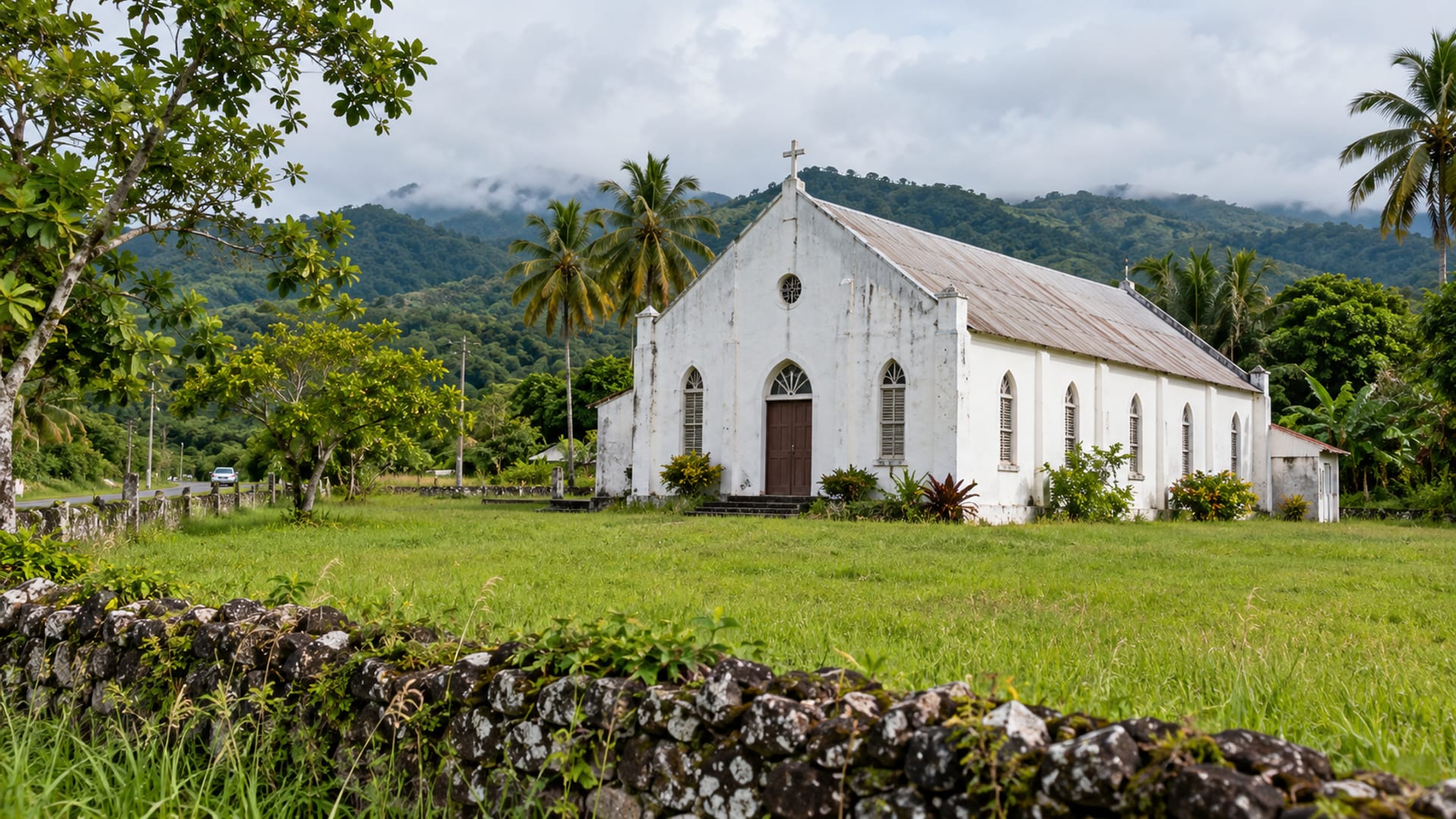
When someone dies, the family is asked to decide a hundred things at once, and transport is rarely the first one on the list. Then the questions begin. Who is collecting your aunt from the airport? How will the older relatives get to the Nine Night, and then to the church, and then on to the burial ground? Funeral transportation in Jamaica often turns into one more thing the family has to coordinate while tired and short of time. The hearse and the family cars are usually arranged through the funeral home. This page is about everyone else who needs to travel: relatives flying in, neighbours without a vehicle, mourners moving from church to cemetery and back for the repast. Practices differ by family, denomination and parish, so take what helps and leave what does not. You can end with a short list to hand to a relative or a transport provider.
Find a calm starting point when funeral transport lands on the family
Most families begin with a simple list of who needs to go where. Write the schedule down first: the date and time of the service, the church, the burial ground, the place of the repast and any Nine Night or family gathering. Then add the people. How many are coming from overseas? How many live in another parish? Who has no vehicle and would struggle to get to each place?
A few details are worth gathering early because every provider will ask for them: the passenger headcount for each trip, flight numbers and arrival times, pickup points, how much luggage is coming and one family contact who answers the phone. That contact matters on the day, since someone must be able to approve a change without a family meeting.
If the funeral is close, do not worry about perfect planning. Start with the movement that is soonest, usually the airport arrivals, and build outward.
Plan every movement from airport arrival to the repast
Nine Night, also called Dead Yard or Set-Up, is a Jamaican wake tradition of gathering at the home of the person who has died for food, singing, music and remembrance. According to the African Caribbean Institute of Jamaica, it may take place over several nights or be concentrated on the ninth night, and practices vary by family, denomination, parish and community. The church service commonly comes before the burial, and the repast is commonly held afterward.
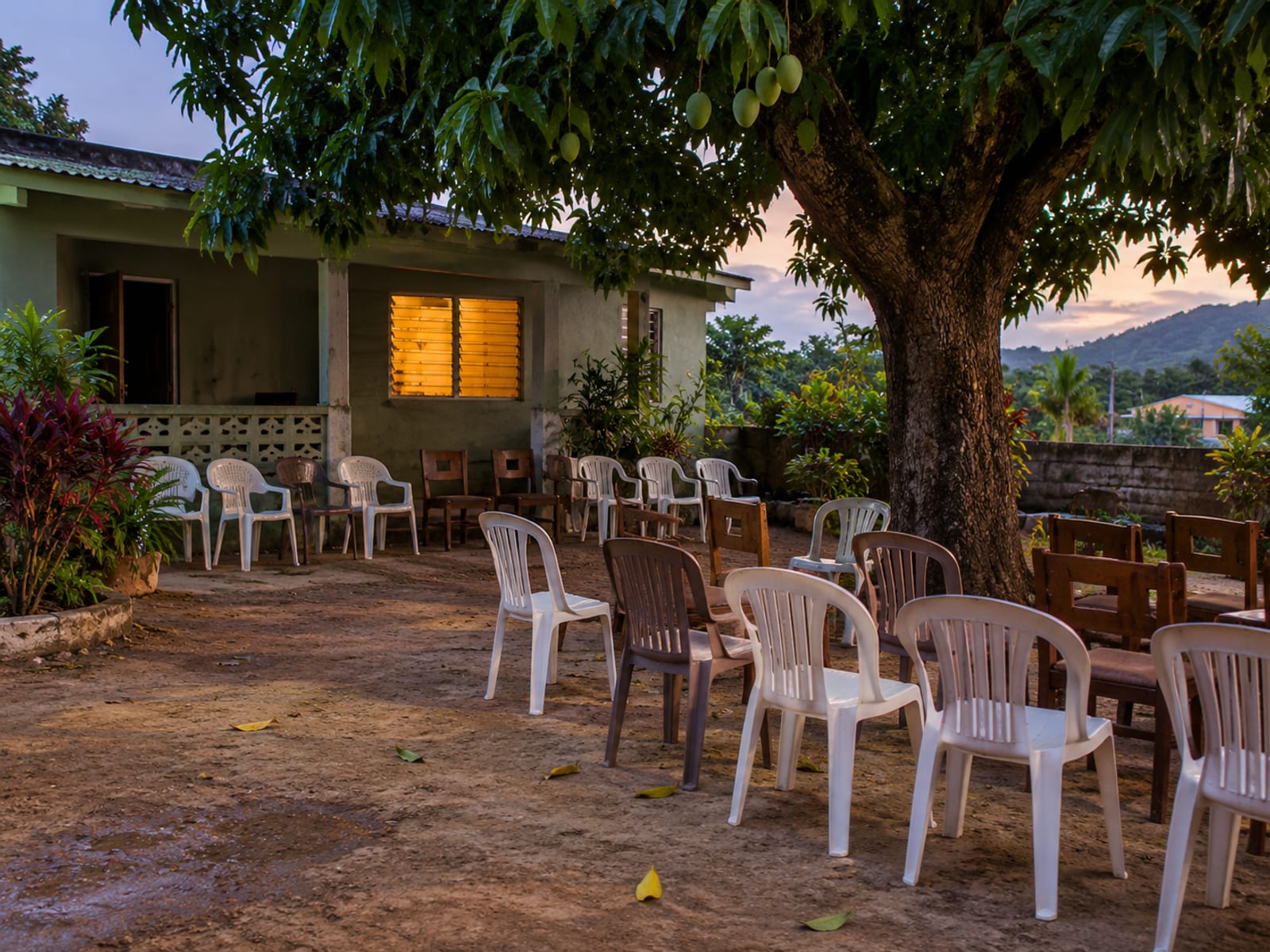
That sequence creates a handful of transport needs. Not every family will need all of them.
For relatives flying in, collect each traveller's name, flight number, arrival airport, luggage count, phone number and final destination. Then confirm whether the airport pickup is one way or round trip, whether the driver waits for a delayed flight or late luggage, and whether the vehicle can carry both the people and the bags. Give each relative the driver's name, phone number and meeting point, and an emergency contact. If the relative is also travelling on to a parish far from the airport, say so up front. Our post on airport pickups for family visiting home in Jamaica goes through this in more detail.
Know the airport you are meeting relatives at
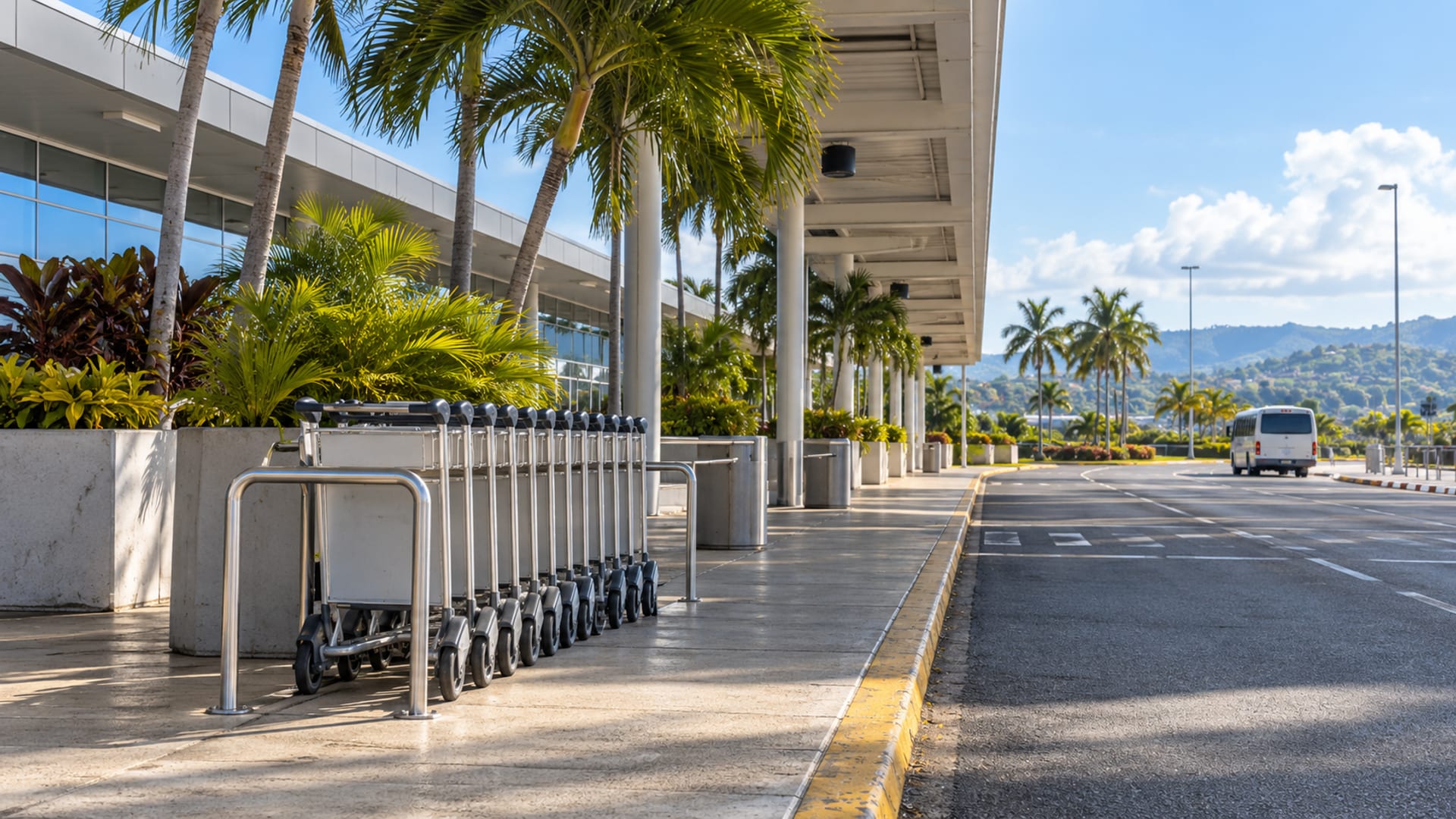
The question many overseas relatives type is how to get from the airport to their hotel or family home. At Sangster International Airport, hotel shuttles, taxis, car rentals and intra-island airlines are in the Ground Transportation Arrivals Hall outside Customs. Sangster lists JUTA and JCAL as the authorised airport taxi companies, with a shared desk outside the Customs exit. A pre-arranged private vehicle can collect relatives and continue to a home parish, church or family address.

At Norman Manley International Airport, the Airports Authority of Jamaica's planning material says road access is by private vehicle, rental car, taxi or JUTC Route 98. Route 98 connects the airport with Port Royal and downtown Kingston, but luggage and connection points can make it a poor fit for some travellers, especially anyone arriving tired and carrying bags.
Sangster also notes that short-term arrivals parking is limited to three hours and encourages parties to meet inside the arrivals car park. Agree a meeting point before the flight lands so that nobody is circling the car park while relatives wait.
Match the vehicle to the people, luggage and route
The Jamaica Tourist Board lists route taxis, chartered or private taxis, JUTC buses, privately operated coaster buses, Knutsford Express coaches, rental cars and private charter coaches among the ways to get around. Route taxis run on fixed routes, chartered taxis are arranged for private trips, and private charter coaches are used for larger groups and events. For a funeral, the difference matters. A route taxi will not wait for your family. A pre-arranged vehicle can.
Choose by the actual numbers. Ask for the seat count of the vehicle, not just its name, and keep luggage space separate from passenger capacity. A vehicle that seats eight people may not carry eight people and their suitcases. For a larger group, our posts on choosing the size of bus for your group and how to charter a bus in Jamaica explain seat counts and the steps to book, and our private charters page describes how we handle a group's vehicle and itinerary.
Think about access too. Rural roads, steep driveways, narrow lanes and private family plots may not suit a large vehicle. Tell the provider the exact address and ask whether the vehicle can reach it.
Build a clear church, cemetery and return schedule
A church-to-cemetery trip can involve a procession, several vehicles, limited church parking, narrow rural roads, unmarked entrances and traffic controls. A large funeral may need a designated meeting point or a shuttle rather than every vehicle following the hearse. Published Jamaican notices show how this works at scale: for a state funeral, police directed mourners to specific parking areas and arranged buses from a separate location, and another notice described temporary road closures with police directing traffic. Most funerals are smaller, but the lesson holds. Drivers and mourners must obey traffic lights, police directions and ordinary road rules, and a funeral convoy does not automatically create permission to ignore traffic controls.
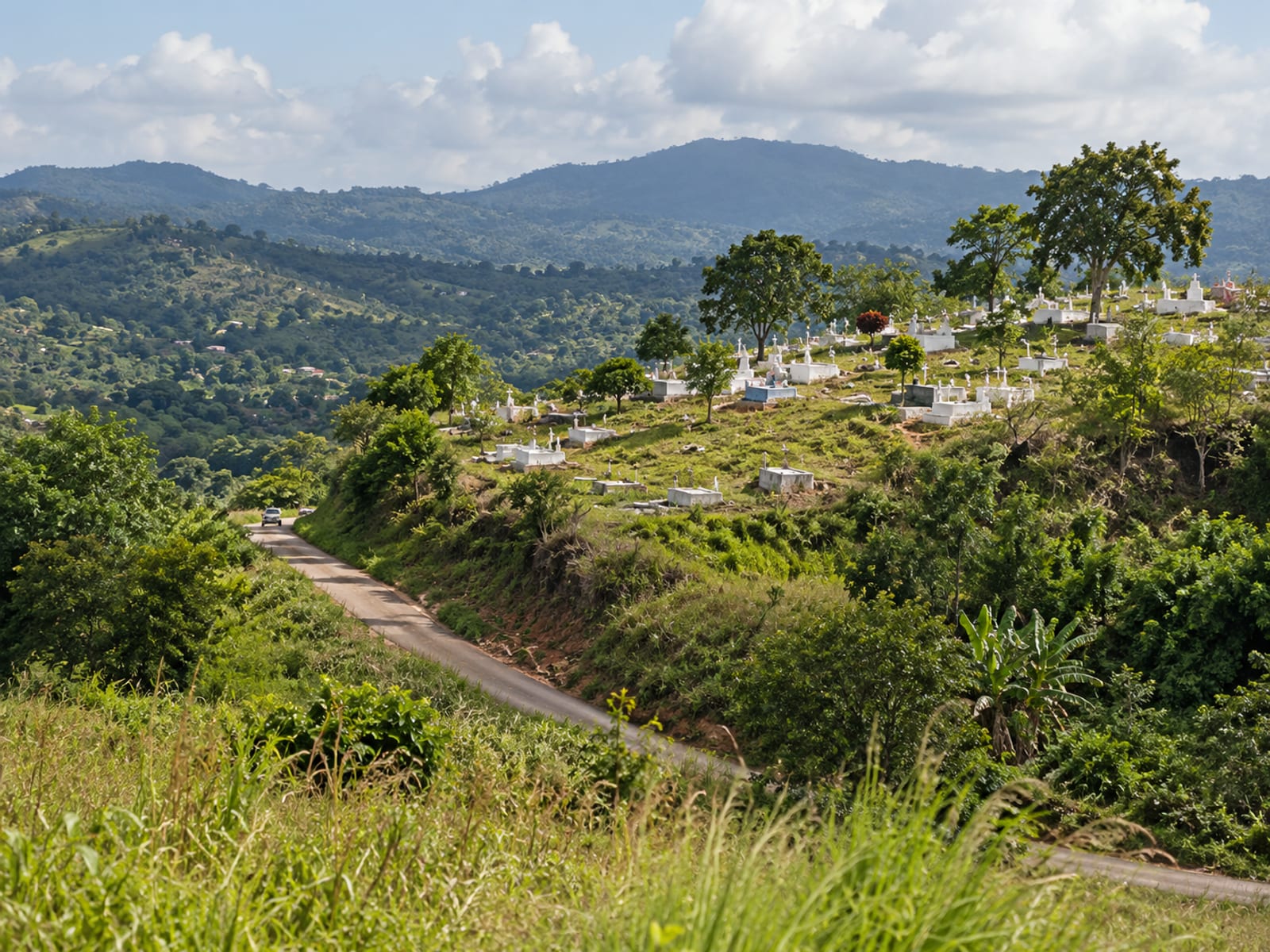
Confirm these points before the day:
- Church: The exact entrance and the loading area.
- Waiting: Where vehicles may wait without blocking the road.
- Cemetery: Whether it has a named entrance or a separate family plot, and whether parking is available there.
- Shuttle: Whether a shuttle should stay at the church.
- Repast: Whether the repast needs a separate route.
- Instructions: Whether the police, church, cemetery or local authority has issued traffic instructions.
Do not rely on a convoy to find an unmarked rural burial ground. Give each driver the exact addresses of the church, cemetery and repast, and keep one family member reachable by phone.
Put the details in writing before the funeral day
A short written confirmation protects a family at a time when memory is stretched. Ask the provider to confirm the following, and send the same itinerary to every driver.
Keep two things apart in the agreement. Transporting mourners is different from transporting the person who has died, and a passenger vehicle booking does not mean the vehicle is authorised or equipped to carry human remains. Leave that to the funeral home.
On price, no honest figure applies to every funeral. The cost changes with the vehicle, the distance, the waiting time, the number of stops, the return trips and the date. Ask for a written quote built on your full plan, and ask what is and is not included.
Check the vehicle and licence questions a provider should answer
The Jamaica Transport Authority says it licenses public passenger vehicles and commercial carriers. Its categories include contract carriage, described as transportation provided on a contractual basis, and hackney carriage, described as a vehicle carrying passengers for hire or reward. For a paid funeral shuttle or private group service, ask the provider which licence category applies and whether the vehicle and driver are authorised for the service you want.
Venue rules may matter as well. Ask where passengers may be dropped off, whether vehicles may wait at the entrance, whether buses may enter the property, where hearses and family vehicles park, whether the cemetery has a separate service entrance and whether the repast venue has a loading zone.
The Jamaica Tourist Board publishes indicative drive times that help with rough planning, such as Kingston to Mandeville at about 1.5 hours, Montego Bay to Negril at under 1.5 hours and Ocho Rios to Kingston at under 1.5 hours. These are estimates, not promises. Traffic, roadworks, weather, closures, rural roads and the exact address all change the real time. Time the actual trip from the actual airport to the actual address, and add a cushion.
Know what funeral homes usually handle and what families arrange separately
Funeral homes differ in what they include, and there is no universal rule that a funeral home provides transport for every mourner. Some list a hearse and family vehicles or limousines. Some list a coaster bus as an additional service. Ask exactly what is covered: the person who has died, the immediate family, selected relatives or the wider group of mourners.
If something is not written into the funeral agreement, assume the family will arrange it. That includes extra waiting time and transport for people who attend only the service or only the repast.
Prevent missed pickups, separated mourners and last-minute confusion
Travellers describe the same problems again and again: vehicles arriving late, unclear airport meeting points, not enough luggage space, traffic delays, route confusion and groups becoming separated on long drives. A transport policy for a Jamaican public event even asks passengers to be at the pickup point at least 30 minutes before departure, and names traffic, road closures, accidents, weather and police directions as causes of delay. None of this is unusual, and all of it can be softened with a little structure.
- One itinerary: Use one written itinerary and send the same one to everyone.
- One meeting point: Give every traveller the same meeting point.
- Early reporting: Set a reporting time ahead of departure.
- Reachable contact: Keep a family contact by the phone, with a backup.
- Real seat counts: Confirm the vehicle's actual seat count.
- Exact addresses: Give drivers the exact church, cemetery and repast addresses.
- Time cushion: Plan for traffic and weather.
- Return plan: Confirm the return trip before the service begins.
Also settle who stays with the vehicle while the family is at the cemetery, what happens if a flight or immigration clearance is delayed, and what the plan is if the phone contact loses service.
Frequently Asked Questions
Does the funeral home arrange transport for all mourners?
Not always. Many funeral homes arrange the hearse and family vehicles, and some offer limousines or coaster buses as additional services. Ask exactly what is included, and arrange separate mourner transport where needed.
How do I get from the airport to my hotel in Jamaica for a funeral?
At Sangster, hotel shuttles and taxis operate from the Ground Transportation Arrivals Hall outside Customs, and JUTA and JCAL use an authorised taxi desk. At Norman Manley, you can use a private vehicle, rental car, taxi or JUTC Route 98. A pre-arranged vehicle can meet relatives and continue to a hotel, home or church.
What are the different types of transportation available in Jamaica?
The Jamaica Tourist Board lists route taxis, chartered taxis, JUTC buses, coaster buses, Knutsford Express coaches, rental cars and private charter coaches. For a funeral group, a pre-arranged charter gives the family control over pickup points and waiting time.
How much does funeral transport cost?
There is no set rate. Cost changes with vehicle size, distance, waiting time, number of stops and the date. Request a written quote based on the full itinerary.
Can I book on short notice?
Availability depends on the date, vehicle size, parish, route and notice, so no lead time can be promised. Call early and be clear about what is most urgent.
What if the cemetery is down a narrow road?
Tell the provider the exact address and ask whether the vehicle can reach it. A smaller vehicle or a shuttle from a nearby point may suit narrow lanes better than a large bus.
Final Thoughts
Funeral transport comes down to a list: who is travelling, where from, where to, and when. Ask the funeral home what it covers, arrange the rest separately, put the details in writing and name one person who can approve changes. Give every driver exact addresses, and allow extra time for traffic and rural roads.
Having this in place means relatives are met at the airport, older family members are not left waiting, and the people closest to the loss can focus on each other instead of on logistics.
D-JARPS Transport Solutions is a Jamaican ground transportation company running its own vehicles, open since 2024, and we arrange transport anywhere in Jamaica as each trip needs it. We take trip requests by phone from 6 AM to 10 PM every day, or through the trip request form on our contact page. Tell us the dates, the places, how many people are travelling and who can approve changes, and we will go over the details, give you the price and confirm the trip before the day.